P.S. Kumaraswamy Raja (1898-1957)
Technical Data
| Date of Issue | July 8, 1999 |
|---|---|
| Denomination | Rs. 3 |
| Quantity | 400,000 |
| Perforation | comb 13½ x 13 |
| Printer | Security Printing Press, Nashik |
| Printing Process | Photogravure |
| Watermark | No Watermark |
| Colors | Multicolor |
| Credit (Designed By) | P.P. Rajoria |
| Catalog Codes |
Michel IN 1690 Stamp Number IN 1751 Yvert et Tellier IN 1457 Stanley Gibbons IN 1853 |
| Themes | Buildings | Commemoration | Famous people | Men | Politicians |
Freedom Fighter, Gandhian and Former Chief Minister of Madras
P.S. Kumaraswamy Raja (1898–1957) was a distinguished freedom fighter, Gandhian, and political leader from Tamil Nadu. Born in Rajapalayam, he played an important role in India’s freedom struggle and later emerged as one of the leading statesmen of independent India.
Early Life and Influence of Mahatma Gandhi
P.S. Kumaraswamy Raja was born in Rajapalayam in present-day Tamil Nadu. During his formative years, he was deeply influenced by the lives and writings of Annie Besant and S. Satyamurti. Their ideas helped shape his character and inspired his commitment to public service and nationalism.
In 1919, Raja met Mahatma Gandhi for the first time. From then on, he followed Gandhi’s life and ideals with great interest. Gandhi’s struggle in South Africa, the establishment of the Sabarmati Ashram in Ahmedabad, and the Champaran movement left a deep impression on him. Raja greatly admired the simplicity, discipline, and dedication that marked Gandhi’s life.
Political Career and Role in the Freedom Movement
From his youth until his death, P.S. Kumaraswamy Raja remained actively involved in public life. He wrote extensively, delivered speeches, and worked tirelessly to organize the Indian National Congress at the village level.
His best-known work, My Induction as a Gandhite, brought him wide recognition. Through his writings and speeches, Raja emphasized the importance of national unity, selfless service, and dedication in the struggle for freedom from British rule.
Raja actively participated in several major political movements. In 1917, he was arrested and imprisoned for taking part in the Home Rule Movement. Despite this setback, he continued his political work with determination.
In 1919, he left his studies and organized the Satyagraha Movement in Rajapalayam. He also arranged public meetings and encouraged people to participate in the national movement.
In February 1930, Raja served as the Vice-President of the Reception Committee of the first Khilafat Conference held in Madras. In 1932, he was sentenced to one year in prison for his political activities. After his release, he resumed his work with renewed energy.
In December 1940, he was once again imprisoned for participating in the Individual Satyagraha movement launched by Mahatma Gandhi.
P.S. Kumaraswamy Raja in Government
P.S. Kumaraswamy Raja also had a long and successful political career in government. He was elected to the Madras Legislative Assembly from the Chittoor constituency. Later, he became a member of the Madras Cabinet formed on 14 July 1937, where he served as the Minister for Public Works.
Over the years, Raja held several important public offices. He served as:
- President of the Ramnad District Board
- Minister for Agriculture in the Provincial Government
- Chief Minister of the composite Madras State after Independence
- Governor of Orissa in 1954
As Chief Minister of Madras, he served until 1952. In 1954, he was appointed Governor of Orissa, a position he held until his resignation in 1956.
Major Contributions and Achievements
P.S. Kumaraswamy Raja was known for his integrity, dedication, and commitment to social reform. He strongly supported the separation of the judiciary from the executive, an idea that later became an important principle in Indian governance.
His other notable achievements included:
- Promotion of prohibition
- Encouragement of Khadi
- Support for Temple Entry legislation
- Strengthening democratic administration
Raja also made important contributions to the development of Rajapalayam. Owing largely to his efforts and vision, the town emerged as a major industrial centre.
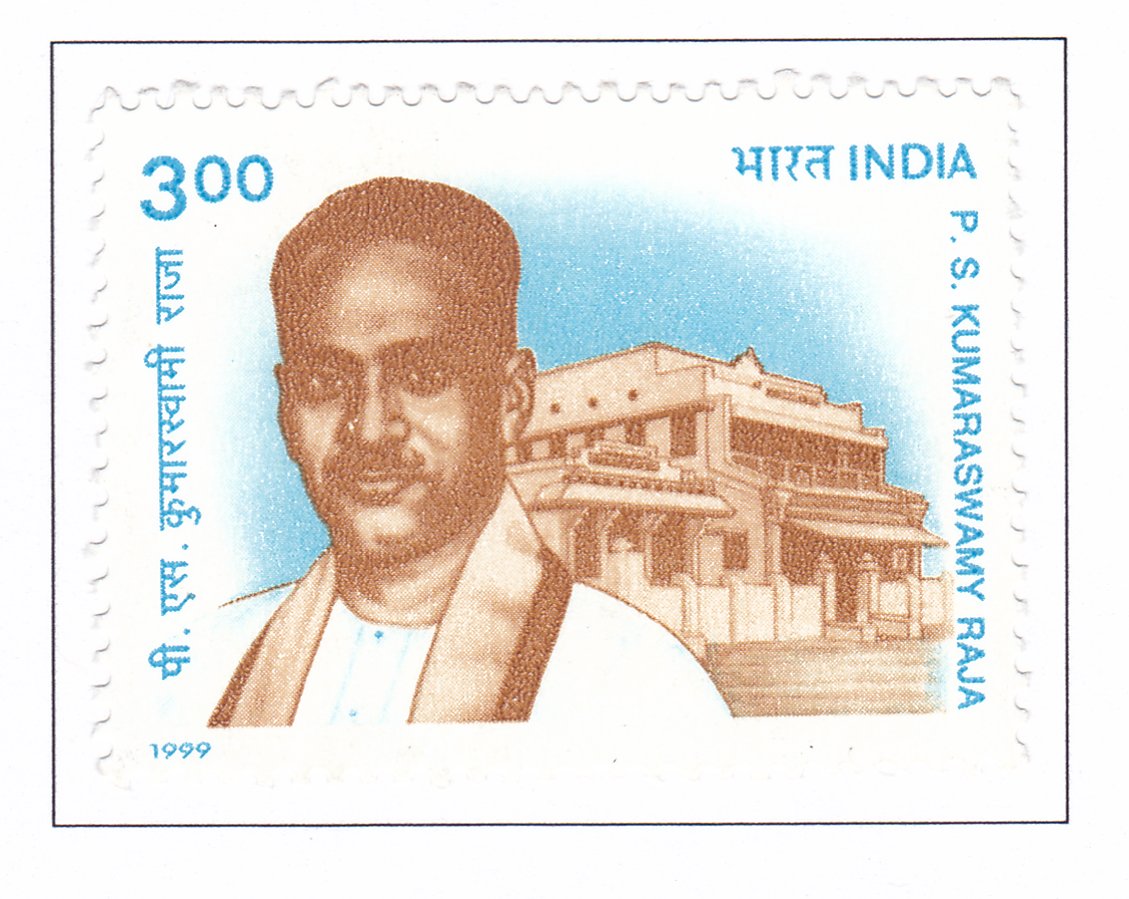
In a remarkable act of generosity, he donated his own house for the establishment of the Gandhi Kala Mandiram in Rajapalayam, an institution dedicated to culture and Gandhian values.
Legacy of P.S. Kumaraswamy Raja
P.S. Kumaraswamy Raja lived a life of sacrifice, service, and unwavering commitment to the nation. Despite repeated imprisonment and personal hardships, he remained loyal to the ideals of Mahatma Gandhi and the Indian National Congress.
His contribution to India’s freedom movement, public administration, and social reform continues to be remembered with great respect.
To honor his remarkable life and achievements, the Department of Posts issued a commemorative postage stamp on P.S. Kumaraswamy Raja. The stamp stands as a tribute to one of Tamil Nadu’s most respected freedom fighters and political leaders.
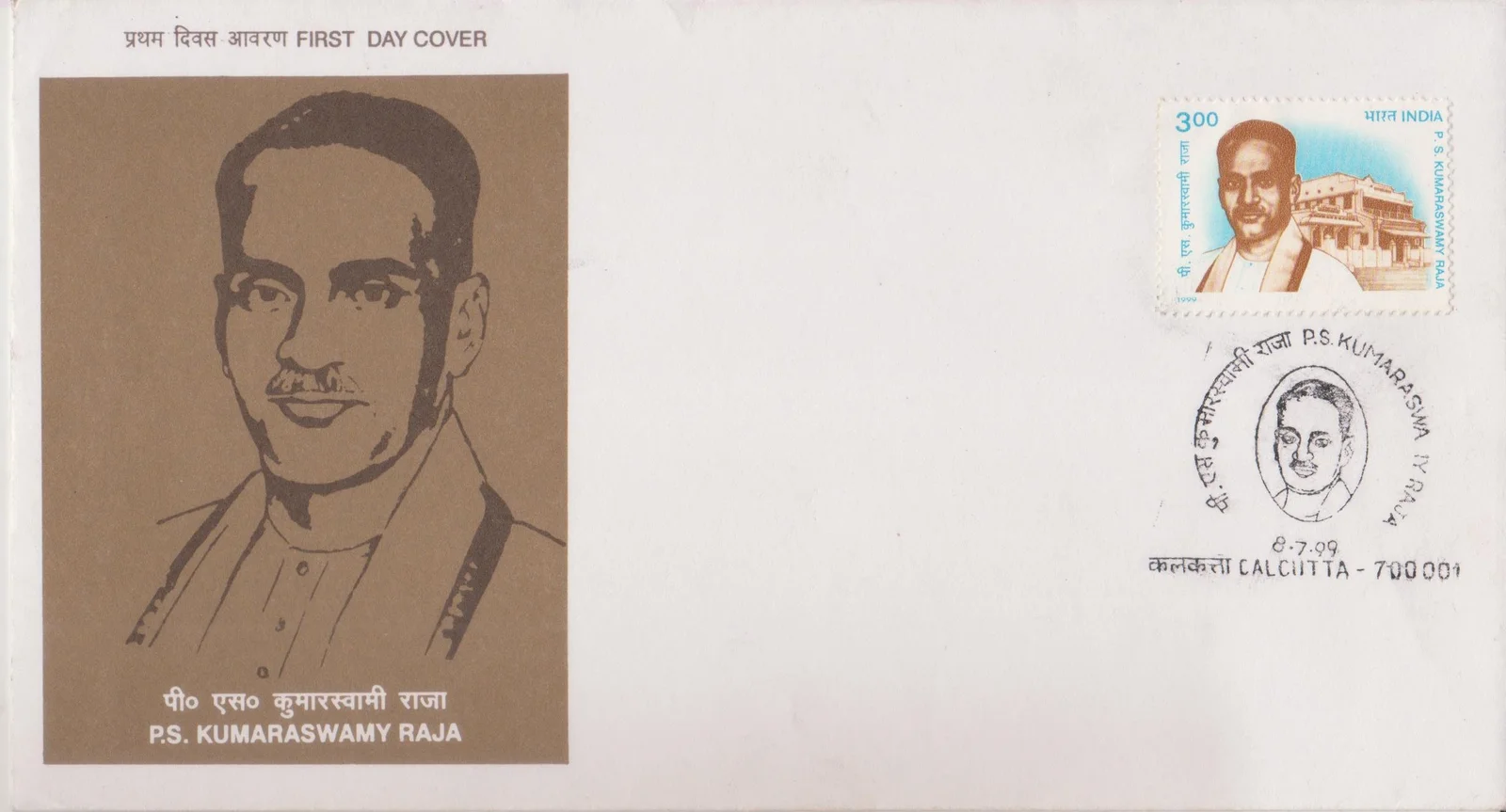
First Day Cover