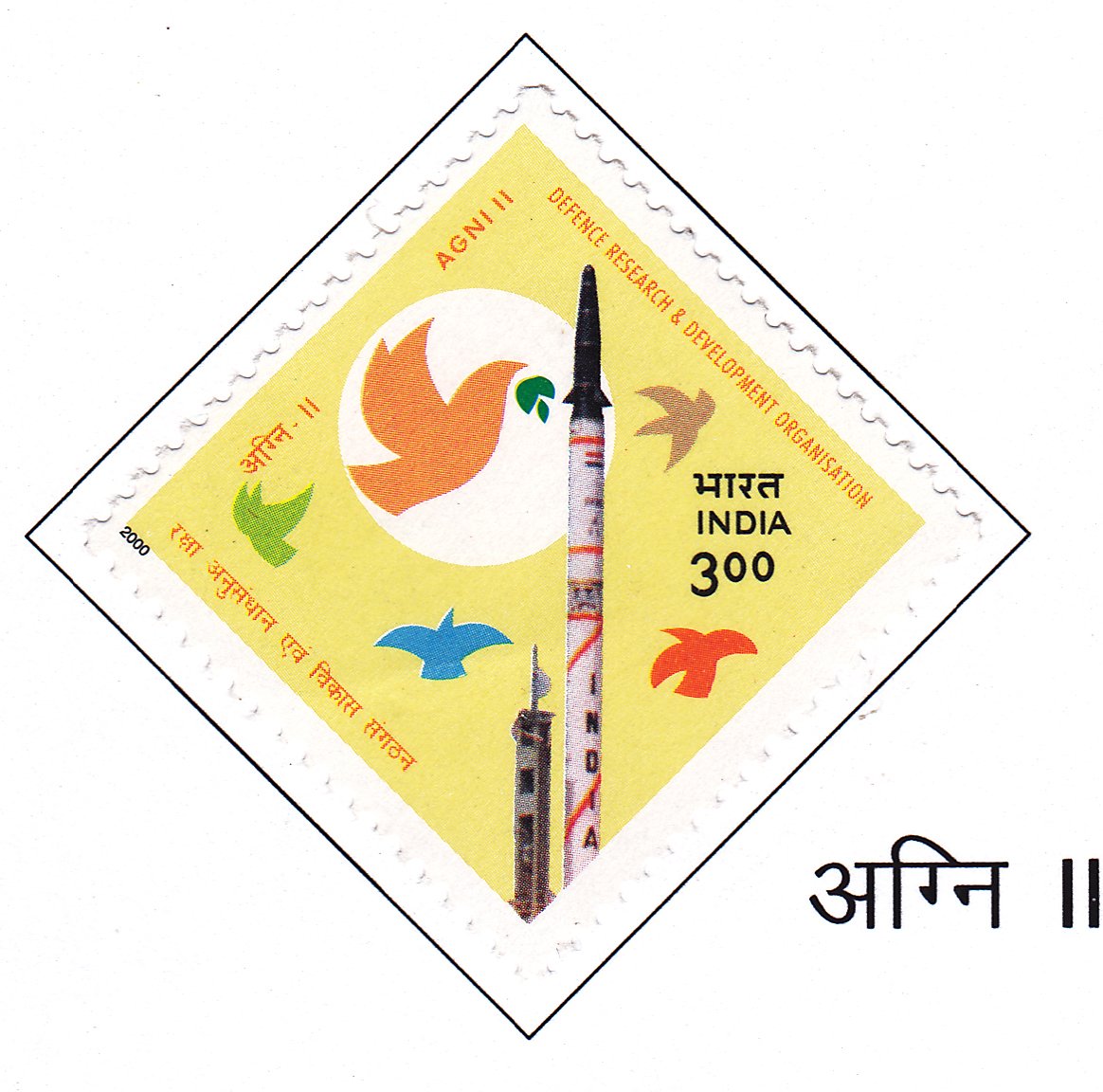
41st Anniversary of DRDO Agni-II
Technical Data
| Date of Issue | January 1, 2000 |
|---|---|
| Denomination | Rs. 3 |
| Quantity | 1,000,000 |
| Perforation | comb 13 x 13½ |
| Printer | Security Printing Press, Nashik |
| Printing Process | Offset Lithography |
| Watermark | No Watermark |
| Colors | Multicolor |
| Credit (Designed By) | Shri Kamleshwar Singh |
| Catalog Codes |
Michel IN 1734 Stamp Number IN 1795 Yvert et Tellier IN 1499 Stanley Gibbons IN 1896 |
| Themes | Anniversaries and Jubilees | Organizations | Peace Doves | Rockets |
India’s Missile Technology and DRDO: Strengthening National Security
India’s technological legacy dates back to the Indus Valley Civilization, reflecting a long tradition of innovation. In modern times, scientists and technologists have continued this legacy by developing advanced technologies that support national security, economic growth, and disaster management.
Role of DRDO in Defence Innovation
The Defence Research and Development Organisation (DRDO) plays a crucial role in strengthening India’s defence capabilities. It leads the development of advanced missile systems under the Integrated Guided Missile Development Programme (IGMDP), working in collaboration with academic institutions, industries, and government agencies.
Advancement in Missile Technology
India has made significant progress in developing a range of missile systems:
- Prithvi missile: Tactical surface-to-surface missile with a range of 150 km (Army) and 250 km (Air Force)
- Agni I missile: Successfully tested re-entry vehicle
- Trishul missile: Short-range quick reaction missile (9 km range)
- Akash missile: Medium-range multi-target missile (25 km range)
- Nag missile: Third-generation fire-and-forget anti-tank missile (4 km range)
These systems demonstrate India’s commitment to achieving self-reliance in defence technology.
Agni-II Missile: A Major Milestone
A significant breakthrough came on April 11, 1999, when Agni II missile was successfully test-fired by the Defence Research and Development Organisation.
Key Features of Agni-II:
- Range of approximately 2000 km
- Two-stage missile using solid propellant
- Rail mobile launcher system
- Advanced guidance and control systems
- Re-entry technology and onboard communication systems
The missile successfully reached its target within 11 minutes, showcasing India’s technological capability in missile development.
Importance for National Security
The development of these missile systems has:
- Strengthened India’s defence preparedness
- Enhanced deterrence capabilities
- Improved technological self-reliance
- Supported the armed forces with modern equipment
India’s defence programme is guided by the principle of “peaceful deterrence”, ensuring security while maintaining strategic stability.
Recognition and Commemoration
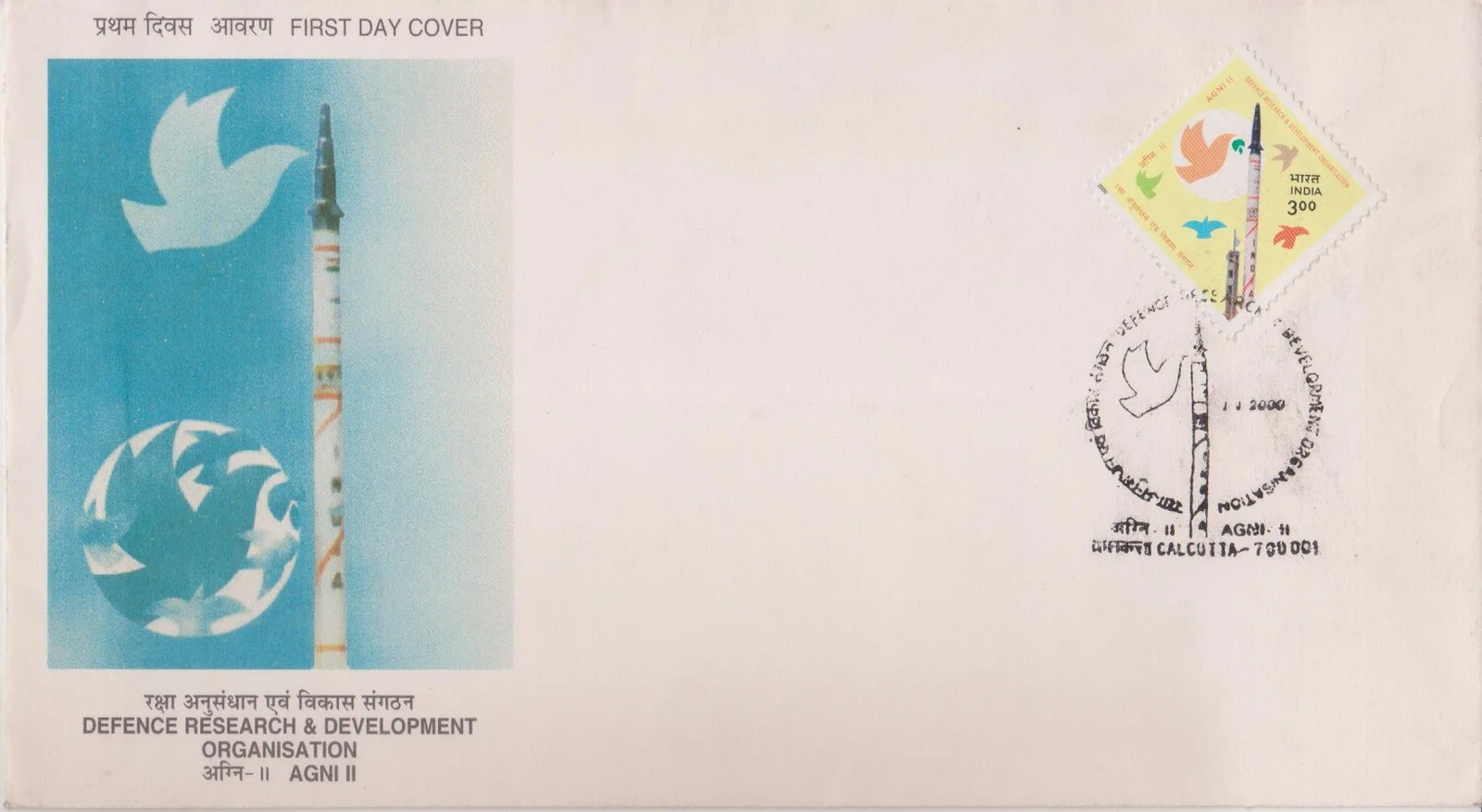
To celebrate this achievement, the Department of Posts issued a commemorative postage stamp highlighting the successful flight testing of the Agni-II missile and the contributions of the Defence Research and Development Organisation.
First Day Cover