
Ashtanga Namaskara
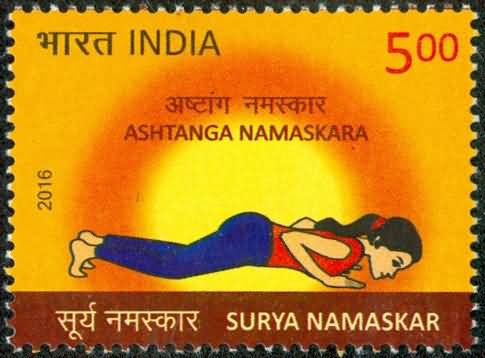
Technical Data
| Stamp Set | Surya Namaskar |
|---|---|
| Date of Issue | June 20, 2016 |
| Denomination | Rs. 5 |
| Quantity | 300,000 |
| Perforation | 13¾ x 13¼ |
| Printer | Security Printing Press, Hyderabad |
| Printing Process | Wet Offset |
| Watermark | No Watermark |
| Colors | Multicolor |
| Credit (Designed By) | Ms. Nenu Gupta |
| Catalog Codes |
Michel IN 2971A Yvert et Tellier IN 2685 Stanley Gibbons IN 3142 |
| Themes | Women |
Introduction
Ashtanga Namaskara, also known as the Eight-Limbed Salutation, is the sixth posture in the Surya Namaskar sequence. The term comes from Sanskrit—“Ashta” meaning eight, “Anga” meaning parts of the body, and “Namaskara”* meaning salutation. In this asana, eight parts of the body touch the ground in a gesture of devotion, surrender, and humility.
Meaning and Significance
Ashtanga Namaskara represents a symbolic and devotional salutation to the Sun, channeling discipline, humility, and spiritual surrender. This posture helps develop respect for the body, mind, and divine energy. It helps balance ego and instills a sense of inner strength and purity. Traditionally, it is considered a posture of self-offering and inner awakening.
How to Practice Ashtanga Namaskara
- From Parvatasana, lower the knees gently to the floor.
- Place the chest and chin on the floor, keeping the hips slightly raised.
- Ensure that eight parts of the body touch the ground:
two palms, two knees, chest, chin, and two feet. - Keep the elbows slightly bent and close to the body.
- The shoulders are drawn back, opening the chest.
- Awareness is maintained on the heart centre, promoting devotion and humility.
Benefits of Ashtanga Namaskara
Ashtanga Namaskara engages multiple muscles and prepares the body for the deep back bend of Bhujangasana. It improves blood flow, flexibility, and mental focus.
Physical Benefits
- Strengthens arms, shoulders, legs, and back
- Enhances flexibility of the spine and neck
- Prepares the body for deeper yogic postures, especially backbends
- Improves posture and core stability
Internal System Benefits
- Stimulates the nervous system
- Enhances blood circulation
- Supports strengthening of the respiratory and digestive systems
Mental and Emotional Benefits
- Develops humility and discipline
- Encourages devotion, surrender, and inner calmness
- Reduces mental stress and cultivates focus
Role in Surya Namaskar
As the 6th posture, Ashtanga Namaskara acts as the transition pose between Parvatasana and Bhujangasana. It brings the body closer to the ground, symbolizing surrender while preparing the spine for the upcoming upward arch. This posture helps balance physical exertion with inner awareness and spiritual grounding within the Surya Namaskar sequence.
Conclusion
Ashtanga Namaskara is a harmonious blend of physical strength and spiritual humility. It encourages balance, prepares the body for further movements, and nurtures a sense of surrender and gratitude. When practiced regularly as a part of Surya Namaskar, it aligns the mind, body, and spirit, contributing to holistic well-being.
Commemorative Stamps on Surya Namaskar
To mark International Yoga Day on 21 June 2016, the Department of Posts released a set of 12 Commemorative Postage Stamps, each depicting one of the 12 positions of Surya Namaskar—highlighting Yoga’s cultural and spiritual significance.
First Day Cover