
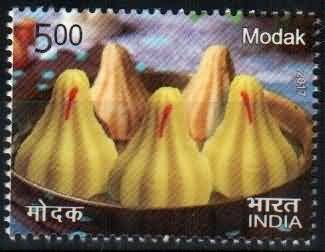
Bhog Prasad – Modak
Technical Data
| Stamp Set | Indian Cuisine |
|---|---|
| Date of Issue | November 3, 2017 |
| Denomination | Rs. 5 |
| Perforation | 13¾ |
| Printer | Security Printing Press, Hyderabad |
| Printing Process | Wet Offset |
| Watermark | No Watermark |
| Colors | Multicolor |
| Credit (Designed By) | Sh. Brahm Prakash |
| Catalog Codes |
Michel IN 3227 Yvert et Tellier IN 2918 Stanley Gibbons IN 3371 |
| Themes | Food | Gastronomy |
Among the sacred offerings in Hindu tradition, Modak is cherished as the beloved sweet of Lord Ganesha and holds a special place in temple bhog culture. Featured in the Bhog Prasad category of the commemorative postage stamp series, Modak represents devotion, purity, and the celebratory spirit of Indian culinary heritage.
A Sweet Beloved by Lord Ganesha
Modak is an integral offering during Ganesh Chaturthi and other rituals dedicated to Lord Ganesha, who is affectionately known as Modakpriya—the one who loves Modak. It is believed that offering Modak to Lord Ganesha brings blessings, happiness, and prosperity to devotees.
Traditional Preparation and Taste
Modak is a steamed or fried Indian sweet dumpling with a delightful blend of flavours and textures. The filling is made of freshly grated coconut and jaggery, gently cooked to bring out a rich caramel-like sweetness. This mixture is enclosed within a soft outer shell prepared using rice flour or wheat flour, often enhanced with khoya or maida for richness.
The iconic shape of Modak, resembling a conical dumpling with pleated edges, signifies a sacred and auspicious form in Hindu tradition.
Symbol of Devotion and Purity in Bhog
As a temple bhog, Modak is offered with devotion and prepared with great care, adhering to purity in ingredients and method. The simplicity of its ingredients paired with its divine association makes Modak more than a sweet—it becomes a sacred blessing for those who receive it as prasad.
A Culinary Icon Beyond Rituals
While deeply rooted in spiritual offerings, Modak has also become a cherished part of Indian culture and festive cuisine. Regions across India have their own versions—like ukadiche modak of Maharashtra, fried modak, and dry fruit modaks—keeping the tradition alive through evolving flavours while retaining its religious essence.
Conclusion
Modak embodies devotion, tradition, and the divine bond between devotees and Lord Ganesha. Its inclusion in the commemorative stamp series celebrates this timeless offering that continues to enrich India’s cultural and spiritual food heritage.