
Bhog Prasad – Peda
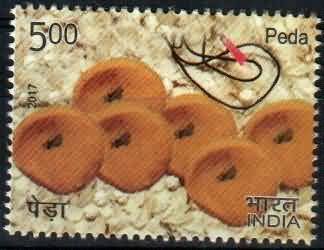
Technical Data
| Stamp Set | Indian Cuisine |
|---|---|
| Date of Issue | November 3, 2017 |
| Denomination | Rs. 5 |
| Perforation | 13¾ |
| Printer | Security Printing Press, Hyderabad |
| Printing Process | Wet Offset |
| Watermark | No Watermark |
| Colors | Multicolor |
| Credit (Designed By) | Sh. Brahm Prakash |
| Catalog Codes |
Michel IN 3230 Stamp Number IN 2974d Yvert et Tellier IN 2921 Stanley Gibbons IN 3374 |
| Themes | Food | Gastronomy |
As part of India’s sacred temple traditions, Peda holds a special place among devotional offerings across the country. Featured in the Bhog Prasad category of the commemorative postage stamp series released by the Department of Posts, Peda represents purity, devotion, and timeless culinary heritage.
A Sweet Rooted in Devotion and Tradition
Among the various temple offerings of India, Peda has earned a reputation for its devotional significance and traditional flavour. In Mathura, the holy birthplace of Lord Krishna, “Mathura ke Peda” is regarded as the most beloved offering to the deity. Worshippers believe that devotion offered with a peda invokes divine blessings, making it an inseparable part of Krishna temples and festivals.
Ingredients and Preparation
The charm of Peda lies in its simplicity and purity. It is traditionally prepared using fresh mawa (khoya), milk, sugar, and ghee, enhanced with a touch of cardamom powder for aroma and flavour. The slow-cooking process gives the Peda its rich, caramelised taste and melt-in-the-mouth texture, making it a favourite devotional sweet across generations.
Symbol of Offering and Celebration
Whether served as temple prasad, festive bhog, or a sacred treat during religious ceremonies, Peda carries spiritual warmth. In temples dedicated to Lord Krishna, especially in Mathura and Vrindavan, devotees eagerly await this holy sweet as a token of divine grace. It embodies devotion, purity, and heartfelt reverence towards the deity.
Cultural and Culinary Significance
Over time, Peda has travelled beyond temple kitchens to become a widely cherished Indian sweet. However, its origins and strongest association still lie in its role as bhog offered to Lord Krishna. Its inclusion in the commemorative stamp series pays tribute to the prasad’s cultural legacy and its place in India’s spiritual and culinary history.
Conclusion
The Peda is not just a sweet—it is a symbol of devotion, purity, and love for the Divine. Its sacred association with temples, especially those worshipping Lord Krishna, makes it an integral part of India’s Bhog Prasad tradition. The postage stamp honouring Peda celebrates this heritage, reinforcing its timeless significance in India’s devotional culture.