
200 Years of Kittur Vijayotsava
Technical Data
| Date of Issue | October 23, 2024 |
|---|---|
| Denomination | Rs. 5 |
| Quantity | 303,850 |
| Perforation | comb13½ x 14 |
| Printer | Security Printing Press, Hyderabad |
| Printing Process | Wet Offset |
| Watermark | No Watermark |
| Colors | Multicolor |
| Credit (Designed By) | Sh. Brahm Prakash |
| Catalog Codes |
Colnect codes IN 2024.10.23-01 Stanley Gibbons IN 3916 |
| Themes | Equestrianism and horse riding | Horses | Independency Activists | Mammals | Queens | Women |
Kittur: Seat of Power (1585–1824 A.D.)
Kittur, formerly known as Geejaganahalli, emerged as a prominent seat of power between 1585 and 1824 A.D. The principality was founded by the brothers Hiremalla Shetty and Chikkamalla Shetty, who were granted the Kittur region by Adilshahi, the king of Bijapur, in recognition of their valor and service.
Initially, the capital was located at Sampagaon. Over time, twelve notable kings ruled Kittur, among whom Allappagouda Desai, Mudimallappagouda Desai, and Mallasarja Desai stand out as the most influential.
Rise of Kittur Under Its Kings
During the reign of Allappagouda Desai, the Kittur Fort and Palace were constructed, firmly establishing Kittur as a significant political and administrative center. These structures symbolized the growing power and prosperity of the principality.
King Mallasarja Desai (1782–1816 A.D.) brought great fame to Kittur. His success, however, aroused the jealousy of Baji Rao II, the Peshwa of Pune, who conspired against him. This led to Mallasarja’s detention and untimely death in 1816.
Queen Channamma’s Leadership
Following the deaths of King Mallasarja and later Shivalinga Rudrasarja, the last king of Kittur, Queen Channamma, the second wife of Mallasarja, assumed the reins of administration. Her leadership marked a defining chapter in Kittur’s history.
The Struggle Against British Rule
After Shivalinga’s death in 1824, the British began interfering in Kittur’s administration. The rude conduct of Collector Thackeray and the seizure of the treasury provoked Queen Channamma’s resistance.
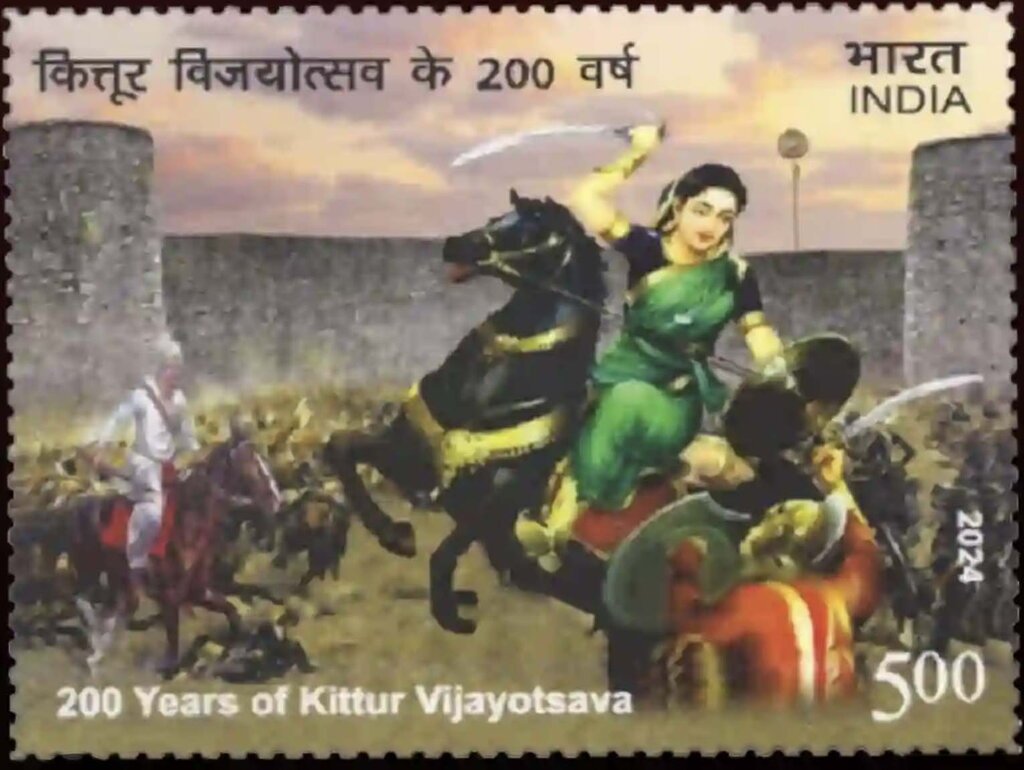
On 23 October 1824, in a historic battle, Kittur’s forces defeated the British, and Collector Thackeray was killed by Amatur Balappa, a courageous bodyguard. This victory was a remarkable assertion of native resistance against colonial authority.
Betrayal and Martyrdom
Despite initial negotiations, the British launched a massive attack on Kittur on 3 December 1824. After three days of intense fighting, betrayal within the ranks led to the defeat of the Kittur army.
Queen Channamma was captured and imprisoned at Bailahongal Fort, where she passed away on 2 February 1829. Her fearless resistance earned her a revered place in history as the “Pole Star of Indian Independence.”
Legacy of Resistance
Queen Channamma’s sacrifice continued to inspire resistance even after her defeat. Loyal warriors such as Sangolli Rayanna led further rebellions against British rule. Though these uprisings were met with severe reprisals, they reflected the unyielding patriotism and courage that defined Kittur’s fight for freedom.
Kittur Palace and Monuments
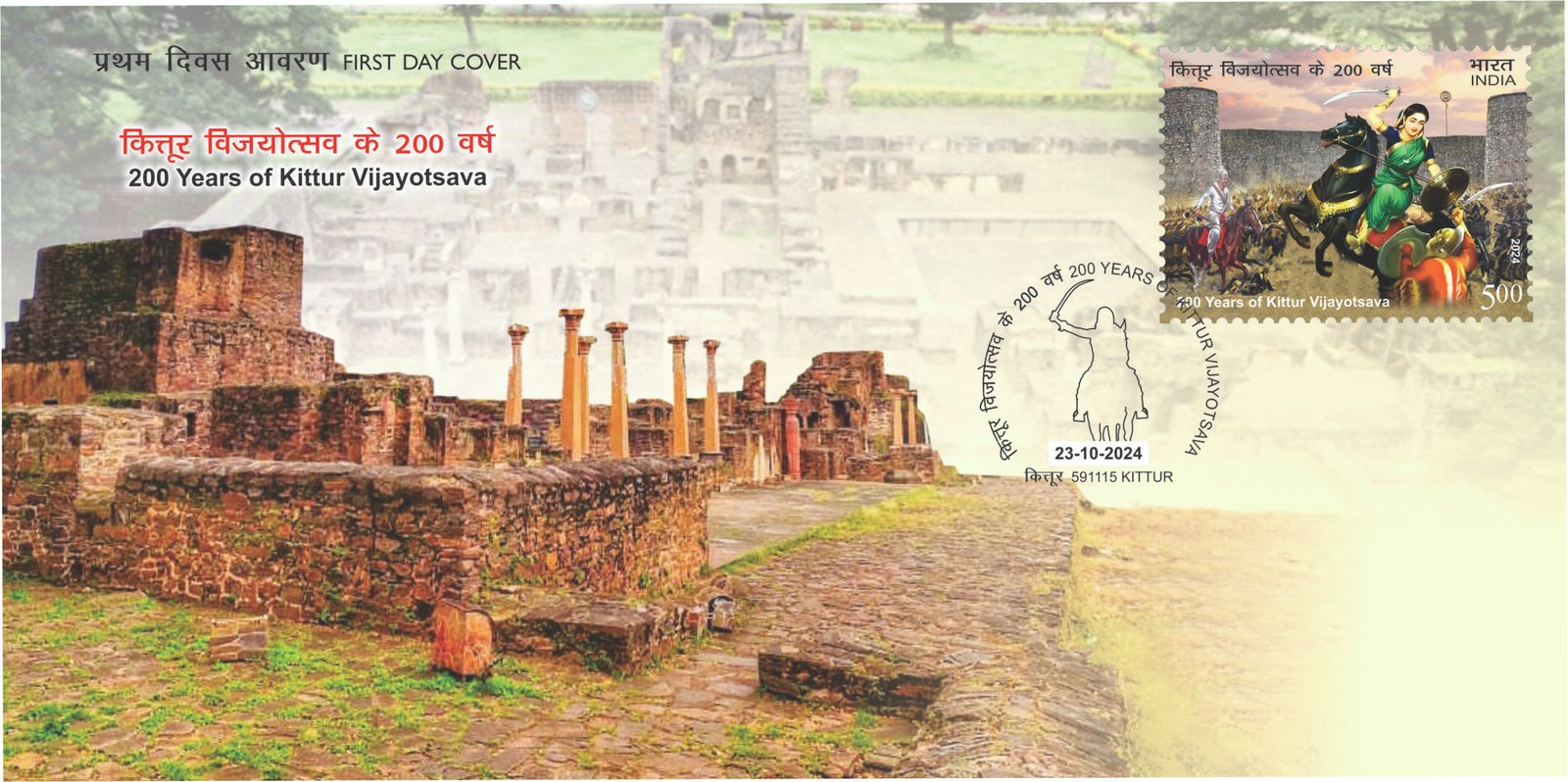
The Kittur Fort and Palace, built between 1660 and 1691 A.D. during Allappagouda Desai’s reign, are notable architectural achievements. Although much of the palace was later demolished by the British, the surviving ruins still reveal its former grandeur.
Key features include guest rooms, a Darbar hall, and an advanced water supply system with copper pipes and stone tanks, offering a glimpse into the sophistication of the era.
Commemorative Postage Stamp
To honor this historic legacy, the Department of Posts is pleased to issue a Commemorative Postage Stamp on 200 Years of Kittur Vijayotsava, paying tribute to Queen Channamma and her unwavering commitment to freedom and resistance against colonial rule.
First Day Cover
Leave a Comment
You must be logged in to post a comment.