
Pongal – Tamil Harvest Festival

Technical Data
| Date of Issue | January 12, 2006 |
|---|---|
| Denomination | Rs. 5 |
| Quantity | 800,000 |
| Perforation | line14 |
| Printer | India Security Press, Nasik |
| Printing Process | Photogravure |
| Watermark | No Watermark |
| Colors | Multicolor |
| Credit (Designed By) | Sh. Sankha Samanta |
| Catalog Codes |
Michel IN 2120 Stamp Number IN 2135 Yvert et Tellier IN 1885 Stanley Gibbons IN 2305 WADP Numbering System - WNS IN001.2006 |
| Themes | Agriculture | Animals (Fauna) | Cattle | Crops | Festivals | Food | Glass and Earthenware |
Pongal is one of the most important festivals of Tamil Nadu and is widely celebrated by Tamil people around the world. It is a harvest festival that expresses gratitude to nature, especially the Sun, the earth, and cattle, for a successful agricultural season. The festival reflects India’s rich agricultural traditions and the spirit of family, sharing, and thanksgiving.
Time and Astronomical Significance
Pongal follows the solar calendar and is celebrated every year from 13 January to 16 January. This period is astronomically significant because the Sun begins its northward journey, a movement known as Uttarayan.
During this time, the Sun moves from the Tropic of Capricorn toward the Tropic of Cancer through the Equator. The festival also marks the end of the North-East Monsoon season.
In many other parts of India, the same period is celebrated as Makar Sankranti.
Four Days of Pongal
1. Bhogi
The first day is called Bhogi. On this day people light a bonfire and throw away old and unwanted items like mats, clothes, and papers into the fire. This ritual symbolizes discarding the old and welcoming a new beginning.
2. Thai Pongal
The second day, Thai Pongal, is the most important day of the festival and is dedicated to the Sun God.
Women decorate the entrances of their homes with beautiful patterns called Kolam, usually drawn with rice flour.
Families gather outdoors and cook sweet rice called Pongal in clay pots. When the pot boils over, people joyfully shout “Pongalo Pongal!”, which symbolizes abundance and prosperity.
Popular dishes prepared on this day include:
- Ven Pongal – a salty rice dish
- Chakkarai Pongal – a sweet dish made with jaggery
3. Mattu Pongal
The third day is Mattu Pongal, dedicated to cattle, which play a vital role in farming.
Cows and bulls are decorated with bells, beads, flowers, and their horns are painted in bright colours. Processions of decorated cattle are taken out, and people offer them fruits and special treats.
In many places, the traditional sport Jallikattu is held, where young men try to seize a prize tied to the horns of a bull, demonstrating courage and skill.
4. Kaanum Pongal
The fourth day is Kaanum Pongal, a day for relaxation and social gatherings. Families visit relatives, enjoy outings, and share meals together.
This day also celebrates the bond between brothers and sisters, similar to the North Indian festival Raksha Bandhan.
Cultural Significance
Pongal represents the gratitude of farmers toward nature and celebrates the importance of family unity, harmony with animals, and community sharing. The festival reflects India’s deep connection with agriculture and traditional values.
Commemorative Stamp
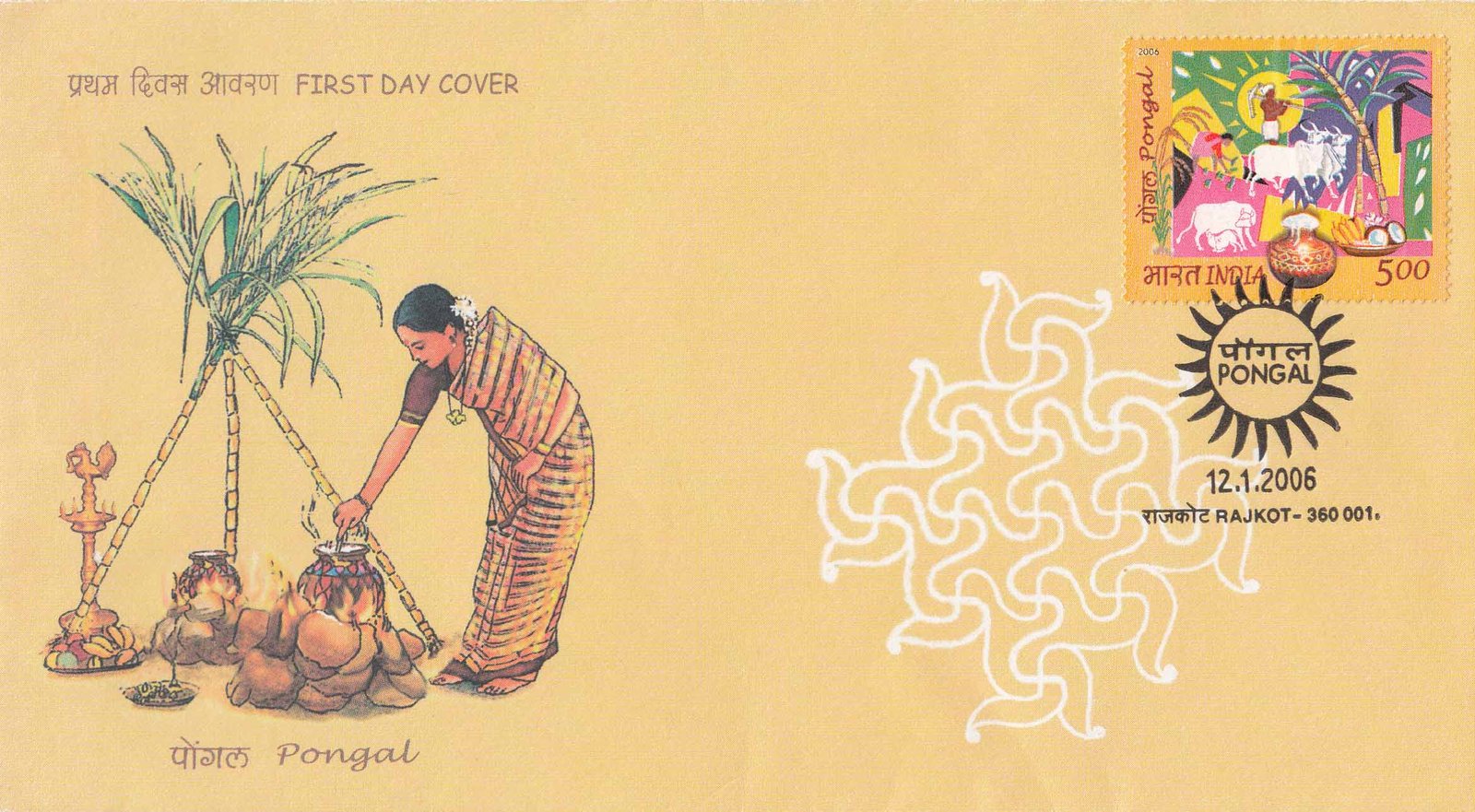
To honour this vibrant cultural tradition, India Post issued a commemorative postage stamp celebrating the joyful festival of Pongal, sharing in the happiness and spirit of thanksgiving that the festival brings to millions of people.
First Day Cover
Leave a Comment
You must be logged in to post a comment.