Raj Kapoor (1924-1988)

Technical Data
| Date of Issue | December 14, 2001 |
|---|---|
| Denomination | Rs. 4 |
| Quantity | 400,000 |
| Perforation | comb 13 |
| Printer | Calcutta Security Printers Ltd |
| Printing Process | Offset Lithography |
| Watermark | No Watermark |
| Colors | Multicolor |
| Credit (Designed By) | Sh. Sankha Samanta |
| Catalog Codes |
Michel IN 1880 Stamp Number IN 1931 Yvert et Tellier IN 1645 Stanley Gibbons IN 2045 |
| Themes | Actors | Commemoration | Famous people | Men | Movies |
The Legendary Showman of Indian Cinema
Raj Kapoor (1924–1988), often regarded as the “Showman of Indian Cinema,” carved a unique place in film history through his remarkable work as an actor, director, and producer. His contributions shaped the golden era of Indian cinema and left a lasting legacy.
Early Life and Film Debut
Born to the legendary actor and theatre personality Prithviraj Kapoor, Raj Kapoor was destined for the world of cinema. He made his acting debut at the young age of eleven in the film Inquilaab, directed by Debaki Bose.
By the time he directed his first film Aag in 1948, he had already appeared in several films, showcasing his early talent and passion for filmmaking.
Rise to Stardom and Iconic Collaborations
Raj Kapoor’s second directorial venture brought him immense success and established his on-screen pairing with Nargis as one of the most iconic romantic duos in Indian cinema.
In 1950, he founded RK Studios in Chembur, Mumbai, which became one of the most prestigious film studios in India.
Masterpieces and Global Recognition
The release of Awara in 1951 marked a turning point in Raj Kapoor’s career. Widely regarded as his masterpiece, the film resonated with audiences not only in India but across the world. Its powerful message of truth and love in a flawed society earned it international acclaim.
Films like Boot Polish and Jaagte Raho, produced by him and directed by Prakash Arora and Shambhu Mitra respectively, stood out for their realism and social relevance, addressing pressing societal issues with technical excellence.
Iconic Films and Creative Evolution
Another landmark film, Shri 420, further popularized Raj Kapoor’s “lovable tramp” character, inspired by Charlie Chaplin.
In 1964, he created Sangam, his first color film, which became a major commercial success. However, his ambitious project Mera Naam Joker did not perform well at the box office.
Learning from this setback, Raj Kapoor made a strong comeback with Bobby in 1973, introducing fresh faces including his son Rishi Kapoor and Dimple Kapadia. The film’s youthful appeal made it a massive hit.
Despite changes in the film industry during the 1970s and 1980s, Raj Kapoor continued to captivate audiences with films like Satyam Shivam Sundaram and Prem Rog.
Unique Storytelling Style and Themes
Raj Kapoor’s deep understanding of religion, folklore, and human emotions allowed him to create films that appealed to a wide audience. He skillfully blended fact and fiction, crafting narratives that were both entertaining and meaningful.
His films often highlighted the struggles of the underprivileged, portraying them with empathy and dignity. He transformed the “underdog” into a relatable and admirable hero, making his storytelling both impactful and timeless.
Awards and Lasting Legacy
Throughout his illustrious career, Raj Kapoor received numerous accolades, including the prestigious Dadasaheb Phalke Award and the Padma Bhushan.
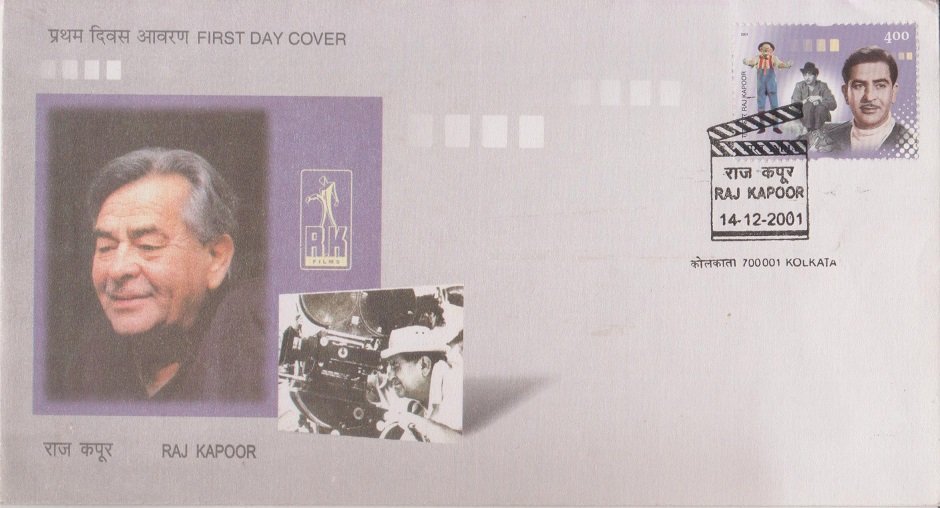
In recognition of his immense contribution to Indian cinema, the Department of Posts honored him with a commemorative postage stamp, celebrating his legacy as one of India’s greatest filmmakers.
First Day Cover