
The Ramayana 8
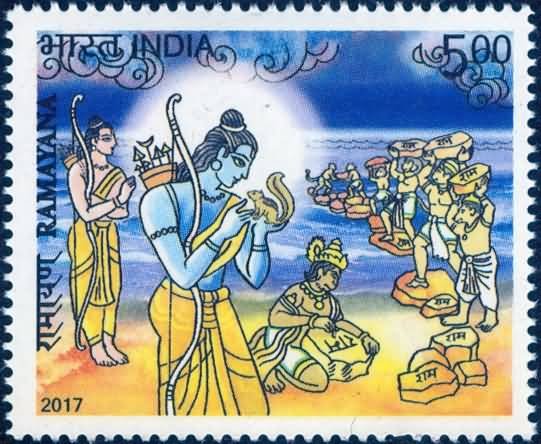
Technical Data
| Date of Issue | September 22, 2017 |
|---|---|
| Denomination | Rs. 5 |
| Perforation | 13 x 13¾ |
| Printer | Security Printing Press, Hyderabad |
| Printing Process | Wet Offset |
| Watermark | No Watermark |
| Colors | Multicolor |
| Credit (Designed By) | Sh. Sankha Samanta Smt. Alka Sharma |
| Catalog Codes |
Michel IN 3209A Yvert et Tellier IN 2900 |
| Themes | Literature |
Commemorative Postage Stamp on Ramayana
Ram – The Eternal Ideal
“Ram” – a sacred chant, a divine presence, and a symbol of righteousness – represents the supreme ideal of virtue, compassion and duty. Considered Maryada Purushottam, Lord Ram embodies the highest standards of conduct. The story of Ram, first composed by Maharishi Valmiki around 500 BCE and known as the Ramayana, has transcended time, geography and culture. Its universal values continue to inspire millions across the globe.
Ramayana – A Timeless Epic
The Ramayana, originally written in Sanskrit, narrates the life of Prince Ram of Ayodhya through his trials, virtues and triumphs. Over centuries, the epic has been retold in diverse languages and cultural contexts, enriching its legacy. Some renowned versions include:
- Valmiki Ramayana (Sanskrit) – the original epic
- Adhyatma Ramayana – attributed to Veda Vyasa
- Kamba Ramayana – by Kambar (Tamil, 12th century)
- Krittivasi Ramayana – by Krittibas Ojha (Bengali)
- Ramcharitmanas – by Goswami Tulsidas in Awadhi (15th century)
Among these, Ramcharitmanas remains immensely popular for its teachings on devotion (bhakti), righteousness (dharma), moral conduct and humility.
A Universal Story with Global Reach
The Ramayana has travelled far beyond India’s borders. Early Indian migrants carried it to Suriname, Fiji, Mauritius, Guyana and other nations, where it provided emotional strength and cultural identity. Several Asian countries — Myanmar, Indonesia, Cambodia, Thailand, Laos, Malaysia, Vietnam and the Philippines — adopted the epic into their own folklore, often incorporating local cultural elements.
Within India too, various communities have embraced the epic, creating regional versions and performances that enrich the living Ramayana tradition.
Key Episodes from the Epic
- Marriage to Sita: Under Sage Vishwamitra’s guidance, Ram and Lakshman reach Mithila. Ram breaks the divine bow Shiva Dhanush and weds Princess Sita, daughter of King Janak.
- Exile and Devotion: Queen Kaikeyi, influenced by her maid Manthara, demands Ram’s exile for 14 years. Ram accepts the command with grace and departs with Sita and Lakshman.
- Symbol of Duty: Bharat pleads Ram to return, but Ram stands firm on his father’s promise. Bharat carries Ram’s wooden sandals (paduka) to rule on his behalf.
- Compassionate Encounters: The devotion of Kevat, who ferries them across the Ganga, and Shabari, who lovingly offers tasted berries to Ram, reflect the inclusiveness of his love.
- Abduction of Sita: Ravana abducts Sita. The valiant bird Jatayu sacrifices his life attempting to stop him, and informs Ram before dying.
- Hanuman’s Devotion: Hanuman leaps across the ocean to Lanka, meets Sita at Ashok Vatika, reassures her with Ram’s ring, and becomes the symbol of selfless service.
- Victory of Good over Evil: Ram defeats Ravana and returns to Ayodhya. His reign — Ram Rajya — is remembered as the era of justice, prosperity, peace and equality.
Enduring Legacy
The Ramayana is not merely a story of a king; it is a guide to righteous living. Through its ideals of duty, sacrifice, loyalty, truth and compassion, the epic continues to inspire humanity. Its spiritual, cultural and philosophical relevance remains timeless.
Philatelic Tribute
To honour this great epic, a Commemorative Postage Stamp on Ramayana was issued, celebrating the values, legacy and universal appeal of Lord Ram’s life and teachings.
First Day Cover
