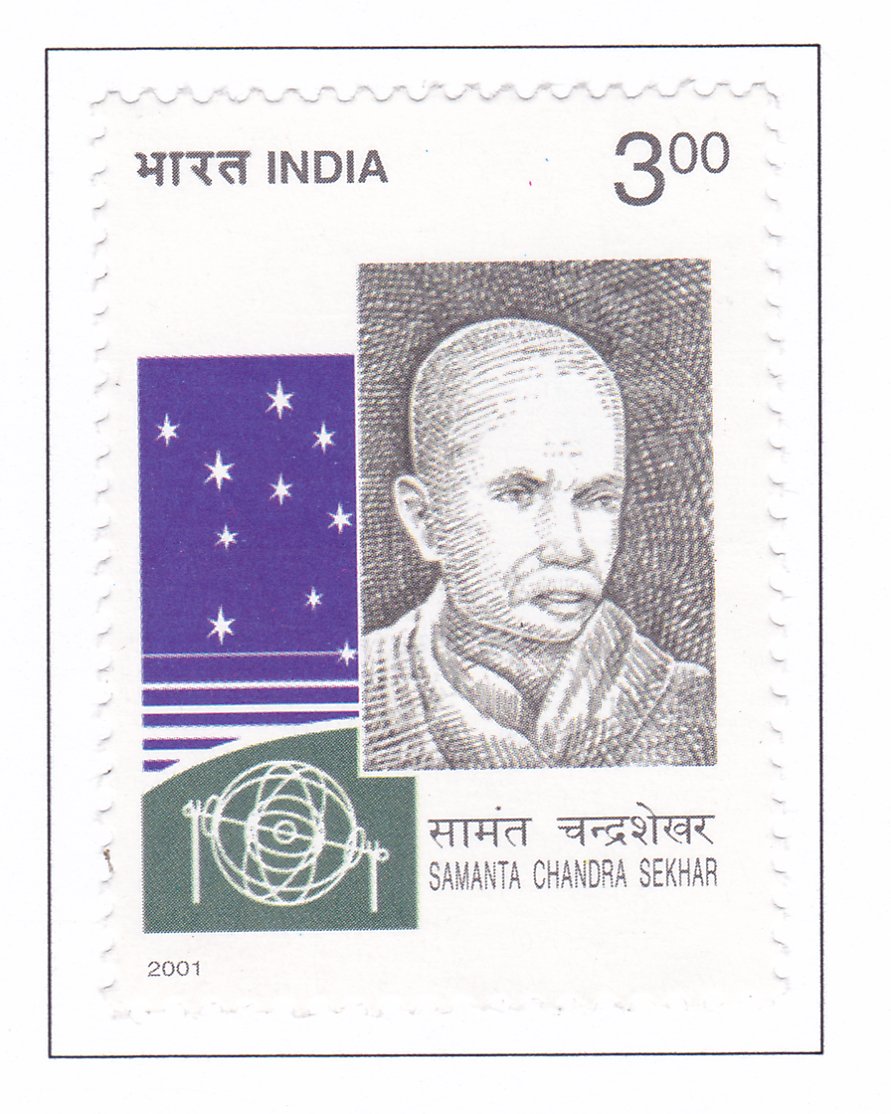
Samanta Chandra Sekhar (1835-1904)
Technical Data
| Date of Issue | June 11, 2001 |
|---|---|
| Denomination | Rs. 3 |
| Quantity | 400,000 |
| Perforation | comb 13 |
| Printer | Madras Security Printers |
| Printing Process | Offset Lithography |
| Watermark | No Watermark |
| Colors | Multicolor |
| Credit (Designed By) | Sh. Sankha Samanta |
| Catalog Codes |
Michel IN 1834 Stamp Number IN 1893 Yvert et Tellier IN 1600 Stanley Gibbons IN 2000 |
| Themes | Astronomers | Commemoration | Famous people | Instruments | Men | Stars |
Pioneer of Traditional Indian Astronomy
Samanta Chandra Sekhar (1835–1904) was a renowned figure in traditional Indian astronomy. His contributions were so significant that some scholars place him alongside legendary astronomers like Aryabhata, Varahamihira, Brahmagupta, and Bhaskara II.
Early Life and Passion for Astronomy
From a young age, Samanta Chandra Sekhar developed a keen interest in astronomy. His father introduced him to the identification of stars, which sparked a lifelong passion.
Through self-study and observation, he gained deep insights into celestial movements. Noticing discrepancies between actual planetary positions and predictions made in ancient astronomical texts (Siddhantas), he began conducting independent observations both day and night.
Creation of Siddhanta Darpana
At the age of 23, Chandra Sekhar started recording his observations and formulating new ideas. A few years later, he began compiling them into a comprehensive treatise titled Siddhanta Darpana. The manuscript was completed in 1869 when he was 34, but he continued refining it for over two decades before finalizing it in 1892.
Structure and Scientific Contributions
Siddhanta Darpana is divided into five sections:
- Mean motion of planets
- True positions of planets
- Motion in relation to space, time, and direction
- Mathematical concepts, including spherical trigonometry
- Methods of time calculation
Through this work, Chandra Sekhar critically examined and refined centuries of astronomical knowledge. Written in elegant Sanskrit verse, the text is both a scientific and literary masterpiece.
Even today, the almanac widely used in Odisha is based on the principles outlined in Siddhanta Darpana, highlighting its lasting practical relevance.
Observations Without Modern Instruments
Remarkably, Samanta Chandra Sekhar conducted his observations without modern astronomical instruments. Using simple tools—some designed by himself—he achieved extraordinary accuracy.
His contributions covered all four major aspects of astronomy:
- Observation
- Calculation
- Measurement techniques
- Theoretical modeling
His work earned international recognition, with journals like Nature praising his genius. He was even compared to Tycho Brahe and described as one of the greatest “naked-eye astronomers.”
Legacy and Modern Connection
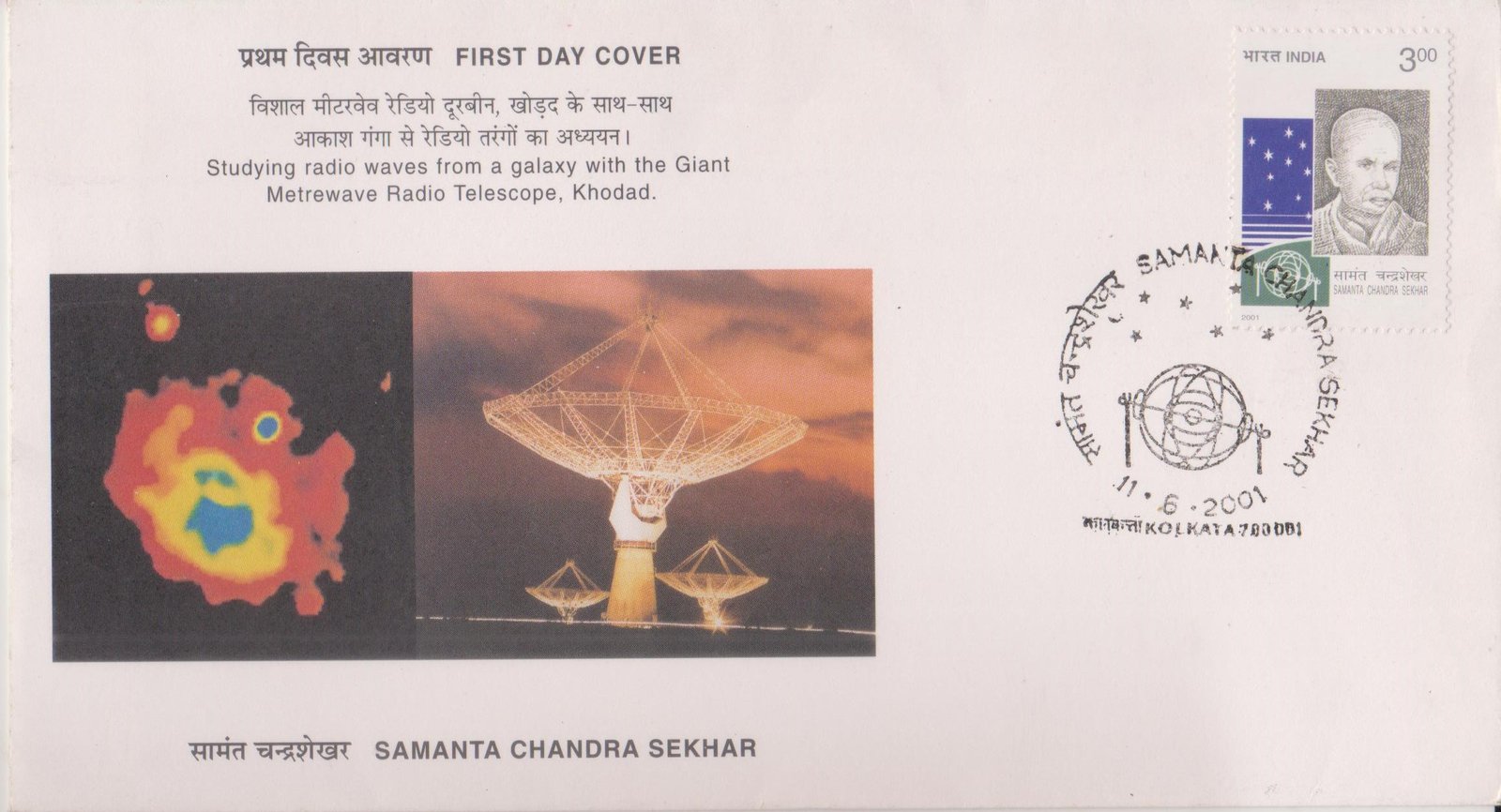
The legacy of traditional Indian astronomy, represented by Samanta Chandra Sekhar, finds its modern counterpart in advanced scientific instruments like the Giant Metrewave Radio Telescope near Pune.
While Sekhar explored the cosmos with the naked eye, modern astronomy continues his mission using cutting-edge technology, showcasing the evolution of India’s astronomical heritage.
Commemoration
Samanta Chandra Sekhar is remembered as a visionary who revived and advanced traditional Indian astronomy. In honor of his remarkable contributions, the Department of Posts issued a commemorative postage stamp celebrating his legacy.
First Day Cover