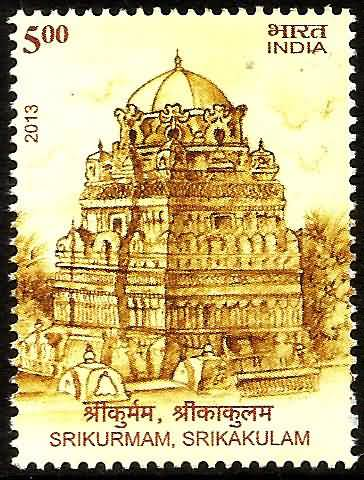
Srikurmam Temple
Technical Data
| Stamp Set | Architectural Heritage of India |
|---|---|
| Date of Issue | April 11, 2013 |
| Denomination | Rs. 5 |
| Quantity | 400,000 |
| Perforation | 13¾ |
| Printer | Security Printing Press, Hyderabad |
| Printing Process | Wet Offset |
| Watermark | No Watermark |
| Colors | Multicolor |
| Credit (Designed By) | |
| Catalog Codes |
Michel IN 2707 Yvert et Tellier IN 2464 Stanley Gibbons IN 2927 WADP Numbering System - WNS IN019.2013 |
| Themes | Architecture | Temples |
Introduction
The Srikurmam Temple, located in Srikurmam village near Srikakulam in Andhra Pradesh, is a uniquely significant shrine dedicated to Lord Vishnu in his Kurma (tortoise) avatara. As one of the rare temples in the world devoted to this incarnation, it stands as an important centre of ancient Indian spirituality and temple culture.
Historical Significance
Believed to have been originally built before the 2nd century AD and later re-developed in the 7th century AD, the temple carries the imprint of several dynasties over the centuries. Notably, both the Chola and Kalinga rulers contributed to its expansion and renovation, strengthening its role as a sacred and cultural landmark in the region.
Architectural Features
The Srikurmam Temple is the only temple in this region constructed in the ancient Dravidian architectural style. Its grandeur is prominently displayed through its majestic five-storied gopuram, a notable example of early South Indian temple architecture.
One of the temple’s striking features is its 200 granite pillars, many of which bear inscriptions in Devanagari script dating from the 11th to the 19th century AD. These inscriptions provide valuable historical insights into the temple’s evolution.
Artistic Elements
The temple is renowned for its 41 mural panels that adorn its interior walls. These paintings depict various mythological episodes and are stylistically similar to the world-famous frescoes of the Ajanta Caves in Maharashtra. Their vibrant narrative style reflects the artistic mastery of ancient Indian painters.
Unique Features
A distinctive aspect of the Srikurmam Temple is the presence of two Dhwajastambams (flag masts) — one at the front and another at the back of the shrine. This unusual arrangement exists because the deity faces the western side, which is considered the back of the temple, making it architecturally unique among Vishnu temples.
Festivals
The most prominent festival celebrated here is Dolotsavam, held annually in the month of March. This vibrant celebration attracts nearly 50,000 pilgrims, who gather to participate in the rituals, festivities, and spiritual offerings.
Philatelic Recognition
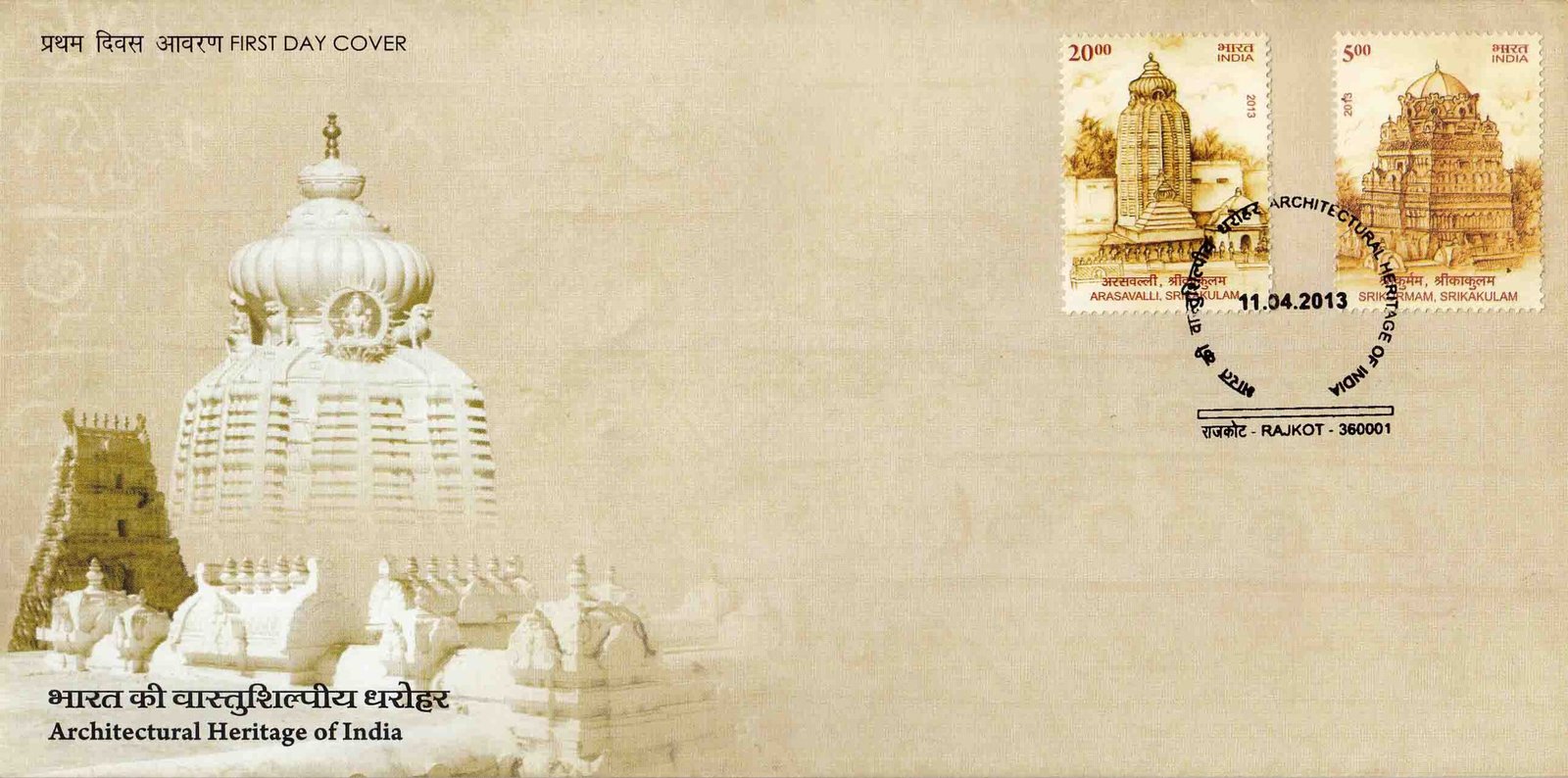
Highlighting its cultural, architectural, and historical value, the Department of Posts has included the Srikurmam Temple in its series of Commemorative Postage Stamps dedicated to the Architectural Heritage of India, further acknowledging its national importance.
First Day Cover