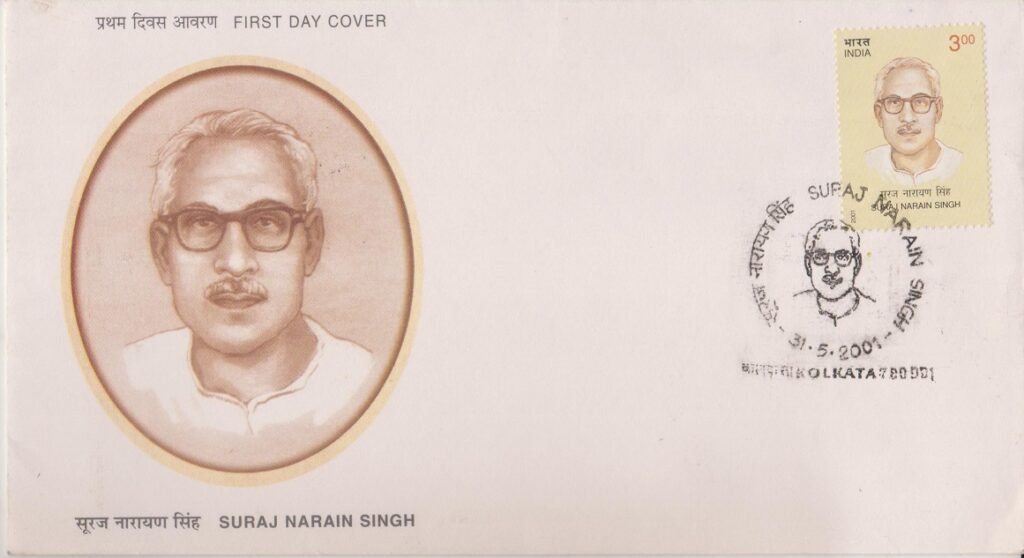
Suraj Narain Singh (1908-1973)
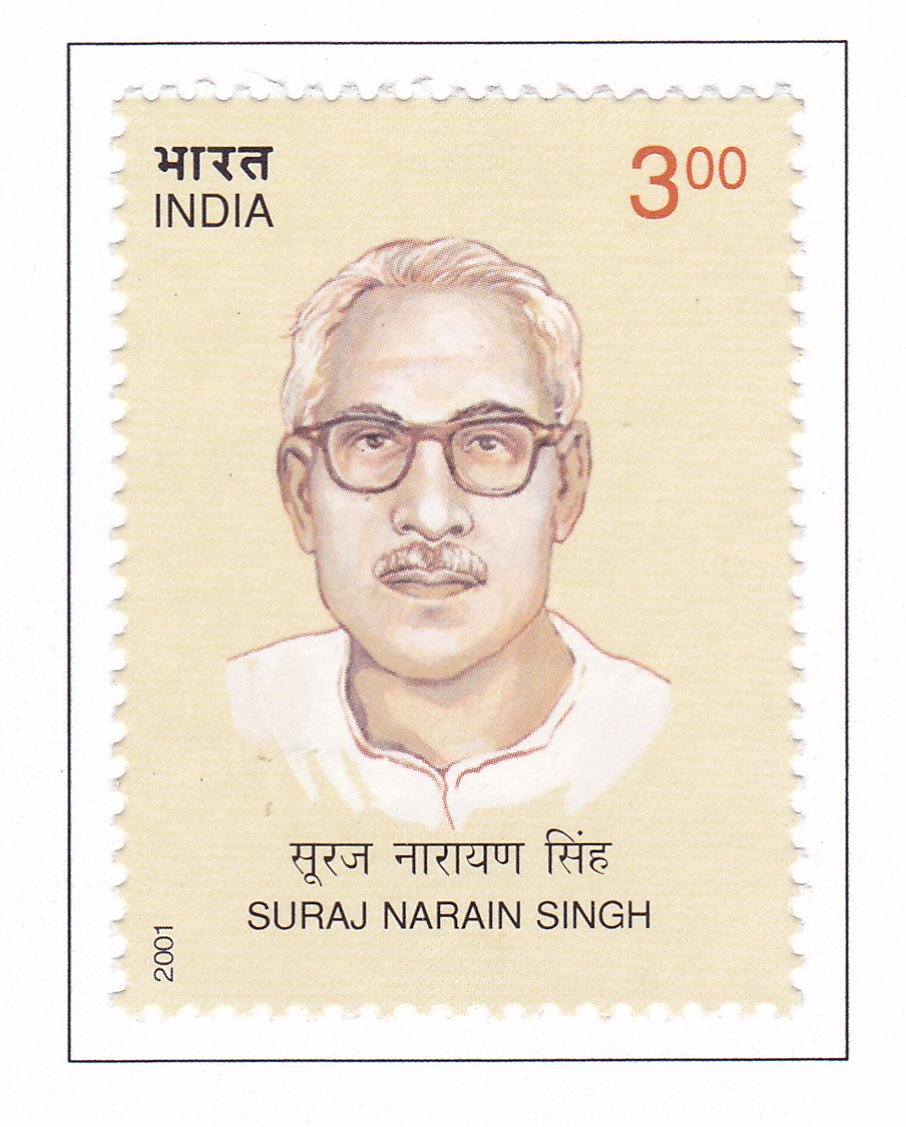
Technical Data
| Date of Issue | May 31, 2001 |
|---|---|
| Denomination | Rs. 3 |
| Quantity | 400,000 |
| Perforation | comb 13 |
| Printer | Madras Security Printers |
| Printing Process | Offset Lithography |
| Watermark | No Watermark |
| Colors | Multicolor |
| Credit (Designed By) | Sh. Sankha Samanta |
| Catalog Codes |
Michel IN 1832 Stamp Number IN 1891 Yvert et Tellier IN 1599 Stanley Gibbons IN 1998 |
| Themes | Commemoration | Famous people | Men | Optical Instruments | Politicians |
A Revolutionary Nationalist of Bihar
Suraj Narain Singh (1908–1973) was one of the most prominent revolutionary nationalists in Bihar, playing a vital role during a turbulent phase of India’s freedom struggle. For nearly two decades, he stood at the forefront of revolutionary activities, inspiring countless others with his courage and commitment.
Role of Revolutionary Nationalism in India’s Freedom Struggle
In the early twentieth century, revolutionary nationalism brought a sense of heroism and intensity to the Indian independence movement. Young revolutionaries aimed to challenge British authority through bold and often risky actions. While they underestimated the strength of British imperialism at its peak, their sacrifices were far from futile. Their bravery instilled pride among Indians and boosted public morale during times of severe colonial repression.
Early Life and Influence of Nationalist Ideals
Suraj Narain Singh was drawn to the national movement at a young age. His participation in the Non-Cooperation Movement of 1921 led to his expulsion from school. Undeterred, he continued his education at Kashi Vidyapith in Varanasi, a hub of nationalist thought.
He was deeply influenced by the writings of Bal Gangadhar Tilak and Bankim Chandra Chattopadhyay, whose patriotic ideas shaped his worldview. The execution of Bhagat Singh proved to be a turning point, inspiring him to dedicate his life fully to revolutionary activities.
Revolutionary Activities and Contribution
Suraj Narain Singh led a life of courage and defiance. He organized numerous anti-government actions and actively worked to disrupt British administration. During the Quit India Movement, he played a significant role by leading raids on police stations, treasuries, and other government establishments.
He also collaborated with prominent leaders such as Yogendra Shukla, Baikunth Shukla, and Jai Prakash Narain. Beyond his revolutionary work, he supported the causes of peasants and workers, contributing to the growth of Kisan and trade union movements.
Due to his involvement in revolutionary activities, he faced multiple arrests and imprisonments, yet remained steadfast in his mission.
Political Life After Independence
After India gained independence, Suraj Narain Singh continued to serve society through active participation in politics. He became an important leader of the Praja Socialist Party and served as a member of the Bihar Legislative Assembly.
Ideology and Vision
Suraj Narain Singh was known for his progressive and modern outlook. He strongly opposed the caste system and criticized exploitative practices within organized religion. He believed in universal brotherhood and regarded service to humanity as the highest form of religion.
He also advocated for:
- National education over Western systems
- Abolition of the zamindari system
- Consolidation of land holdings
- Promotion of mechanized agriculture
Legacy and Recognition
Suraj Narain Singh’s life remains a powerful example of dedication, bravery, and social commitment. His contributions to India’s independence and his progressive ideals continue to inspire generations.
In recognition of his immense contribution, the Department of Posts issued a commemorative postage stamp in his honour, celebrating his legacy as a distinguished nationalist leader.
First Day Cover