
Bhai Jeevan Singh
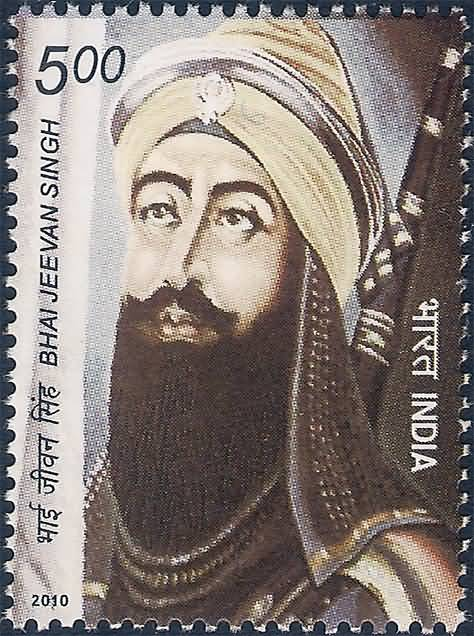
Technical Data
| Date of Issue | December 23, 2010 |
|---|---|
| Denomination | Rs. 5 |
| Quantity | 300,000 |
| Perforation | 13 |
| Printer | India Security Press, Nashik |
| Printing Process | Wet Offset |
| Watermark | No Watermark |
| Colors | Multicolor |
| Credit (Designed By) | Smt. Alka Sharma |
| Catalog Codes |
Michel IN 2542 Stamp Number IN 2480 Stanley Gibbons IN 2782 WADP Numbering System - WNS IN087.2010 |
| Themes | Commemoration | Famous people | Generals | Men |
Brave Sikh General and Companion of Guru Gobind Singh
Bhai Jeevan Singh, popularly known as Bhai Jaita Singh, holds a place of great honour in Sikh history. Revered for his courage, devotion, and supreme sacrifice, he was a trusted companion of the Sikh Gurus and played a crucial role during one of the most defining moments in Sikh history.
A commemorative postage stamp was issued to mark the 350th Birth Anniversary of Baba Jeevan Singh (Bhai Jaita), honouring his legacy as a Sikh General and devoted companion of Guru Gobind Singh.
Early Life of Bhai Jaita Singh
Bhai Jaita Singh was born on 13 December 1661 at Patna to Bhai Sada Nand Ji and Mata Premo Ji. The ninth Sikh Guru, Guru Tegh Bahadur, himself gave him the name “Jaita.”
His childhood was spent in the household of Guru Tegh Bahadur, where he grew up alongside Gobind Rai, who later became Guru Gobind Singh. This close association shaped his spiritual upbringing and deep devotion to the Sikh faith.
Association with Guru Tegh Bahadur and Imprisonment
Guru Tegh Bahadur marched to Delhi in protest against the religious intolerance and tyranny of the Mughal Emperor Aurangzeb. He was arrested at Agra along with several devoted Sikhs, including Bhai Jaita Singh, and imprisoned in Delhi.
With the Guru’s permission, and with assistance from Khwaja Abdullah, the Kotwal of Chandni Chowk, acting under the directions of Bibi Zainab-un-Nissa (daughter of Aurangzeb), Bhai Jaita, Bhai Uday, and Bhai Gurditta managed to escape from imprisonment.
During his incarceration, Guru Tegh Bahadur composed 57 shlokas and entrusted them, along with a letter and sacred items, to Bhai Jaita to deliver safely to Anandpur Sahib for Sahibzada Gobind Rai. Bhai Jaita successfully fulfilled this sacred duty and returned to Delhi.
The Supreme Sacrifice and Heroic Mission
On 11 November 1675, Guru Tegh Bahadur was martyred in Delhi by beheading. The Mughal authorities proclaimed that anyone who dared to claim the Guru’s head or body would meet the same fate.
In an extraordinary act of courage and sacrifice, Bhai Sada Nand, father of Bhai Jaita, directed him to exchange his own head and body with that of the Guru so that the sacred remains could be taken to Anandpur Sahib. This unparalleled sacrifice remains one of the most extraordinary acts in human history.
Despite strict surveillance, armed guards, torrential rain, and hostile conditions, Bhai Jaita courageously recovered the severed head of Guru Tegh Bahadur and travelled nearly 300 kilometres to reach Kiratpur Sahib. From there, he sent word to Guru Gobind Singh.
On 16 November 1675, the last rites of Guru Tegh Bahadur were performed. Guru Gobind Singh asked Bhai Jaita to recount the events in Delhi leading to the martyrdom. His narration left a profound and lasting impression on the young Guru.
Role in the Establishment of the Khalsa
The sacrifice of Guru Tegh Bahadur and the devotion of Bhai Jaita deeply influenced Guru Gobind Singh. These events played a significant role in paving the way for the establishment of the Khalsa Order in 1699, a turning point in Sikh history.
Upon initiation into the Khalsa in 1699, Guru Gobind Singh renamed Bhai Jaita as Baba Jeevan Singh. From that moment onward, he became a prominent Sikh warrior and general.
Military Leadership and Martyrdom
Baba Jeevan Singh participated in at least fourteen battles alongside Guru Gobind Singh. He was known not only for his spiritual depth and devotion but also for his strategic brilliance and military leadership.
During the Battle of Garhi of Chamkaur in 1704, Guru Gobind Singh conferred upon him the supreme honours of the “Kalgi,” the “Armaments,” and the “Pushaka.” These symbols reflected the Guru’s immense respect and trust in him.
Baba Jeevan Singh attained martyrdom while fighting the Mughal army at the Garhi of Chamkaur on 23 December 1704. His sacrifice remains a shining example of courage, loyalty, and faith.
Commemorative Postage Stamp on the 350th Birth Anniversary
To honour his extraordinary life and sacrifice, a commemorative postage stamp was issued on the 350th Birth Anniversary of Baba Jeevan Singh (Bhai Jaita). The stamp pays tribute to his role as a Sikh General, companion, and devoted friend of Guru Gobind Singh.
This commemorative issue holds special significance for philatelists and those interested in Sikh history, as it celebrates the bravery and devotion of one of the most revered figures in Sikh tradition.
Legacy of Baba Jeevan Singh (Bhai Jaita)
Baba Jeevan Singh’s life reflects unwavering devotion, fearless courage, and absolute faith in the Sikh Gurus. His heroic actions during one of the most critical moments in Sikh history helped preserve the honour and legacy of Guru Tegh Bahadur.
His name continues to inspire generations as a symbol of sacrifice, loyalty, and spiritual strength within Sikh history.
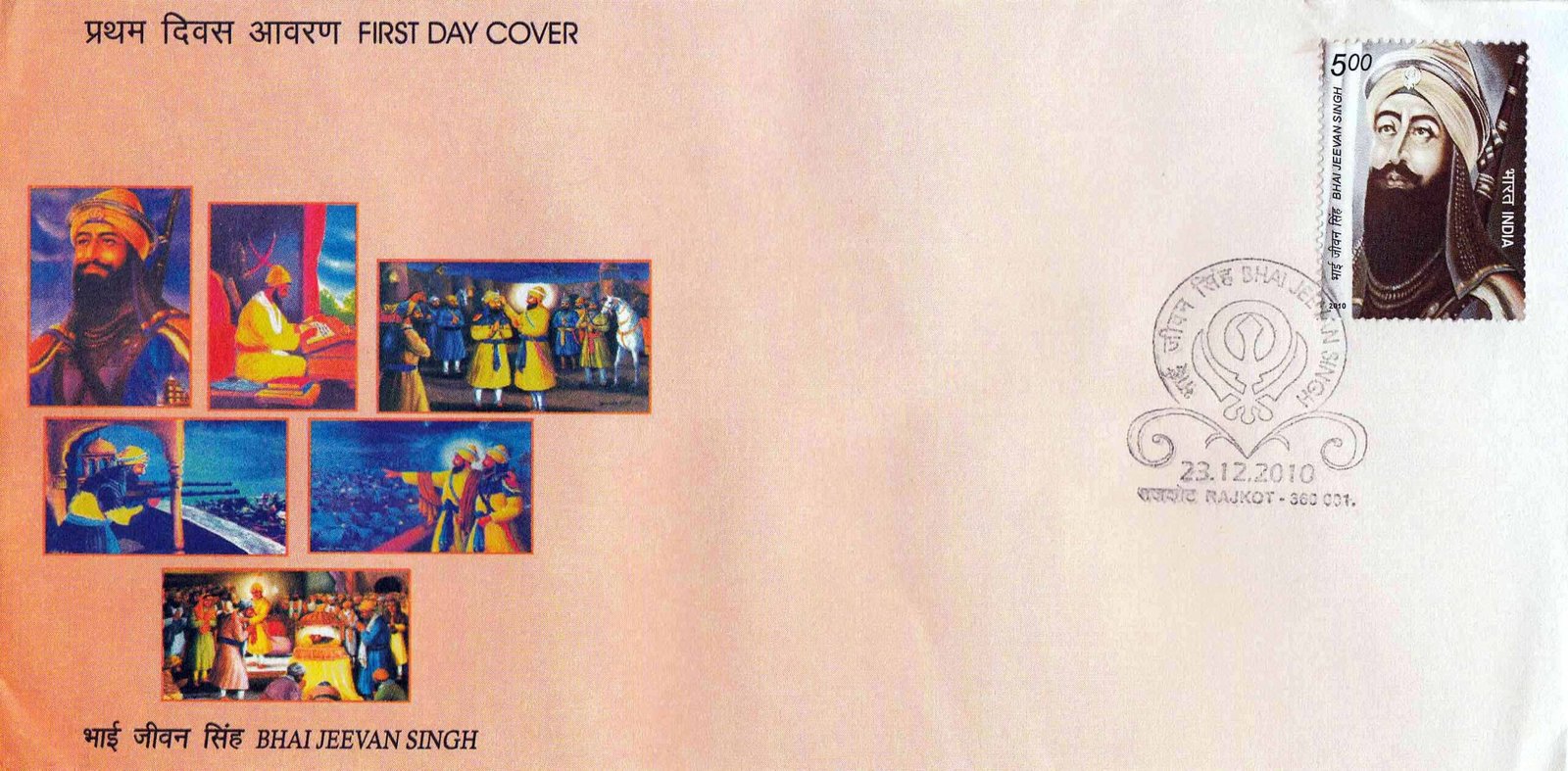
First Day Cover
Leave a Comment
You must be logged in to post a comment.