
Polar Bear (Ursus maritimus)
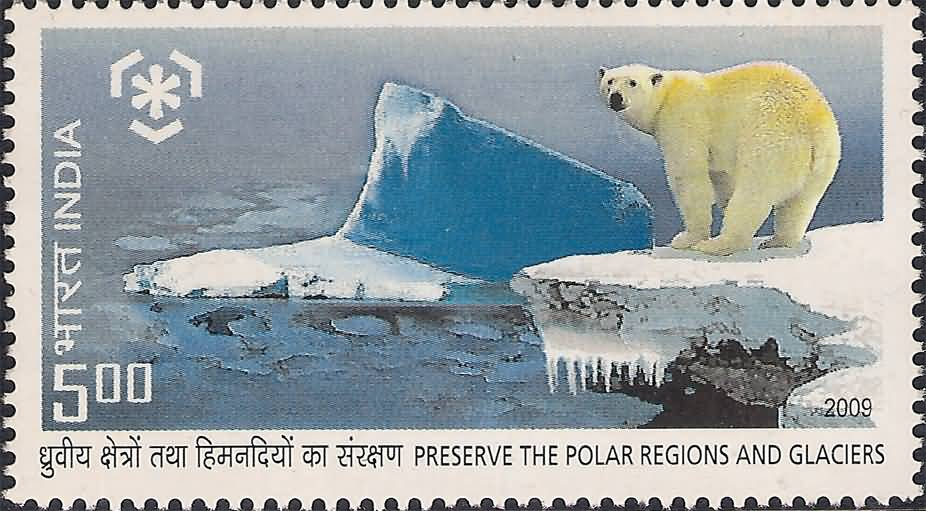
Technical Data
| Date of Issue | December 19, 2009 |
|---|---|
| Denomination | Rs. 5 |
| Quantity | 3,000,000 |
| Perforation | 13 |
| Printer | Security Printing Press, Hyderabad |
| Printing Process | Wet Offset |
| Watermark | No Watermark |
| Colors | Multicolor |
| Credit (Designed By) | Sh. Sankha Samanta |
| Catalog Codes |
Michel IN 2452 Stamp Number IN 2390 Stanley Gibbons IN 2679 WADP Numbering System - WNS IN105.2009 |
| Themes | Animals (Fauna) | Bears | Glaciers | Mammals | Polar Bears |
The Icon of the Arctic’s Fragile Ecosystem
The Polar bear is one of the most iconic species of Earth’s Polar Regions. Native to the Arctic, this magnificent animal symbolizes both the beauty and vulnerability of the Frigid Zones. As climate change accelerates and sea ice declines, the survival of polar bears has become closely linked to the future of the Arctic ecosystem.
Habitat of the Polar Bear
Polar bears inhabit the Arctic region, primarily around the Arctic Ocean and its surrounding coastal areas. Unlike other bear species, polar bears depend heavily on sea ice rather than land. Sea ice serves as their hunting platform, resting ground, and breeding area.
The Arctic’s vast ice sheets play a crucial role in regulating the planet’s climate. However, rising global temperatures are rapidly reducing sea ice coverage, directly impacting polar bear populations.
Adaptations to Extreme Cold
Polar bears are specially adapted to survive in extreme Arctic conditions:
- Thick layers of blubber for insulation
- Dense, water-repellent fur
- Large paws for swimming and walking on ice
- Sharp claws for gripping slippery surfaces
These adaptations make them powerful swimmers and skilled hunters, primarily feeding on seals.
Climate Change and the Threat to Polar Bears
The melting of Arctic sea ice due to anthropogenic global warming poses the greatest threat to polar bears. Over the past five decades, temperatures in the Polar Regions have risen significantly, resulting in shrinking ice cover.
As sea ice melts earlier in summer and forms later in winter:
- Polar bears lose critical hunting time
- Food shortages increase
- Cubs face higher mortality rates
- Long-distance swimming exhausts adults
Scientists warn that continued ice loss could drastically reduce polar bear populations by the end of this century.
Because the Arctic functions as a climate regulator for the entire planet, the decline of polar bears signals a much larger environmental crisis affecting global weather systems, sea levels, and biodiversity.
Ecological Importance of Polar Bears
Polar bears are considered an apex predator in the Arctic ecosystem. Their presence helps maintain balance within marine food chains. A decline in polar bear populations can disrupt ecological stability across the Arctic.
Their struggle also highlights the interconnectedness of global ecosystems—what happens in the Arctic does not remain in the Arctic. Climate change in the Polar Regions influences atmospheric circulation and impacts communities far beyond the poles.
Conservation Efforts and Awareness
Protecting polar bears requires global action to address climate change and reduce greenhouse gas emissions. Conservation initiatives focus on:
- Monitoring polar bear populations
- Protecting Arctic habitats
- Raising public awareness about melting sea ice
To sensitize people about the urgent need to protect the Polar Regions and their wildlife, including the polar bear, India Post issued a commemorative postage stamp carrying the message to save the Polar Regions.
Such commemorative stamp serve as powerful reminders of our responsibility to preserve fragile ecosystems and safeguard endangered species like the polar bear.
Conclusion
The polar bear stands as a powerful symbol of the Arctic’s fragile beauty and the urgent threat posed by climate change. Its survival depends on the preservation of sea ice and global commitment to environmental sustainability.
Saving the polar bear ultimately means protecting the Earth’s Polar Regions—and ensuring a stable climate for future generations.
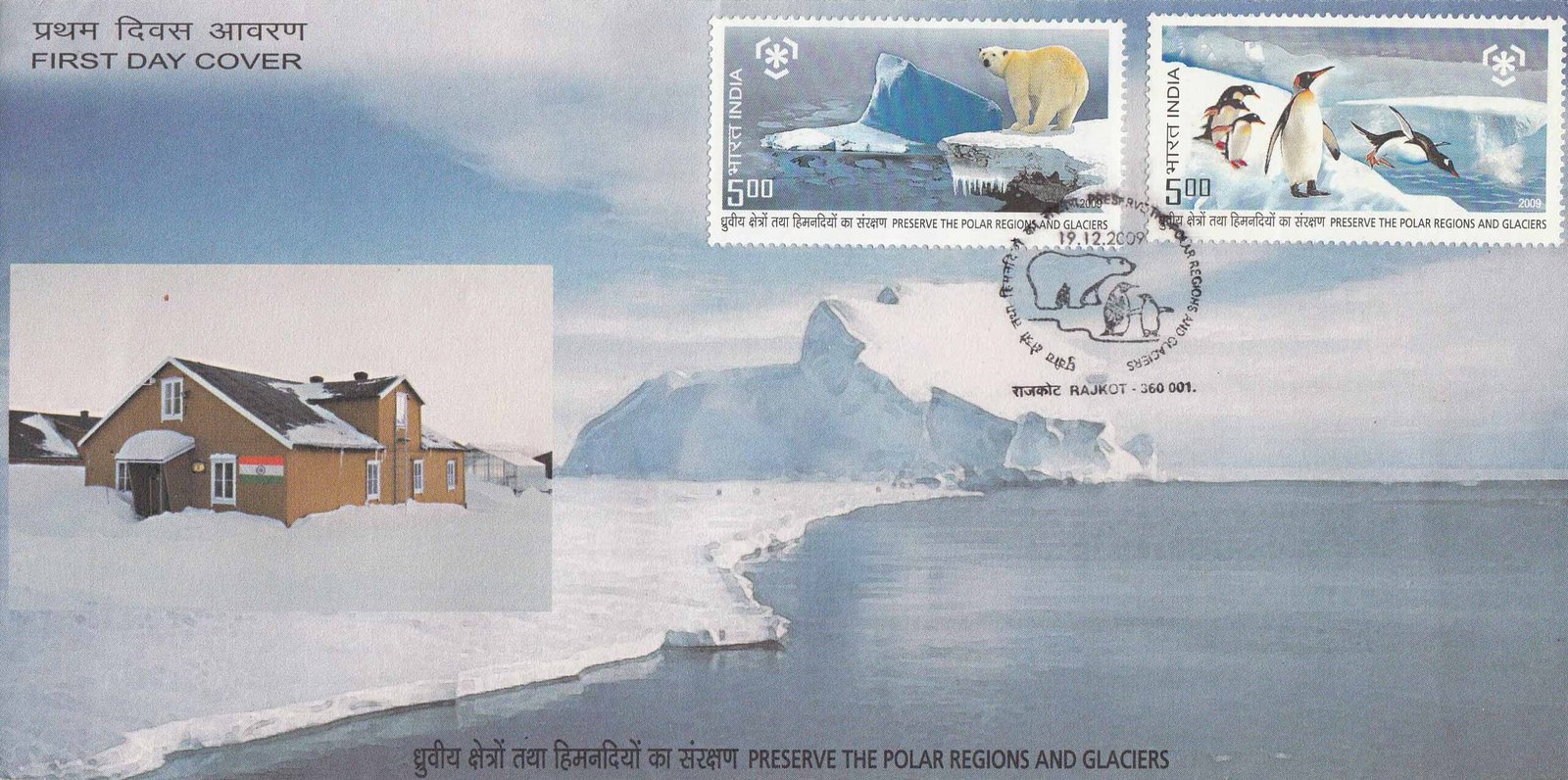
First Day Cover
Leave a Comment
You must be logged in to post a comment.