
Manipuri

Technical Data
| Date of Issue | November 9, 2009 |
|---|---|
| Denomination | Rs. 5 |
| Quantity | 300,000 |
| Perforation | 13½ |
| Printer | Security Printing Press, Hyderabad |
| Printing Process | Wet Offset |
| Watermark | No Watermark |
| Colors | Multicolor |
| Credit (Designed By) | Shri Kamleshwar Singh |
| Catalog Codes |
Michel IN 2428 Stamp Number IN 2367 Yvert et Tellier IN 2191 Stanley Gibbons IN 2650 WADP Numbering System - WNS IN081.2009 |
| Themes | Animals (Fauna) | Horses | Mammals |
India’s Agile and Enduring Indigenous Horse Breed
The Manipuri pony is one of India’s most distinctive and historically significant indigenous horse breeds. Developed in the northeastern state of Manipur, this hardy and intelligent pony has played a crucial role in both the cultural and sporting traditions of the region.
Believed to have descended from ancient stock linked to Mongolian wild horses and Arabian bloodlines, the Manipuri pony is also closely associated with the origin and evolution of the modern game of polo. Tatar tribes are thought to have introduced polo to the region, where the Manipuri pony became the preferred mount due to its agility and endurance.
Physical Characteristics of the Manipuri Pony
The Manipuri pony stands between 11 and 13 hands in height, making it compact yet powerful. Despite its relatively small size, it is known for remarkable strength and stamina.
Key features include:
- Light head with a straight facial profile
- Well-formed neck
- Deep chest and sloping shoulders
- Small pointed ears
- Alert, expressive eyes
- Comes in bay, chestnut, grey, brown, and white colors
Its balanced build and quick reflexes make it ideal for polo and racing.
Role in Polo and Regional Life
The Manipuri pony is historically significant for its contribution to the sport of polo, which originated in Manipur before spreading internationally. Its speed, intelligence, and responsiveness make it perfectly suited for the fast-paced demands of the game.
Beyond sports, the Manipuri pony has long been part of the socio-economic fabric of Manipur’s hilly regions. It has traditionally been used for transport, trade, and daily travel across challenging terrain.
Decline and Conservation Efforts
Despite its cultural importance, the population of the Manipuri pony has declined in recent decades due to modernization, shrinking grazing lands, and changing transport systems. However, conservation efforts are underway.
Organizations such as the Manipuri Horse Riding and Polo Association are actively promoting awareness, breeding programs, and polo events to preserve this indigenous breed and sustain its legacy.
Preserving India’s Indigenous Horse Heritage
The Manipuri pony stands as a symbol of resilience, heritage, and sporting excellence. Protecting this breed is not only about conserving an animal species but also about safeguarding a vital part of India’s cultural and equestrian history.
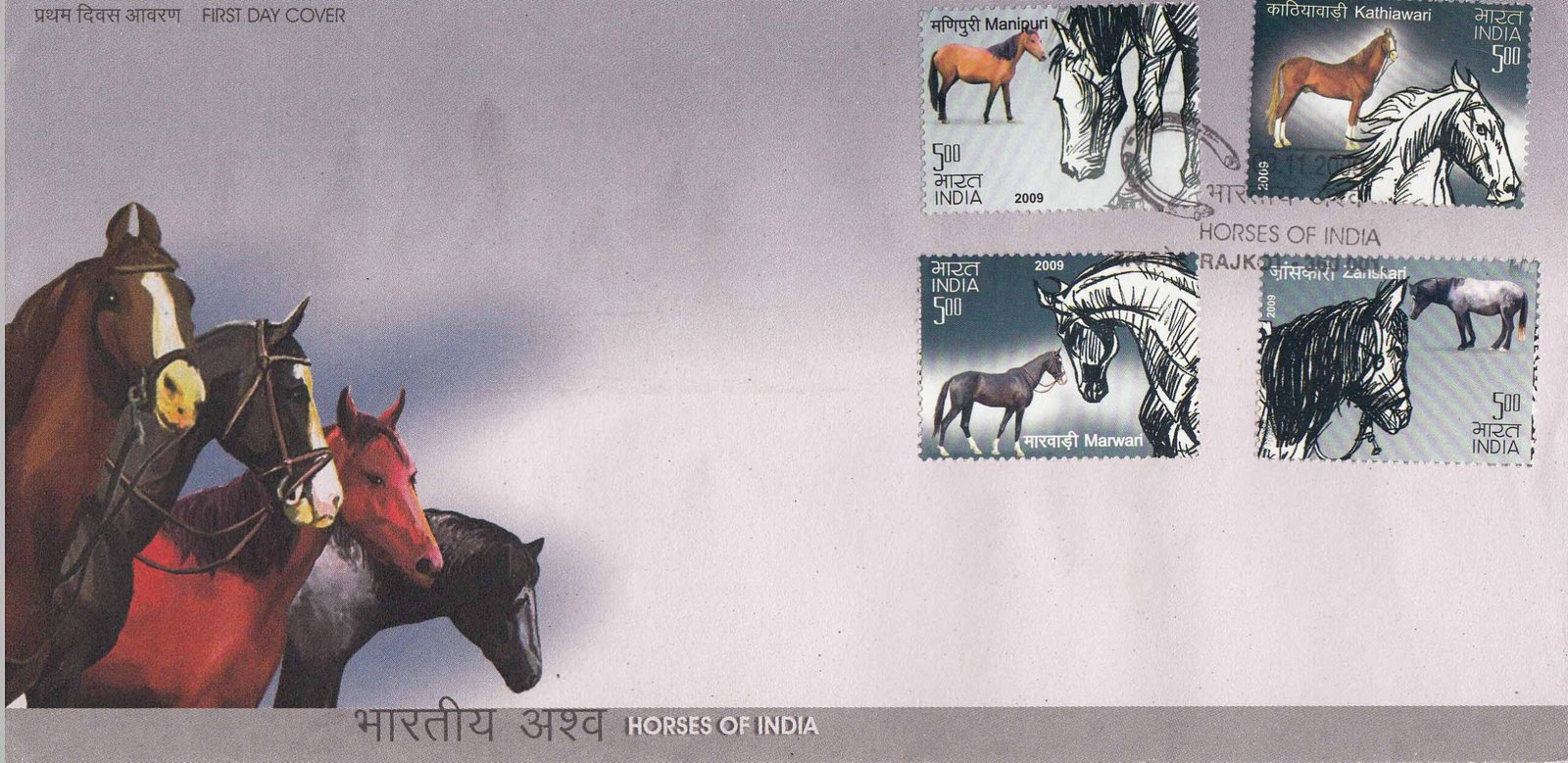
Recognizing the importance of indigenous horse breeds like the Manipuri pony, India Post issued a commemorative postage stamp, celebrating Indian horses—honouring their enduring role in history, sport, and society.
First Day Cover
Leave a Comment
You must be logged in to post a comment.