
Baburao Puleshwar Shedmake
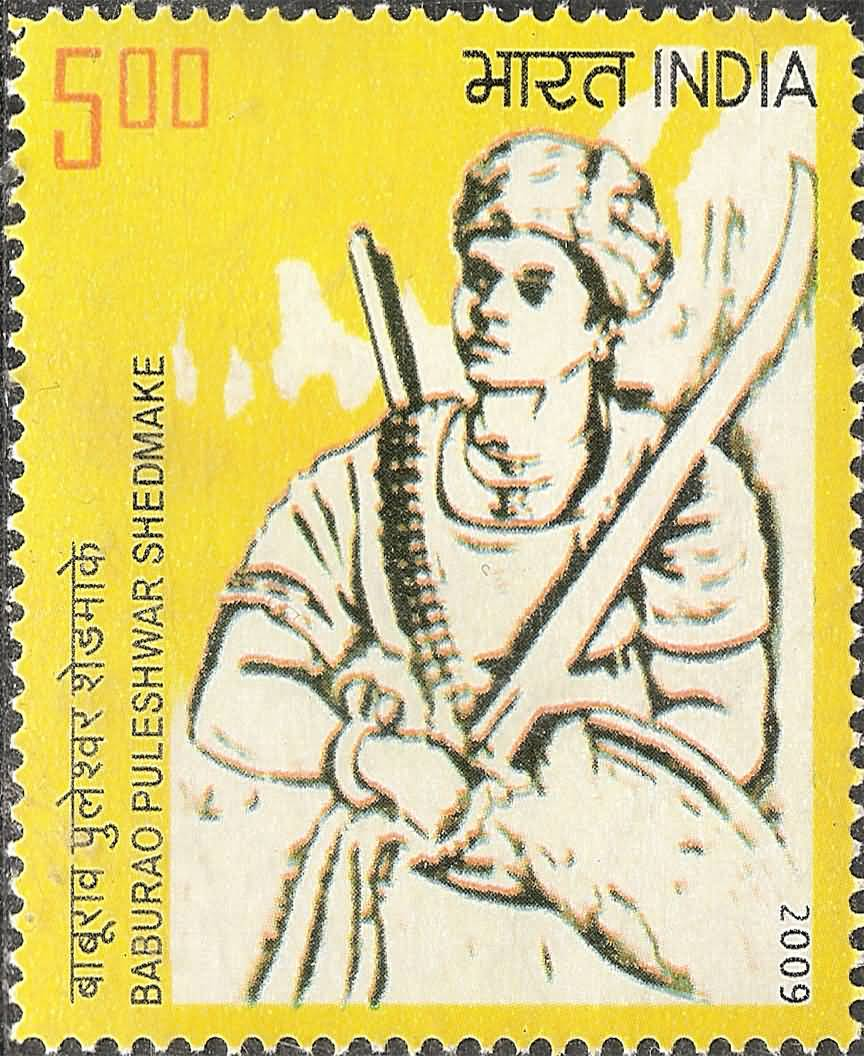
Technical Data
| Date of Issue | March 12, 2009 |
|---|---|
| Denomination | Rs. 5 |
| Quantity | 400,000 |
| Perforation | 13 |
| Printer | India Security Press, Nasik |
| Printing Process | Photo Gravure |
| Watermark | No Watermark |
| Colors | Multicolor |
| Credit (Designed By) | Smt. Alka Sharma |
| Catalog Codes |
Michel IN 2362 Stamp Number IN 2319 Stanley Gibbons IN 2581 WADP Numbering System - WNS IN018.2009 |
| Themes | Commemoration | Famous people | Men | Revolutionaries |
Tribal Freedom Fighter of the 1857 Uprising
Baburao Puleshwar Shedmake was a courageous tribal revolutionary who played a significant role in the uprising against British rule in Central India during the Revolt of 1857. His life stands as a symbol of tribal resistance and patriotism.
Early Life and Education
Baburao Puleshwar Shedmake was born on 12th March 1833 in Molampalli, under Ghot Zamindari in the Chanda district of Central Provinces and Berar (present-day Maharashtra). He was the eldest son of Poolaisur Bapu, an Up-Zamindar of Molampalli, and Jurja Kunwar.
Following Gond tribal traditions, Shedmake received his early education at the Ghotul Sanskar Kendra, where he learned Hindi, Gondi, and Telugu along with music and dance. Recognizing the growing importance of English education under British influence, his father sent him to Raipur (now in Chhattisgarh) to study English. After completing his education, he returned to Molampalli and, at the age of 18, married Raj Kunwar according to tribal customs.
Resistance Against British Rule
In 1854, Chandrapur came under British control. Shedmake was among the first in the region to openly oppose British authority. He adopted guerrilla warfare tactics to challenge colonial forces.
During the Revolt of 1857 — India’s First War of Independence — Shedmake mobilized nearly 500 tribal youths and formed an armed group. With this force, he successfully captured the Rajghad area. Alarmed by this development, the Deputy Collector of Chandrapur sent British troops to suppress the uprising. However, Shedmake’s forces defeated them near Nandgaon Bhosari.
A second British troop was dispatched, leading to battles at Sanganapur and Bamanpet. Once again, the British forces were defeated, boosting the morale of the tribal resistance.
The Chinchgudi Attack and Arrest
Encouraged by his victories, Shedmake launched an attack on the British telegraph camp at Chinchgudi on 29th April 1858. During this assault, two telegraph operators were killed, while one escaped and reported the incident to British authorities.
The British administration then adopted diplomatic and strategic measures to capture him. Assistance was sought from Nagpur, and local political pressure was applied. Ultimately, through a conspiracy involving regional authorities, Shedmake was arrested on 18th September 1858.
He was imprisoned in Chanda Central Jail and, on 21st October 1858, was publicly hanged at an open ground in Chanda (present-day Chandrapur).
Legacy and Recognition
Veer Baburao Puleshwar Shedmake remains an enduring symbol of tribal courage and resistance against colonial oppression. His contribution highlights the vital role played by tribal communities in India’s freedom struggle.
In recognition of his sacrifice and patriotism, India Post issued a commemorative postage stamp in his memory, honoring him as a brave tribal freedom fighter of the 1857 uprising.
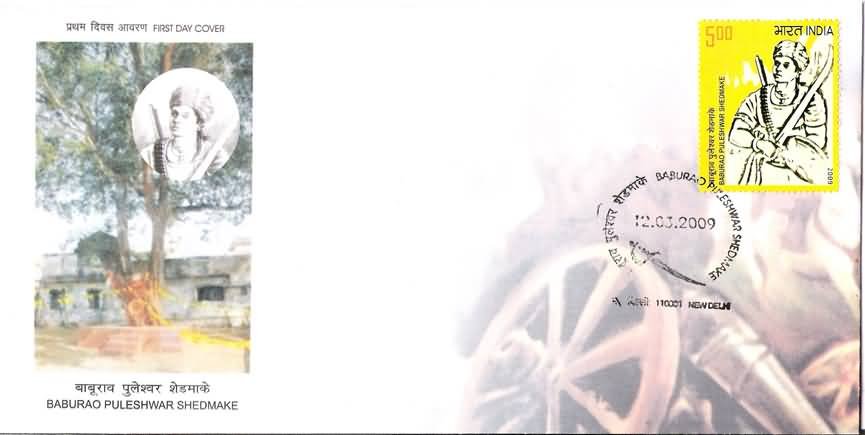
First Day Cover
Leave a Comment
You must be logged in to post a comment.