
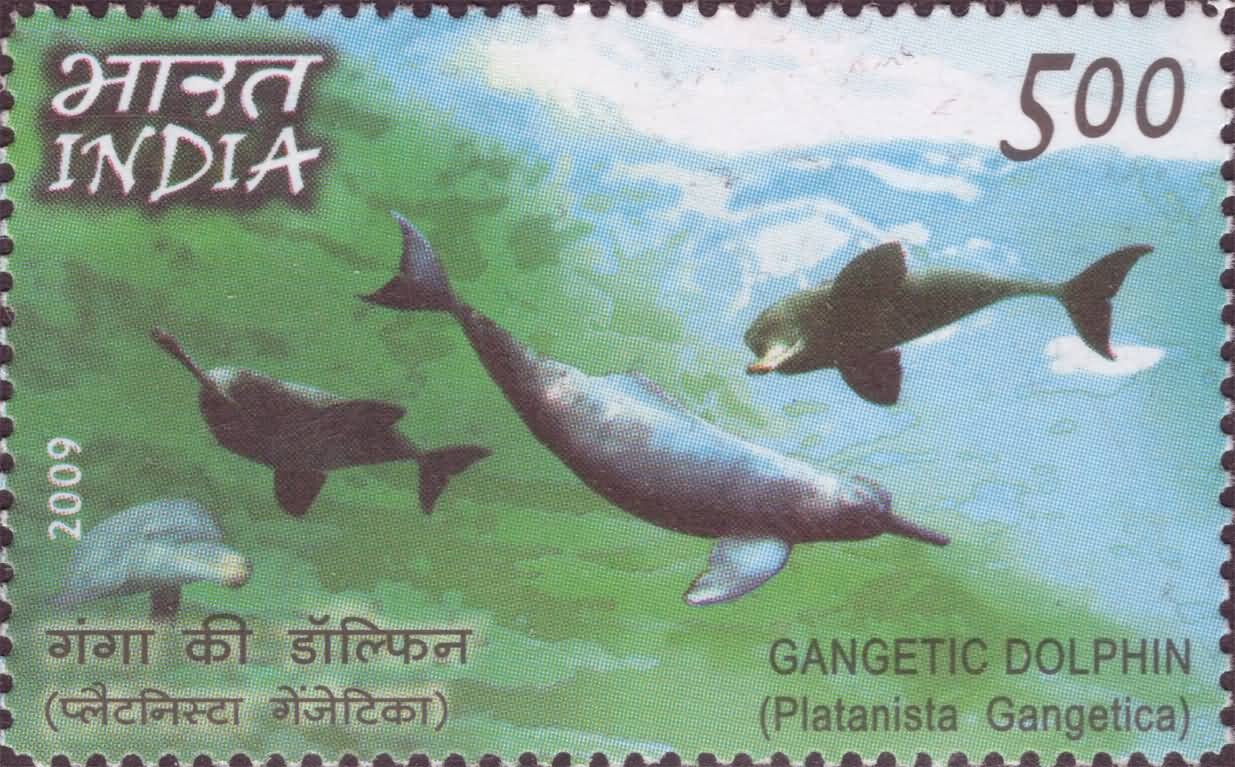
Gangetic Dolphin (Platanista gangetica)
Technical Data
| Date of Issue | November 16, 2009 |
|---|---|
| Denomination | Rs. 5 |
| Quantity | 1,500,000 |
| Perforation | 13 |
| Printer | India Security Press, Nasik |
| Printing Process | Wet Offset |
| Watermark | No Watermark |
| Colors | Multicolor |
| Credit (Designed By) | Shri Kamleshwar Singh Smt. Alka Sharma |
| Catalog Codes |
Michel IN 2435 Stamp Number IN 2374a Yvert et Tellier IN 2198 Stanley Gibbons IN 2659 WADP Numbering System - WNS IN088.2009 |
| Themes | Animals (Fauna) | Dolphins | Joint Issues | Mammals | Sea (Marine) Mammals |
India’s Endangered Freshwater Treasure
The Gangetic Dolphin, also known as the Ganges River Dolphin, is one of the most important freshwater mammals of the Indian subcontinent. Found exclusively in the river systems of India and Bangladesh, this unique species is a powerful symbol of river health and aquatic biodiversity.
Often referred to as the “freshwater tiger,” the Gangetic Dolphin represents the ecological balance of the rivers it inhabits. Its survival is closely linked to the condition of India’s major river systems, especially the Ganga.
Habitat and Distribution
The Gangetic River Dolphin lives in freshwater rivers, particularly the Ganga–Brahmaputra–Meghna river system. It prefers deep channels, counter-current systems, and areas where rivers meet tributaries.
To support its conservation, the Vikramshila Ganges River Dolphin Sanctuary in Bihar has been notified under the Wild Life Protection Act, 1972. This sanctuary plays a crucial role in protecting the species and its habitat.
Physical Characteristics and Adaptations
The Gangetic Dolphin measures between 1.5 and 2.5 meters in length and can weigh up to 90 kilograms. It feeds on a variety of fish and invertebrates, including prawns, clams, catfish, and freshwater sharks.
One of its most remarkable features is its adaptation to murky river waters:
- Its eyesight is extremely limited, as its eyes lack a functional lens.
- It relies primarily on echolocation to navigate and hunt.
- It uses its long, sensitive snout to probe the muddy riverbed for prey.
- It often swims on one side, dragging a flipper along the river bottom to gather sensory information.
These adaptations allow the dolphin to survive in sediment-rich and low-visibility waters.
Threats to the Gangetic Dolphin
Despite its ecological significance, the Gangetic Dolphin faces serious threats:
- Construction of dams and barrages that fragment habitats
- Commercial fishing and accidental entanglement in nets
- Ecologically insensitive irrigation practices
- Pollution from industrial waste and domestic sewage
- Excessive extraction of river water, leading to reduced depth
The dolphins in the Ganga are struggling for survival as habitat degradation continues to intensify.
Conservation and Awareness
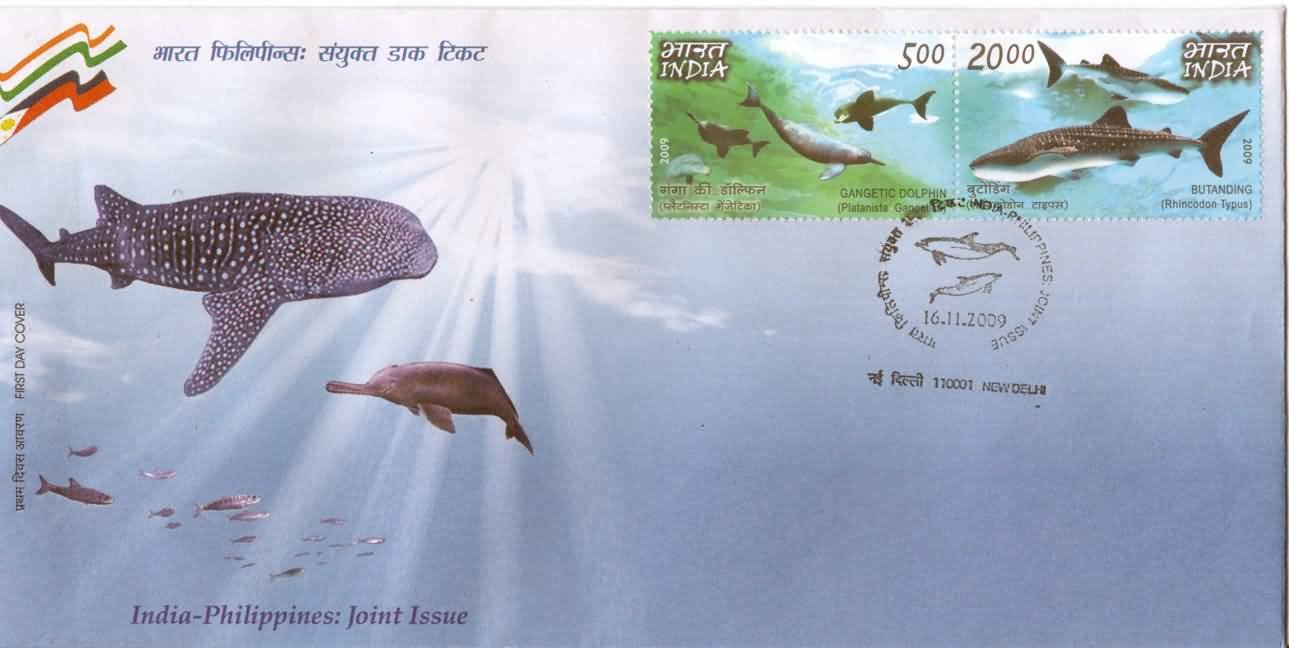
Recognizing the importance of protecting endangered aquatic species, the Gangetic Dolphin has been featured in a Joint Issue of Commemorative Postage Stamp by India Post and Philippine Postal Corporation. This initiative not only celebrates diplomatic relations but also emphasizes the urgent need for wildlife conservation and ecological protection.
Life began in water, and endangered species like the Gangetic Dolphin serve as a vital reminder that safeguarding rivers and their ecosystems is essential for sustainable development.
First Day Cover
Leave a Comment
You must be logged in to post a comment.