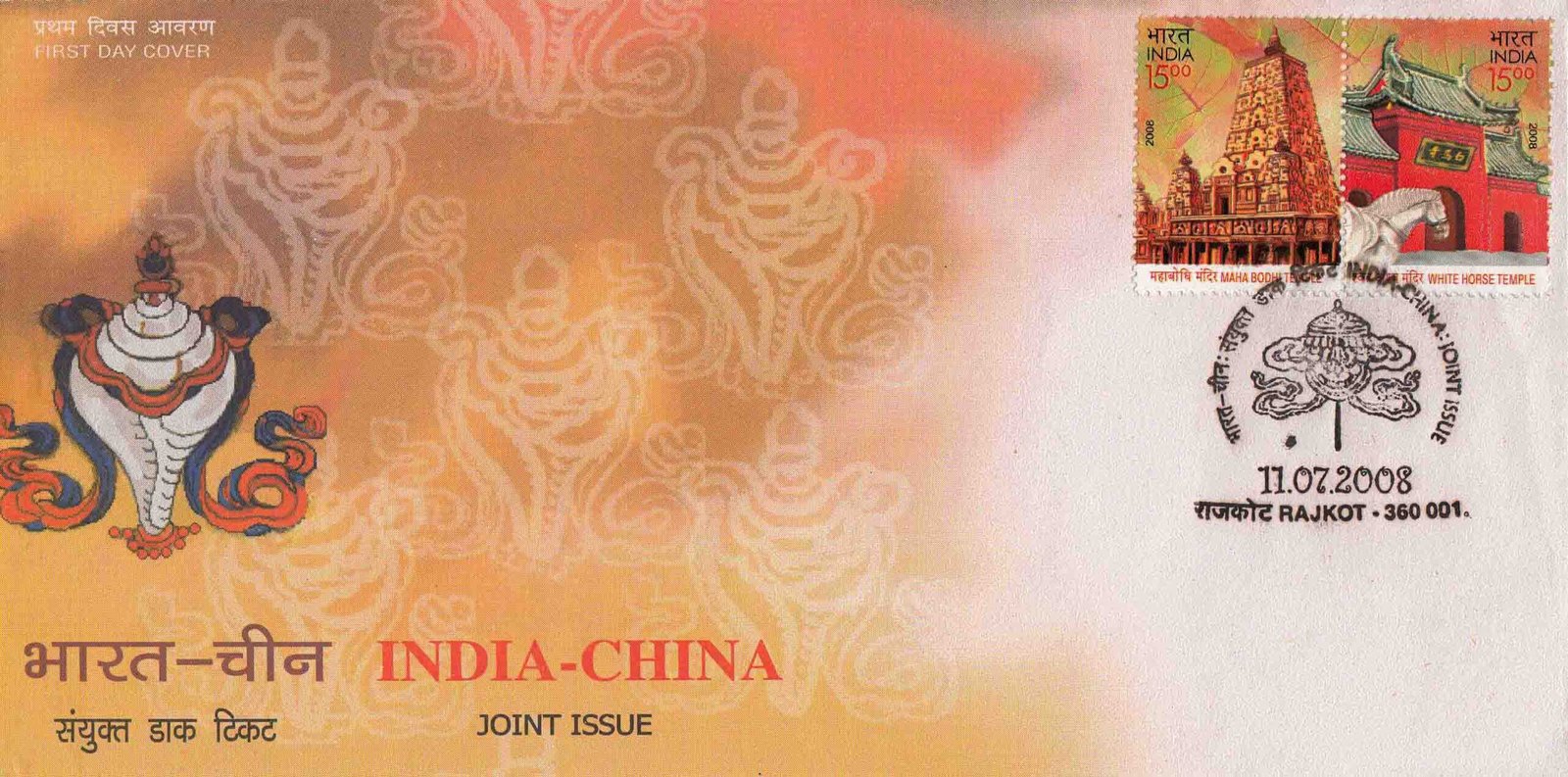
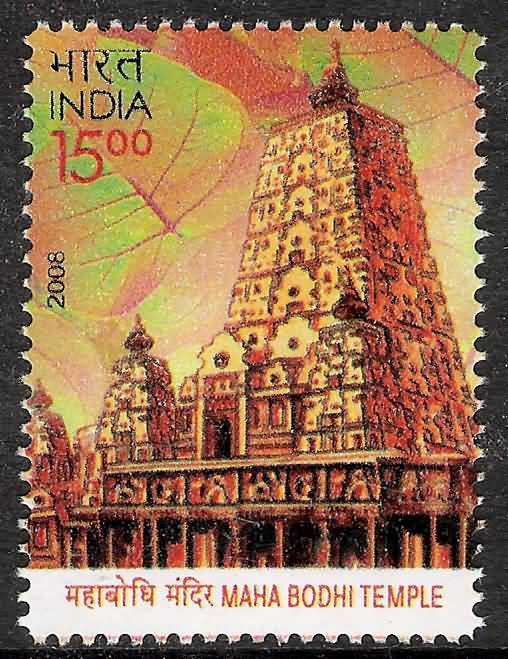
Mahabodhi Temple- Bodh Gaya
Technical Data
| Date of Issue | July 11, 2008 |
|---|---|
| Denomination | Rs. 15 |
| Quantity | 800,000 |
| Perforation | 13 |
| Printer | India Security Press, Nasik |
| Printing Process | Photo Gravure |
| Watermark | No Watermark |
| Colors | Multicolor |
| Credit (Designed By) | Sh. Bharati Mirchandani |
| Catalog Codes |
Michel IN 2277 Stamp Number IN 2246a Stanley Gibbons IN 2483 WADP Numbering System - WNS IN021.2008 |
| Themes | Architecture | Buildings | Joint Issues | Temples | UNESCO World Heritage Sites |
Historical Background
India and China share a long history of cultural and spiritual interaction, with Buddhism serving as the strongest link between the two civilizations. As part of commemorating this enduring relationship, a joint issue of commemorative postage stamps was released featuring two significant Buddhist monuments — the Mahabodhi Temple and the White Horse Temple of China. The stamp depicting the Mahabodhi Temple honours the sacred site where Gautama Buddha attained enlightenment.
Sacred Site of Enlightenment
The Mahabodhi Temple is located in Bodh Gaya, in the Gaya district of Bihar, on the banks of the river Lilajan (ancient Nairanjana), near the historic village of Uruvela. It stands at the very place where Prince Siddhartha meditated under the Bodhi Tree and attained supreme knowledge, becoming the Buddha — the Enlightened One.
According to tradition, after attaining enlightenment, the Buddha spent seven weeks in meditation in different parts of the temple परिसर. The first week was spent under the Bodhi Tree itself. The sacred Vajrasana, a polished sandstone throne believed to have been installed by Emperor Ashoka, marks the exact spot of Buddha’s meditation. Historical records indicate that Ashoka undertook a pilgrimage to Sambodhi and contributed to the early development of the shrine.
Architectural Grandeur
The Mahabodhi Temple is renowned for its magnificent architectural design. Its soaring pyramidal spire rises to a height of about 54 metres (177 feet), carved in tiers and crowned with an umbrella-like finial. The temple gateway, made of granite, bears inscriptions inspired by Buddha’s teachings.
The temple complex is enclosed on three sides by a stone railing dating back to the 1st century B.C., adorned with lotus medallions and scenes from the life of the Buddha. A covered promenade, known as the Chankama, marks the sacred spot where the Buddha spent the third week after enlightenment, walking in meditation. The brick platform here features lotus symbols believed to have blossomed under his footsteps.
Inside the sanctum sits a large gilded statue of Shakyamuni Buddha in the earth-touching mudra, facing east, precisely at the spot of enlightenment. Over centuries, the temple has undergone several repairs and renovations, yet great care has been taken to preserve its original architectural pattern and spiritual essence.
Spiritual and Cultural Significance
The Mahabodhi Temple stands as one of the holiest pilgrimage sites in Buddhism. It symbolizes peace, enlightenment, and the universal message of compassion taught by the Buddha. For centuries, monks, scholars, and pilgrims from across Asia, including China, have visited Bodh Gaya, strengthening the spiritual bond between the two nations.
Philatelic Importance
The commemorative postage stamp featuring the Mahabodhi Temple celebrates not only a sacred monument of global significance but also the deep-rooted cultural ties between India and China nurtured through Buddhism. As part of the joint issue, the stamp reflects shared heritage and mutual respect. The associated miniature sheet further enhances its philatelic value, symbolizing the enduring legacy of the Bodhi Tree — the sacred Pipal tree under which enlightenment was attained.
Through this release, the Department of Posts honours a timeless spiritual landmark and the centuries-old friendship between two great civilizations.
First Day Cover