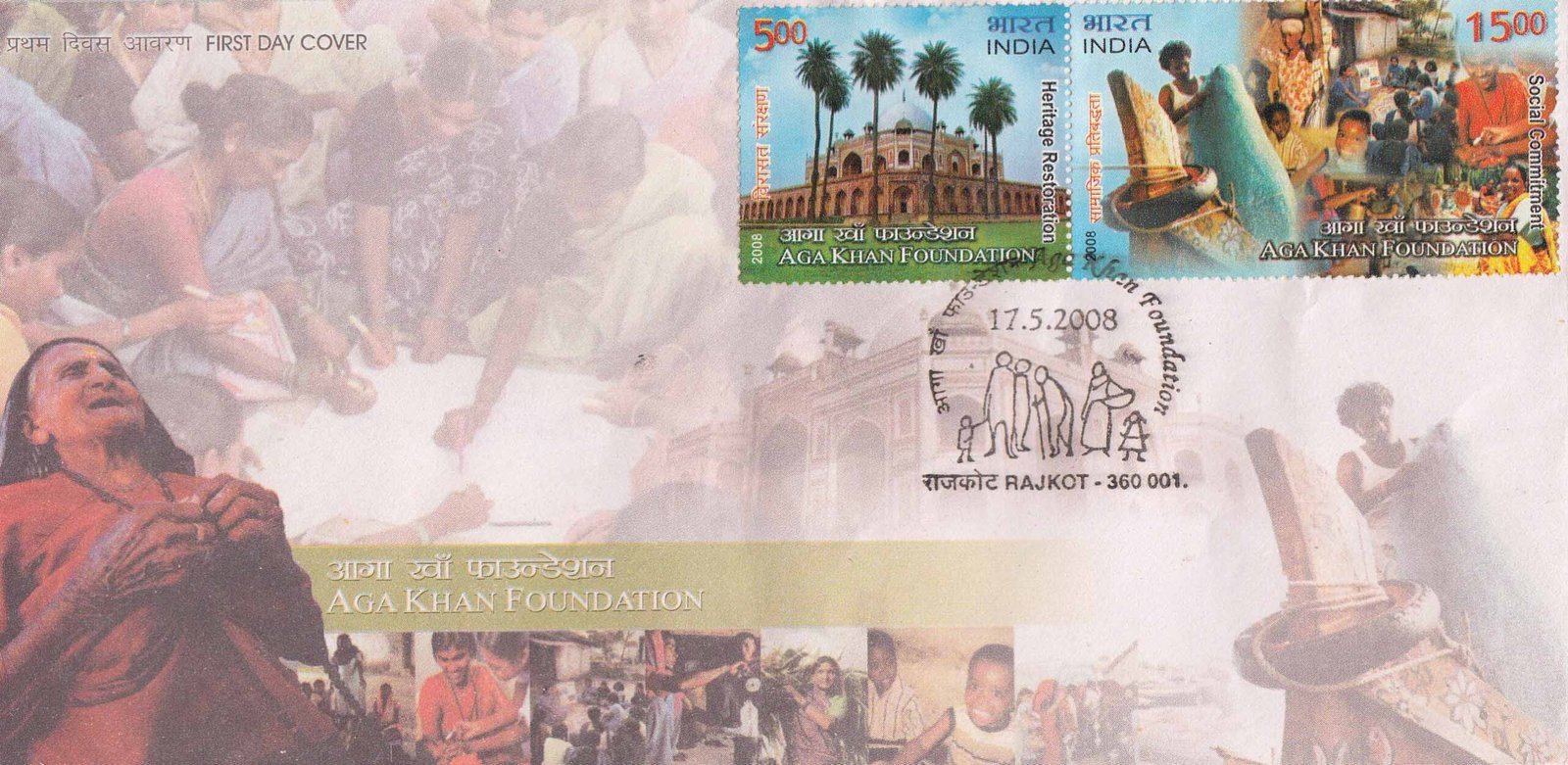
Mosque (“Heritage Restoration”)

Technical Data
| Date of Issue | May 17, 2008 |
|---|---|
| Denomination | Rs. 5 |
| Quantity | 800,000 |
| Perforation | 13 |
| Printer | India Security Press, Nasik |
| Printing Process | Photo Gravure |
| Watermark | No Watermark |
| Colors | Multicolor |
| Credit (Designed By) | Sh. Brahm Prakash Smt. Alka Sharma |
| Catalog Codes |
Michel IN 2271 Stamp Number IN 2241a Yvert et Tellier IN 2036 Stanley Gibbons IN 2476 WADP Numbering System - WNS IN015.2008 |
| Themes | Anniversaries and Jubilees | Buildings | Mosques | Palm-trees |
Preserving Cultural Legacy
Among the many facets of work undertaken by the Aga Khan Development Network, heritage restoration occupies a place of profound significance. Recognizing that cultural monuments are not merely architectural structures but living symbols of identity and history, the Network has consistently worked to preserve and revitalize historic sites. The commemorative postage stamp depicting a restored mosque highlights this important dimension of its contribution — safeguarding heritage for future generations.
Commitment to Heritage Restoration
The Aga Khan Foundation (AKF), as part of the broader Aga Khan Development Network, approaches restoration with the same integrated and community-based philosophy that defines its social development programmes. Restoration is not limited to physical repair; it encompasses revival of traditional craftsmanship, local employment generation, and community participation.
Through careful conservation practices, historic mosques and other monuments are restored in ways that respect original architectural styles, materials, and craftsmanship. Such efforts ensure that restoration maintains authenticity while strengthening the social and cultural fabric of surrounding communities.
Architectural and Cultural Significance
Mosques, as centres of spiritual life and community gathering, represent architectural brilliance and artistic refinement. Intricate calligraphy, geometric designs, domes, arches, and minarets reflect centuries of cultural evolution and craftsmanship.
By restoring these sacred spaces, the Aga Khan Development Network helps preserve not only structures of stone and mortar but also traditions of art, faith, and communal harmony. Heritage restoration projects often revive traditional building techniques, providing training and livelihood opportunities to local artisans and craftsmen.
Integrated Development Approach
The restoration of heritage sites is closely linked with broader development goals. Revitalized monuments can stimulate local economies through cultural tourism, create employment opportunities, and instill pride among communities. This integrated approach ensures that preservation of the past contributes meaningfully to present and future well-being.
In keeping with its philosophy of empowering communities to act independently, the Network engages local stakeholders in planning and maintaining restored sites, thereby ensuring sustainability and long-term impact.
Philatelic Significance
The commemorative postage stamp featuring the restored mosque symbolizes the enduring commitment of the Aga Khan Development Network to cultural preservation alongside social progress. Issued as a tribute to its multifaceted work, the stamp reflects both spiritual heritage and developmental vision.
Through this philatelic honour, the Department of Posts acknowledges the vital role played by the Aga Khan institutions in conserving architectural treasures while fostering dignity, self-reliance, and cultural continuity.
First Day Cover