
Bandhavgarh National Park
Technical Data
| Date of Issue | May 31, 2007 |
|---|---|
| Denomination | Rs. 5 |
| Quantity | 600,000 |
| Perforation | 13 |
| Printer | India Security Press, Nasik |
| Printing Process | Photogravure |
| Watermark | No Watermark |
| Colors | Multicolor |
| Credit (Designed By) | Mr. Suresh Kumar |
| Catalog Codes |
Michel IN 2209 Stamp Number IN 2199a Yvert et Tellier IN 1974 Stanley Gibbons IN 2404 WADP Numbering System - WNS IN025.2007 |
| Themes | Animals (Fauna) | Deer | Mammals | National Parks | Tigers | Wild Cats |
The Land of the Tiger
Bandhavgarh National Park, located in the state of Madhya Pradesh, is one of India’s most famous wildlife destinations, particularly renowned for its thriving tiger population. Once the hunting reserve of the royal family of Rewa, Bandhavgarh was declared a National Park in 1968 and has since become a symbol of India’s successful wildlife conservation efforts.
Spread across approximately 542.40 square kilometers, the park features a mix of teak forests, grasslands, and scrublands, creating a diverse and vibrant ecosystem.
Landscape and Natural Beauty
Bandhavgarh’s hilly terrain, dense forests, and open meadows provide ideal habitats for a wide range of wildlife species. The varied landscape not only enhances its scenic beauty but also supports ecological diversity, making it one of the most important National Parks of India.
The park gained global attention as the place where the famous white tigers were first discovered, adding to its unique legacy.
Wildlife of Bandhavgarh National Park
Bandhavgarh is best known for offering some of the highest chances of spotting the Royal Bengal Tiger in the wild. Apart from tigers, the park is home to around 22 species of mammals and nearly 250 species of birds.
Notable wildlife species include:
- Nilgai
- Chausingha (Four-Horned Antelope)
- Chital (Spotted Deer)
- Chinkara
- Black Buck
- Wild Boar
- Rhesus Macaque
- Hanuman Langur
The rich biodiversity of Bandhavgarh makes it a vital part of India’s conservation landscape.
Conservation Importance
Protected under the Wildlife Protection Act, 1972, Bandhavgarh National Park plays a crucial role in safeguarding endangered species and maintaining ecological balance. As a key tiger habitat, it contributes significantly to India’s efforts in preserving its national animal and other wildlife species.
Commemorative Stamp on Bandhavgarh National Park
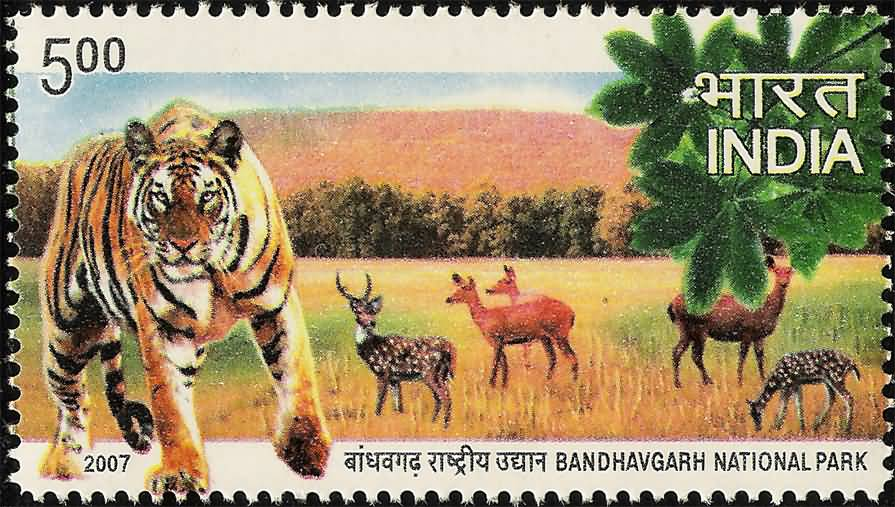
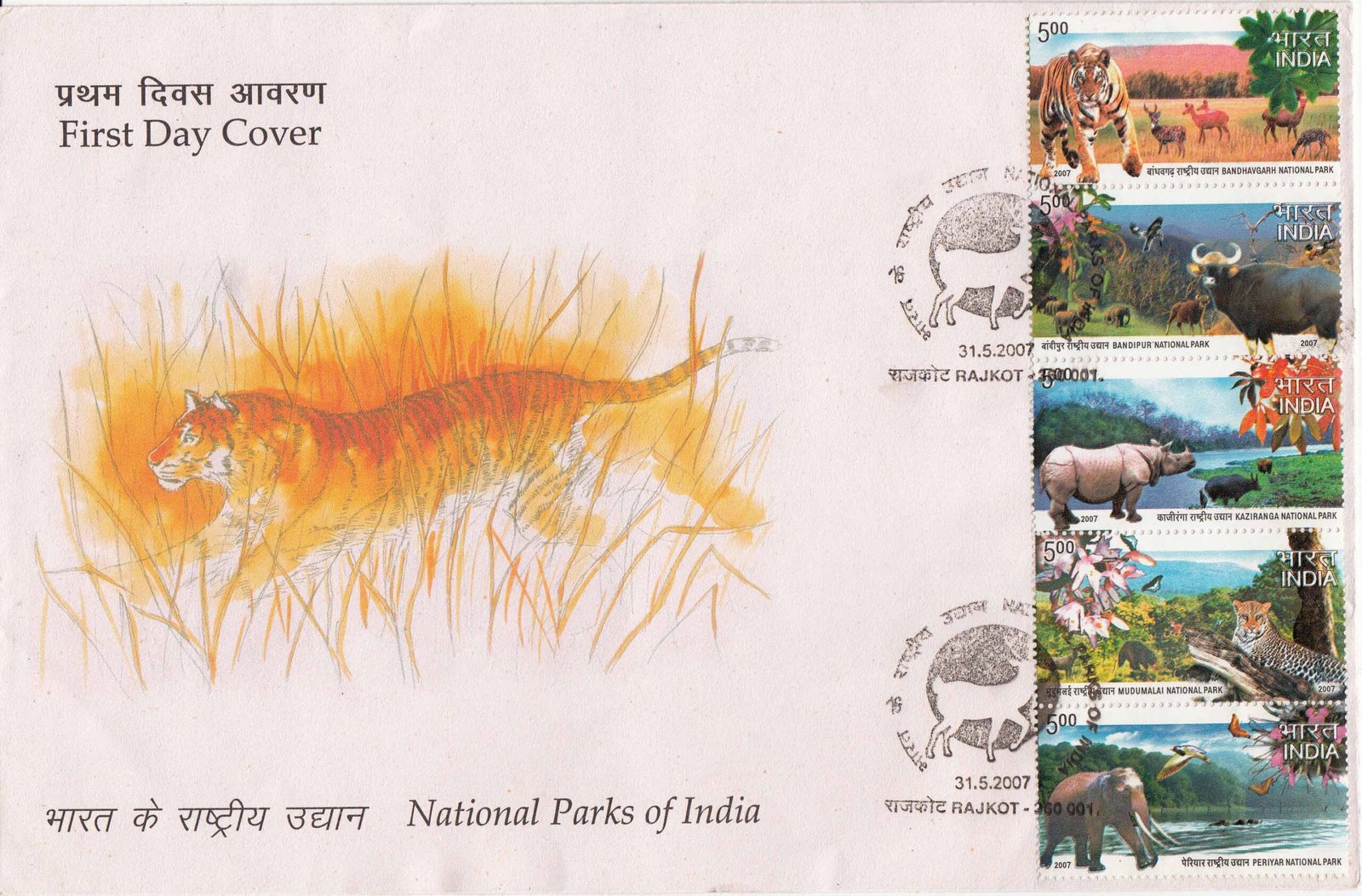
In recognition of its ecological significance and contribution to wildlife conservation, India Post featured Bandhavgarh National Park in a special set of five commemorative postage stamps on National Parks of India.
The commemorative stamp highlights the park’s iconic tiger and natural beauty, celebrating its status as one of India’s premier wildlife reserves. Through this philatelic tribute, India Post promotes awareness about the importance of preserving India’s rich natural heritage.
Bandhavgarh National Park remains a proud emblem of India’s commitment to wildlife protection and biodiversity conservation.
First Day Cover
Leave a Comment
You must be logged in to post a comment.