
Kaziranga National Park
Technical Data
| Date of Issue | May 31, 2007 |
|---|---|
| Denomination | Rs. 5 |
| Quantity | 600,000 |
| Perforation | 13 |
| Printer | India Security Press, Nasik |
| Printing Process | Photogravure |
| Watermark | No Watermark |
| Colors | Multicolor |
| Credit (Designed By) | Mr. Suresh Kumar |
| Catalog Codes |
Michel IN 2211 Stamp Number IN 2199c Yvert et Tellier IN 1976 Stanley Gibbons IN 2406 WADP Numbering System - WNS IN027.2007 |
| Themes | Animals (Fauna) | Cattle | National Parks | Rhinoceroses | UNESCO World Heritage Sites |
The Pride of India’s Wildlife Conservation
Kaziranga National Park, located in Assam on the southern bank of the Brahmaputra River, is one of India’s most celebrated wildlife reserves. Known globally as the last great stronghold of the endangered one-horned Indian Rhinoceros, Kaziranga represents a remarkable success story in wildlife conservation.
Initially declared a Reserve Forest in 1908 to protect the dwindling rhino population, Kaziranga was later designated a Wildlife Sanctuary in 1940 and granted the status of a National Park in 1974. In 1985, it earned international recognition as a UNESCO World Heritage Site.
Landscape and Habitat
Kaziranga National Park is characterized by vast grasslands, marshes, wetlands, and tropical forests. The fertile floodplains of the Brahmaputra River create a dynamic ecosystem that supports a rich diversity of flora and fauna. Seasonal flooding rejuvenates the land, making it one of the most productive wildlife habitats in India.
Wildlife of Kaziranga National Park
Kaziranga is best known for conserving the one-horned Indian Rhinoceros, whose population has significantly increased due to sustained protection efforts. From alarmingly low numbers in the early 20th century, conservation measures have helped the rhino population grow steadily, making Kaziranga a global conservation model.
Apart from rhinos, the park is home to a wide range of wildlife, including:
- Indian Elephant
- Tiger
- Wild Buffalo
- Swamp Deer
- Leopard
- Wild Boar
- Jackal
- Monitor Lizard
- Python
- Hoolock Gibbon
- Otters
Kaziranga also supports a healthy population of tigers and is recognized as one of India’s important tiger habitats.
A Paradise for Bird Watchers
Kaziranga National Park is a haven for bird lovers. It hosts numerous resident and migratory bird species. Raptors such as the Oriental Honey Buzzard and Pallas’s Fishing Eagle are commonly seen, while winter brings migratory birds like Greylag Geese, Bar-Headed Geese, Ruddy Shelduck, and Northern Shoveller to its lakes and marshlands.
This exceptional avian diversity further enhances Kaziranga’s ecological importance.
Conservation and Legal Protection
Protected under the Wildlife Protection Act, 1972, Kaziranga National Park plays a crucial role in safeguarding endangered species and preserving India’s biodiversity. Strict anti-poaching measures and habitat management programs have ensured the continued survival of many threatened species.
Commemorative Stamp on Kaziranga National Park
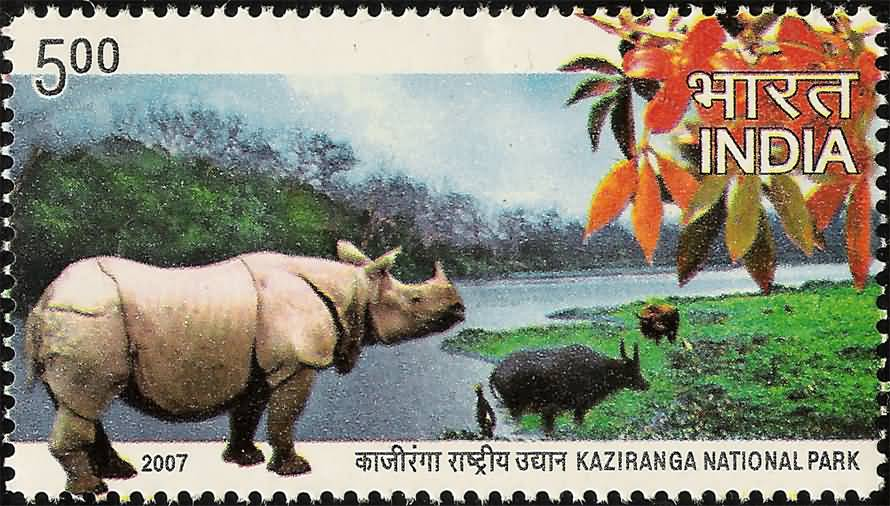
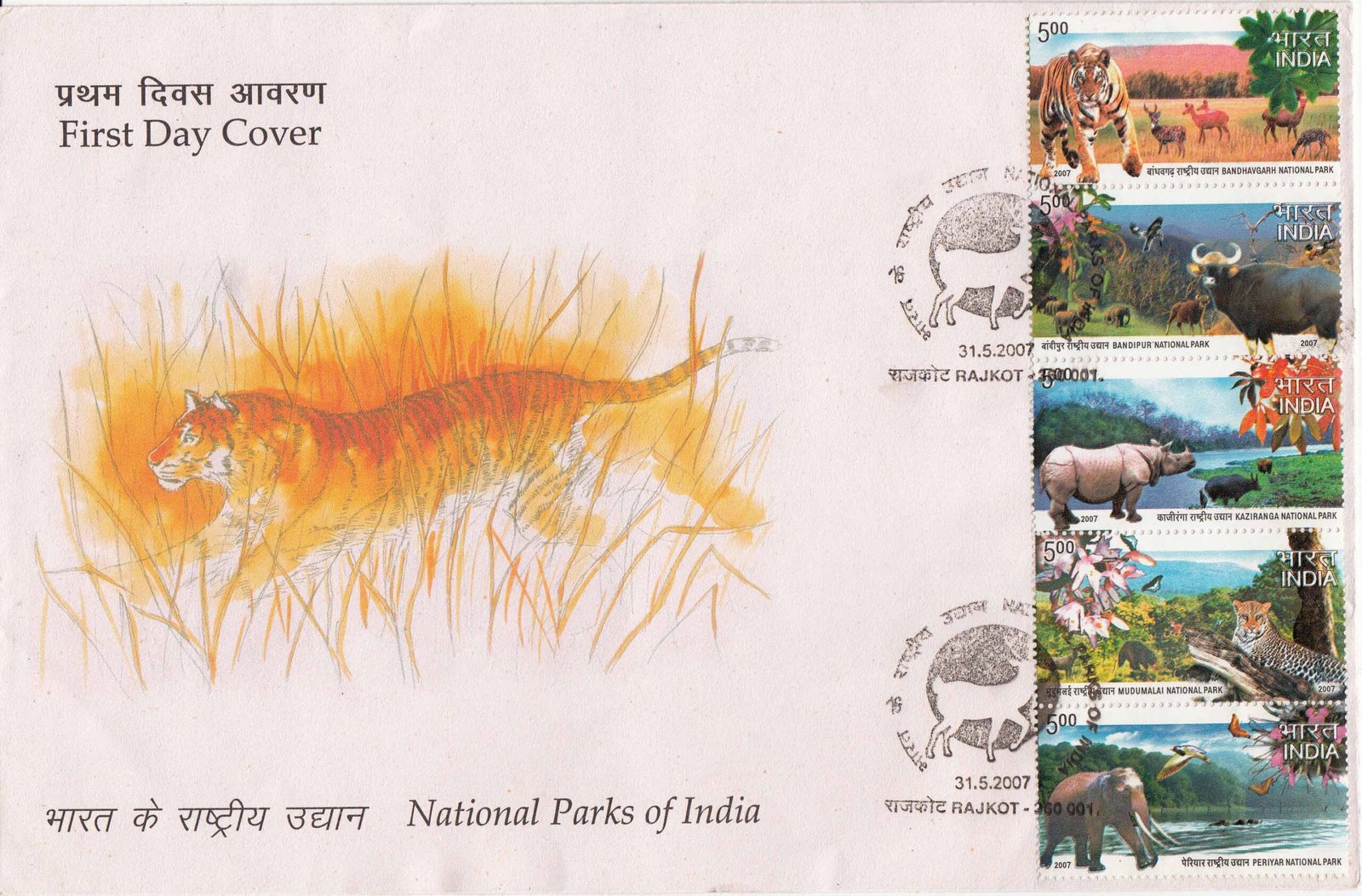
To celebrate India’s rich natural heritage, India Post featured Kaziranga National Park in a special set of five commemorative postage stamps on National Parks of India.
The stamp beautifully captures the spirit of Kaziranga and its iconic one-horned rhinoceros, symbolizing India’s dedication to wildlife conservation. Through this philatelic tribute, India Post honors the park’s global importance and raises awareness about the need to protect endangered species and fragile ecosystems.
Kaziranga National Park remains a shining example of successful conservation and a proud emblem of India’s biodiversity.
First Day Cover
Leave a Comment
You must be logged in to post a comment.