
The Vellore Mutiny 1806
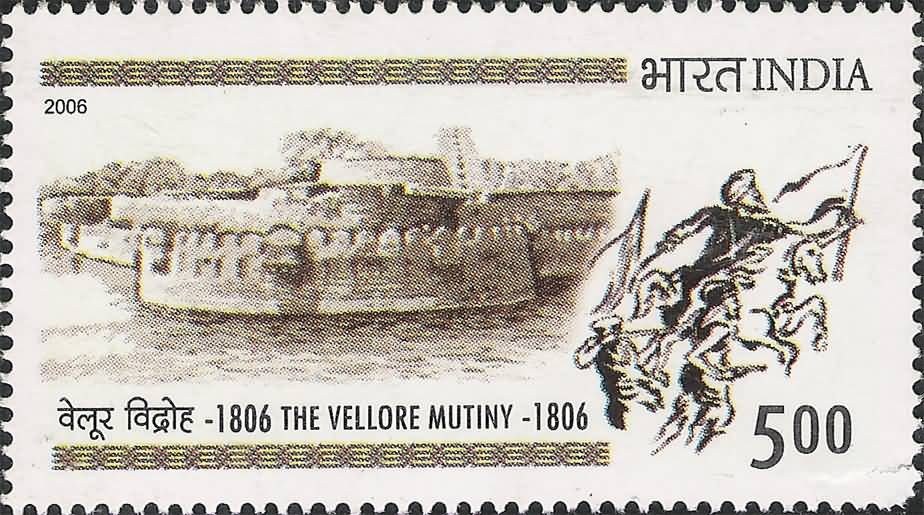
Technical Data
| Date of Issue | July 10, 2006 |
|---|---|
| Denomination | Rs. 5 |
| Quantity | 800,000 |
| Perforation | comb13¼ |
| Printer | India Security Press, Nasik |
| Printing Process | Wet Offset |
| Watermark | No Watermark |
| Colors | Multicolor |
| Credit (Designed By) | Sh. Sankha Samanta |
| Catalog Codes |
Michel IN 2148 Stamp Number IN 2159 Yvert et Tellier IN 1912 Stanley Gibbons IN 2334 WADP Numbering System - WNS IN028.2006 |
| Themes | Anniversaries and Jubilees | Fortresses / Strongholds | Uprising |
The Vellore Mutiny, which took place on 10 July 1806, was one of the earliest revolts by Indian soldiers against British rule in India. It occurred at Vellore Fort and is considered an important precursor to the later Indian Rebellion of 1857.
Background
During the early 19th century, the British East India Company maintained a large army in India. Most soldiers in this army were Indians, often referred to as “native soldiers.”
However, the British authorities frequently ignored the religious and cultural traditions of these soldiers, which led to growing resentment.
As early as 1806, the British introduced new dress regulations for the army. These rules required changes in traditional attire that conflicted with Hindu and Muslim religious customs. Despite protests, the British enforced these regulations strictly and punished those who resisted.
Situation at Vellore Fort
After the defeat and death of Tipu Sultan in Fourth Anglo Mysore War, his family was imprisoned at Vellore Fort, one of the strongest forts in southern India.
At the time of the revolt, the British garrison there consisted of:
- Around 1500 Indian soldiers
- About 370 European soldiers
Many Indian soldiers sympathized with the family of Tipu Sultan, who had fiercely resisted British rule.
The Revolt
On the morning of 10 July 1806, Indian soldiers at Vellore Fort rose in rebellion. During the uprising:
- Several British officers were killed.
- The soldiers seized the arms and ammunition stored in the fort.
- They lowered the British Union Jack and hoisted the royal tiger flag of Tipu Sultan.
- Fateh Hyder, the second son of Tipu Sultan, was proclaimed as the king.
The rebels hoped to restore the Mysore royal family to power.
Suppression of the Mutiny
The revolt was short-lived. British reinforcements from Ranipet, led by Rollo Gillespie, arrived within a few hours and suppressed the uprising.
The British response was extremely harsh:
- Over 800 Indian soldiers were killed inside the fort.
- 17 Indian officers were publicly hanged outside the fort.
- Many others were imprisoned in Vellore and Tiruchirappalli prisons.
Historical Significance
The Vellore Mutiny of 1806 was one of the first major military uprisings against British authority in India. Although it was quickly suppressed, it revealed the growing discontent among Indian soldiers and highlighted the dangers of ignoring local religious and cultural traditions.
The event is remembered as an early sign of India’s struggle against colonial rule.
Commemoration
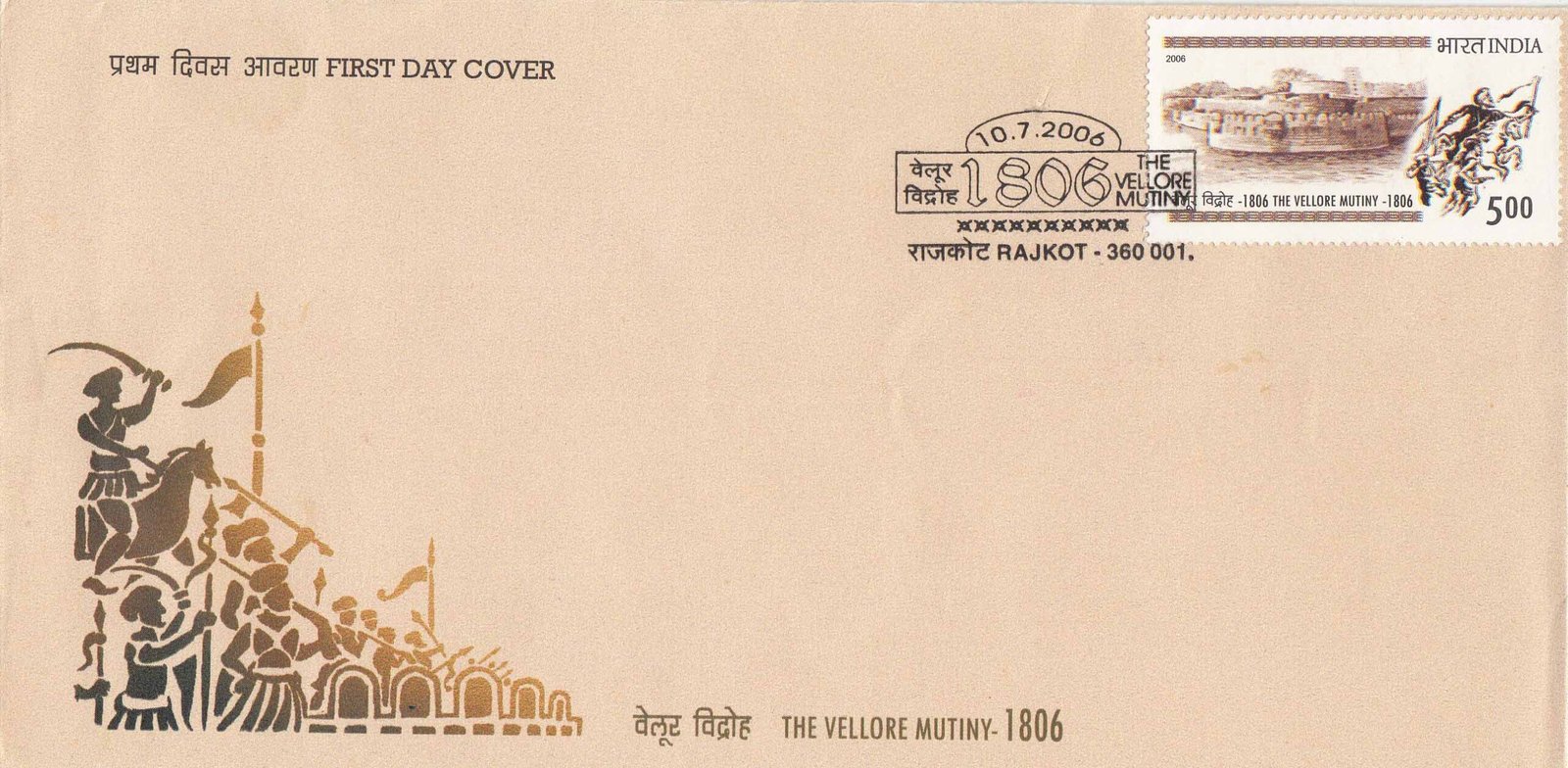
To mark the 200th anniversary of the Vellore Mutiny, the Department of Posts issued a commemorative postage stamp, honouring the courage of the soldiers who rose against British rule.
First Day Cover
Leave a Comment
You must be logged in to post a comment.