
Glove Puppets
Technical Data
| Date of Issue | February 13, 2026 |
|---|---|
| Denomination | Rs. 10 |
| Quantity | 111,000 |
| Printing Process | Wet Offset |
| Colors | multicolor |
| Credit (Designed By) | Sh. Sankha Samanta |
| Catalog Codes |
Colnect codes IN 2026.02.13-03 |
| Themes | Puppets |
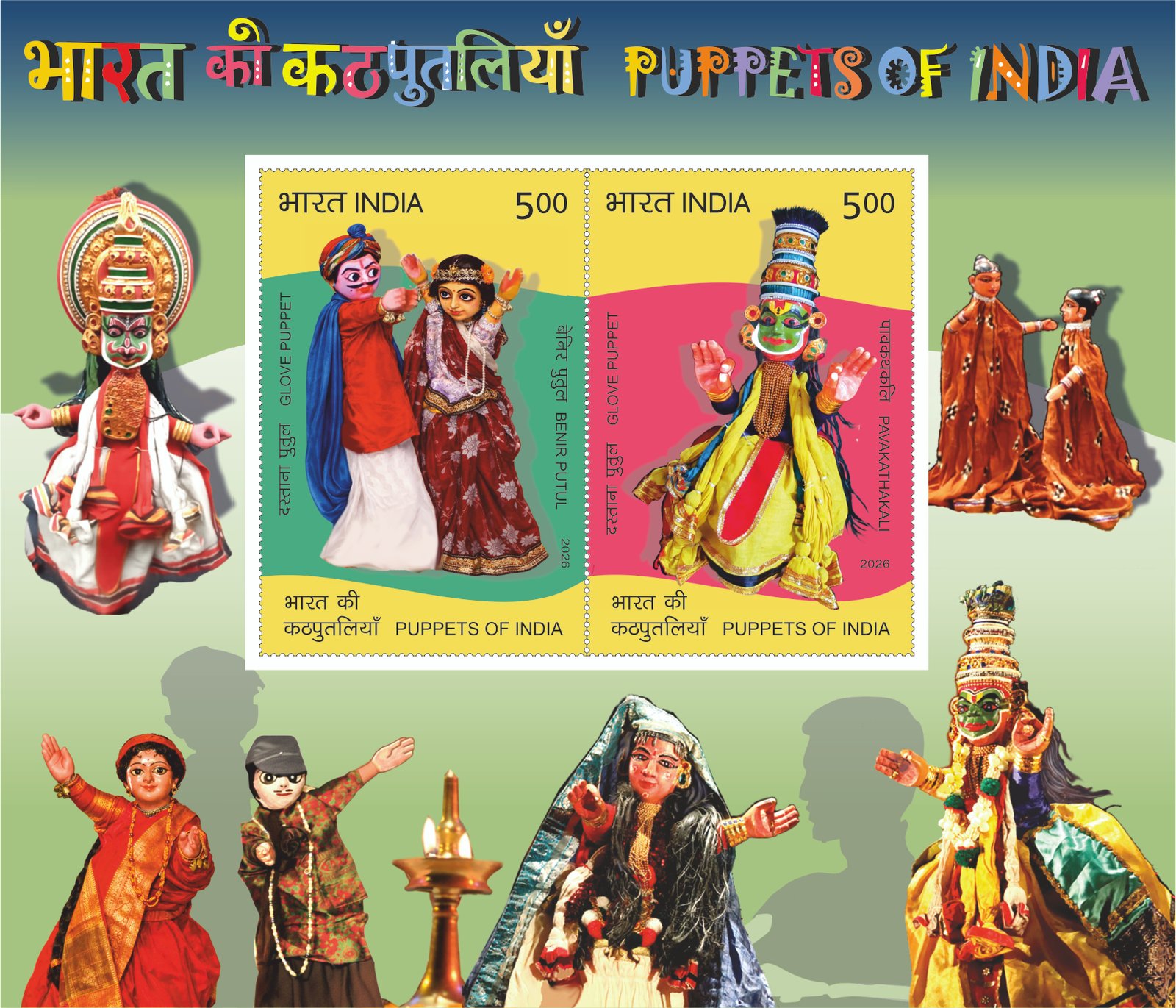
Intimate Theatre in the Palm of the Hand
Glove puppetry is one of India’s most engaging and accessible traditional performance forms. Operated by inserting the hand into the puppet’s hollow body, the puppeteer controls the head with the forefinger and the arms with the thumb and middle finger. This direct manipulation gives glove puppets lively expressions, quick gestures, and an intimate theatrical appeal.
Like other Indian puppet traditions, glove puppet performances frequently narrate episodes from the Ramayana and Mahabharata, along with stories from the Puranas, regional legends, and social themes. Through music, dialogue, and expressive movement, glove puppeteers interpret mythology while offering moral lessons and subtle commentary on contemporary life.
Glove puppetry traditions continue to thrive in Kerala, Odisha, Uttar Pradesh, and West Bengal, each region lending its own stylistic flavour.
Distinctive Features of Glove Puppetry
- Compact Size: Usually small and lightweight, allowing swift and expressive movements.
- Direct Control: The puppeteer’s hand forms the body of the puppet, creating immediacy and spontaneity.
- Carved Heads: Typically made of wood or terracotta and vividly painted.
- Vibrant Costumes: Reflective of regional theatre traditions.
- Live Performance: Often accompanied by singing, narration, and percussion.
Because of their size and portability, glove puppet troupes traditionally travel from village to village, performing in small, intimate spaces and directly engaging with audiences.
Major Glove Puppet Traditions
Benir Putul (West Bengal)
Benir Putul, also known as “Merchants’ Puppets,” is a traditional glove puppet theatre from West Bengal, particularly concentrated in the Medinipur district. The name suggests the twisting motion of the puppets, resembling braided hair.
Performances usually feature lively exchanges between male and female characters with terracotta heads and wooden limbs. Bells or cymbals tied to the wrists maintain rhythmic movement. Small travelling troupes—often one or two performers—bring this vibrant art form to rural communities.
Pavakathakali (Kerala)
Pavakathakali is Kerala’s distinctive glove puppet theatre, influenced by the classical dance-drama tradition of Kathakali. The word combines Pava (puppet) and Kathakali (story play).
Emerging about two centuries ago, Pavakathakali adapted Kathakali’s elaborate costumes, facial makeup, and stylized gestures into miniature puppet form. Traditionally performed in homes and during festivals, it was designed especially to educate and entertain children. Through these performances, young audiences became familiar with the epics while absorbing moral values and cultural ideals.
Cultural Importance of Glove Puppets
Glove puppetry represents a harmonious blend of theatre, sculpture, music, and oral storytelling. The art is usually transmitted within families, with children learning by observing elders carve puppet heads, stitch costumes, and master vocal modulation.
The puppeteer serves as narrator, performer, and interpreter—animating characters through modulated voices and expressive hand movements. Despite their small size, glove puppets create a powerful dramatic impact and foster a close connection between performer and audience.
Philatelic Tribute
Recognizing the enduring vitality of India’s puppet traditions, India Post has issued a Miniature Sheet on Puppets of India, celebrating glove, string, rod, and shadow puppetry.
This commemorative issue honours glove puppets as vibrant symbols of India’s artistic heritage—preserving epic narratives, regional storytelling traditions, and craftsmanship passed down through generations.
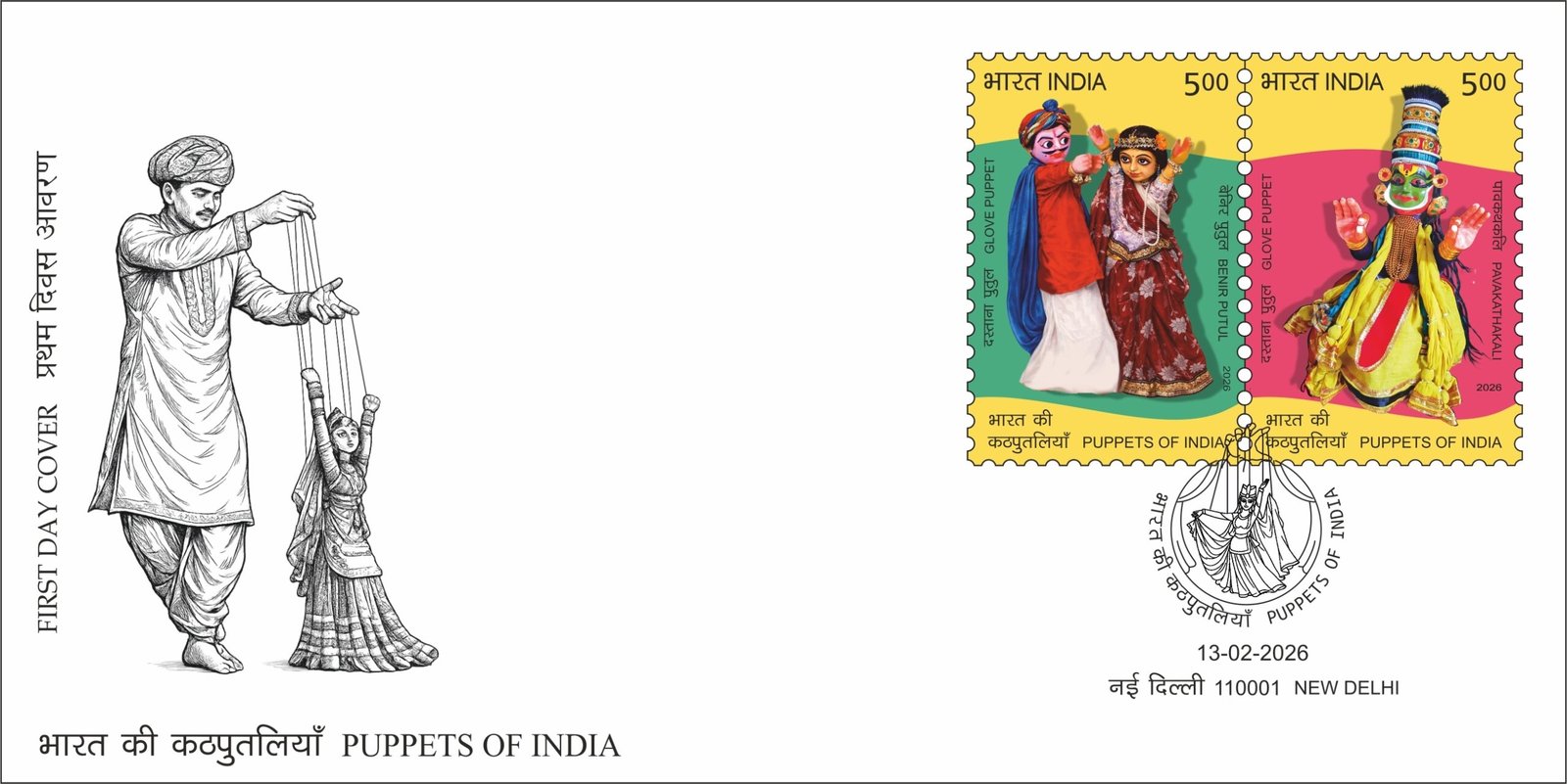
First Day Cover
Leave a Comment
You must be logged in to post a comment.