
Shadow Puppets
Technical Data
| Date of Issue | February 13, 2026 |
|---|---|
| Denomination | Rs. 10 |
| Quantity | 111,000 |
| Printer | Security Printing Press, Hyderabad |
| Printing Process | Wet Offset |
| Colors | Multicolor |
| Credit (Designed By) | Sh. Sankha Samanta |
| Catalog Codes |
Colnect codes IN 2026.02.13-05 |
| Themes | Puppets |
The Theatre of Light and Silhouette
Shadow puppetry is one of India’s most ancient and visually poetic theatrical traditions. Performed behind a translucent screen illuminated by oil lamps or modern lighting, intricately crafted leather figures cast dramatic silhouettes that come alive through movement, music, and narration. This evocative interplay of light and shadow creates a powerful storytelling medium rooted in mythology and community memory.
Like other Indian puppet forms, shadow puppet theatre frequently narrates episodes from the Ramayana, Mahabharata, and the Puranas, along with regional legends and devotional themes. Through stylized dialogue, singing, and instrumental accompaniment, puppeteers transport audiences to epic times while often incorporating contemporary reflections.
Shadow puppet traditions continue in Andhra Pradesh, Karnataka, Maharashtra, Odisha, and Tamil Nadu, each region contributing distinctive aesthetics and performance styles.
Distinctive Features of Shadow Puppetry
- Translucent Leather Figures: Crafted from treated animal hide and often perforated with delicate patterns.
- Illuminated Screen: Puppets are held against a white cloth screen, creating striking silhouettes.
- Vibrant Colours: In some traditions, the translucent leather is painted in vivid hues, producing luminous visual effects.
- Musical and Narrative Elements: Performances combine recitation, song, percussion, and dialogue.
- Ritual Significance: Many performances begin with prayers and invocations.
The shadow puppet stage is both sacred and theatrical, serving as a space where mythology, devotion, and artistry converge.
Major Shadow Puppet Traditions
Ravanachhaya (Odisha)
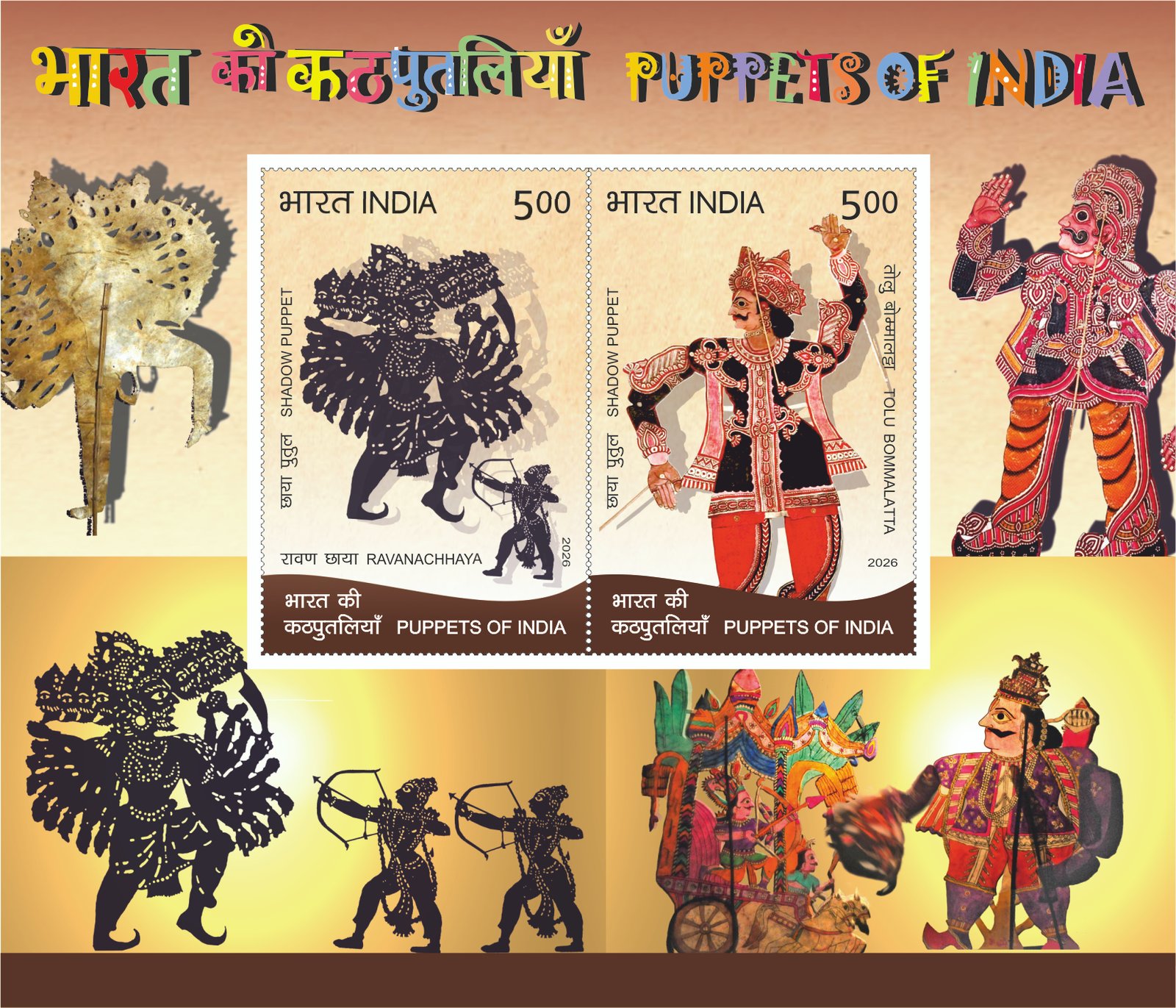
Ravanachhaya, meaning “Shadow of Ravana,” is a distinctive shadow puppet tradition of Odisha. Based on the Odia version of the Ramayana—particularly the Vichitra Ramayana—this form is unique for its simple, unpainted leather puppets that create bold dark silhouettes.
Once widely practiced in Angul and Dhenkanal districts, Ravanachhaya now survives mainly in parts of Angul. Performances are accompanied by traditional instruments such as khanjani and daskathi, and begin with ritual invocations, preserving both devotional and narrative elements.
Tolu Bommalatta (Andhra Pradesh)
Tolu Bommalatta, the shadow puppet theatre of Andhra Pradesh, is among the earliest surviving folk forms of the region. Unlike the stark silhouettes of Ravanachhaya, its puppets are multi-coloured and translucent, producing vivid pictorial compositions when illuminated behind the screen.
The mythological figures—richly decorated and often large in size—appear animated through coordinated manipulation, song, and dialogue. The singer-manipulators play a crucial role in bringing emotional depth and dramatic intensity to the performance.
Cultural and Artistic Significance
Shadow puppetry represents a remarkable fusion of visual art, craftsmanship, music, and oral tradition. The making of each puppet involves careful cutting, perforating, colouring, and assembling of leather pieces, reflecting generations of inherited skill.
Traditionally transmitted within families, the art form serves not only as entertainment but also as a vehicle for moral instruction, preservation of epic literature, and community bonding. Its dramatic use of light and shadow symbolizes the interplay between the visible and the unseen—an enduring metaphor within Indian philosophical thought.
Philatelic Recognition
Celebrating the richness of India’s diverse puppetry traditions, India Post has issued a Miniature Sheet on Puppets of India, highlighting the four classical forms: string, rod, glove, and shadow puppets.
Through this commemorative issue, shadow puppetry is honoured as a timeless expression of India’s artistic heritage—where light, silhouette, and storytelling unite to preserve epic narratives and cultural memory across generations.
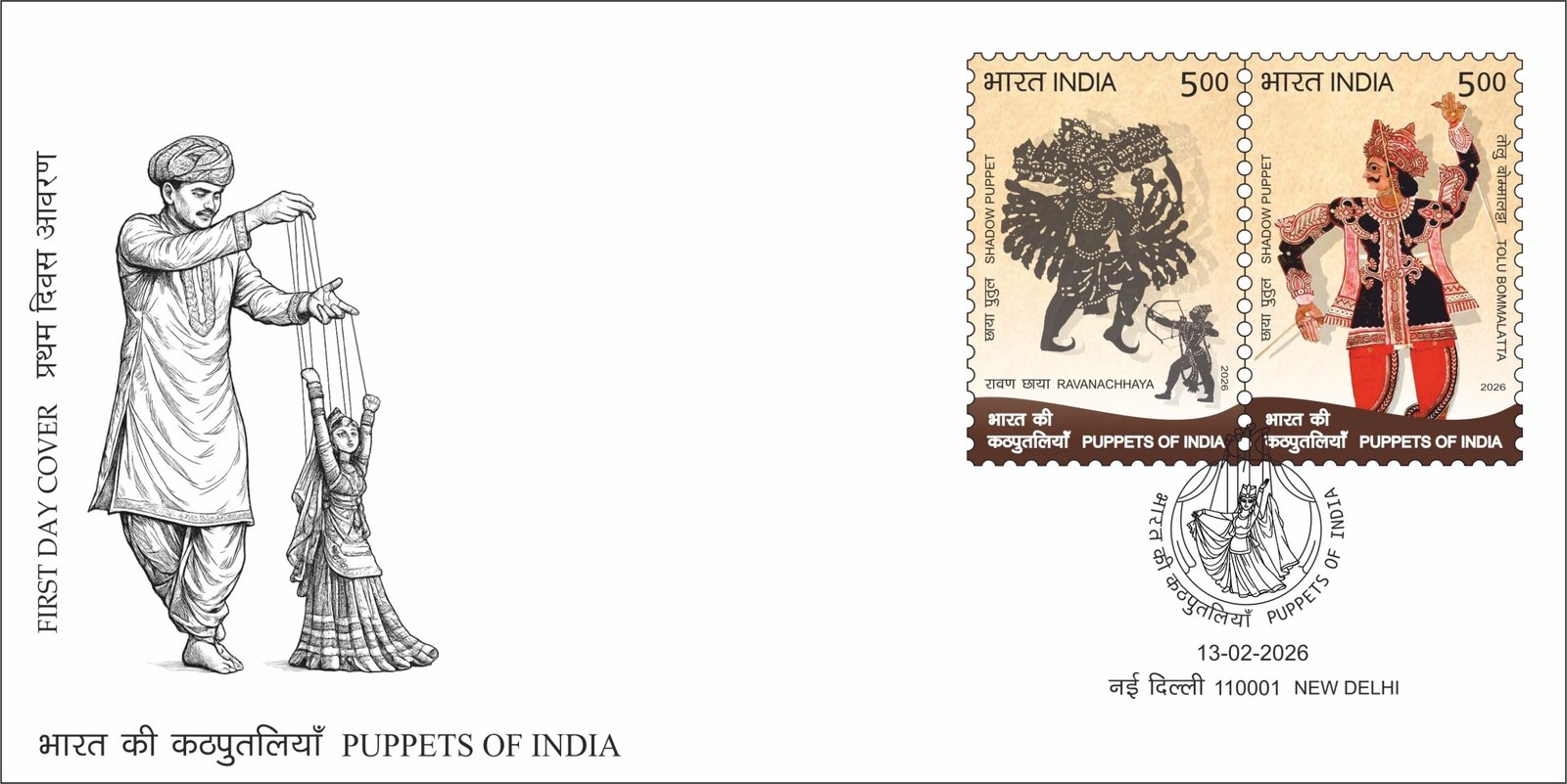
First Day Cover
Leave a Comment
You must be logged in to post a comment.