
Endangered Birds of India

Technical Data
| Date of Issue | October 5, 2006 |
|---|---|
| Denomination | Rs. 20 |
| Perforation | line13¼ |
| Printer | India Security Press, Nasik |
| Printing Process | Photogravure |
| Watermark | No Watermark |
| Colors | Multicolor |
| Credit (Designed By) | Mr. Suresh Kumar |
| Catalog Codes |
Michel IN BL37 Stamp Number IN 2168e Stanley Gibbons IN MS2350 |
| Themes | Animals (Fauna) | Birds | Storks |
Stamps in this Miniature Sheet
A Call for Conservation
The Earth sustains an extraordinary diversity of life, yet many species have not survived the passage of time. Over the centuries, numerous animals have become extinct, while many others now face the threat of extinction. The primary danger to wildlife today is the rapid loss of natural habitats caused by growing human populations and expanding development activities.
Large-scale transformation of landscapes—such as deforestation, draining of wetlands, and the conversion of grasslands into agricultural or urban areas—has left many species with little or no space to survive. In addition, environmental pollution, chemical contaminants, pesticides, and insecticides have severely affected wildlife populations, reducing their ability to reproduce and threatening the delicate balance of ecosystems.
To highlight the importance of wildlife conservation, India Post issued a set of commemorative postage stamps featuring four endangered bird species of India, celebrating their unique beauty while spreading awareness about the need to protect them.
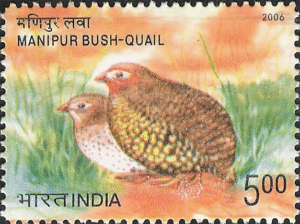
Manipur Bush Quail
Manipur Bush Quail inhabits tall grasslands and typically feeds in groups in open areas. Its diet mainly consists of grass seeds, wild lentils, and insects. Once endemic to the wet grasslands of North-East India, this elusive bird has not been reliably sighted since 1935, making it one of the most mysterious and possibly extinct bird species of the region.
Lesser Florican
Lesser Florican is a large bird belonging to the bustard family and is the only member of the genus Sypheotides. It inhabits open grasslands and agricultural fields, particularly those growing cotton and millets. The bird feeds on grains, young shoots, seeds, and insects such as beetles. Known for its spectacular courtship display, the Lesser Florican is one of India’s most threatened grassland birds.
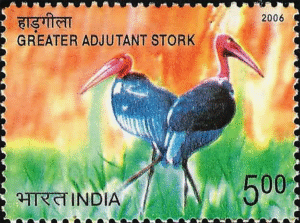
Greater Adjutant Stork
Greater Adjutant is a massive wading bird belonging to the stork family Ciconiidae. Found mainly in the tropical wetlands of northern and north-eastern India, this impressive bird can reach a height of 145–150 cm and has a wingspan of nearly 250 cm. Its diet consists primarily of frogs, fish, reptiles, lizards, and large insects.
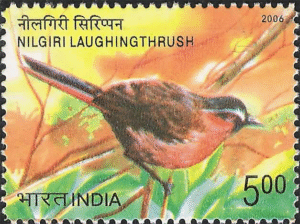
Nilgiri Laughingthrush
Nilgiri Laughingthrush is endemic to the Nilgiri Hills. This lively bird feeds on insects and berries, particularly wild raspberry and hill guava. Known for its distinctive and cheerful “laughing” call, the species breeds between February and July, building a cup-shaped nest made of grass, moss, and rootlets in bushes or small trees.
A Philatelic Message for Wildlife Protection
Through the release of a Miniature Sheet consisting of four commemorative stamps, India Post celebrates the beauty and ecological importance of these endangered birds. At the same time, the stamps serve as a reminder of the urgent need to protect wildlife and conserve natural habitats so that these remarkable species can continue to thrive for generations to come.
First Day Cover
