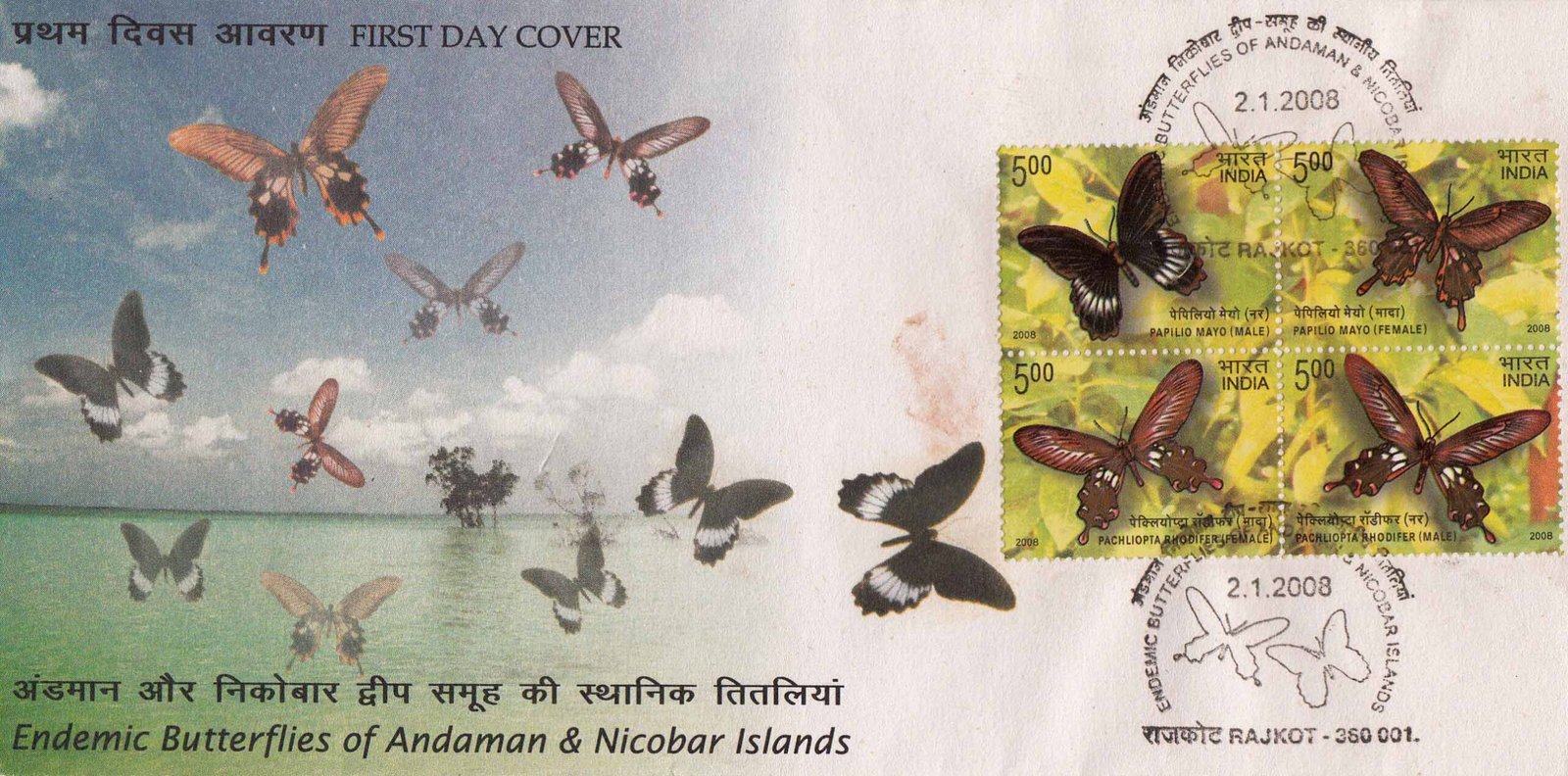
Endemic Butterflies of Andaman & Nicobar Islands

Technical Data
| Date of Issue | January 2, 2008 |
|---|---|
| Denomination | Rs. 20 |
| Quantity | 200,000 |
| Perforation | 13 |
| Printer | India Security Press, Nasik |
| Printing Process | Photo Gravure |
| Watermark | No Watermark |
| Colors | Multicolor |
| Credit (Designed By) | Mr. Suresh Kumar Smt. Alka Sharma |
| Catalog Codes |
Michel IN BL51 Stamp Number IN 2230e Yvert et Tellier IN BF50 Stanley Gibbons IN MS2463 WADP Numbering System - WNS IN004MS.2008 |
| Themes | Animals (Fauna) | Butterflies and Moths | Insects |
Stamps in this Miniature Sheet
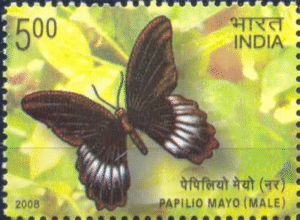
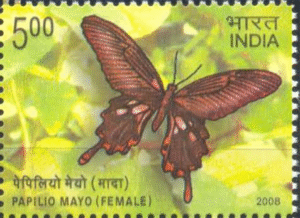
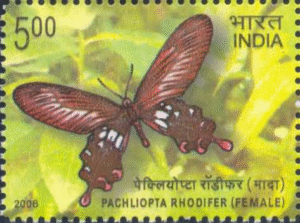
Unique Butterfly Fauna of the Islands
The Andaman and Nicobar Islands are blessed with a rich and diverse butterfly fauna, owing to their humid tropical rainforests and relatively undisturbed ecological environment. The long geographical isolation of these islands has fostered the evolution of numerous endemic species found nowhere else in the world.
The butterfly fauna here exhibits a high degree of endemism and ecological uniqueness. Some notable endemic species include Andaman Mormon, Andaman Club Tail, Andaman Oak Leaf, Tailless Oak Blue, Andaman Snow Flat, Nicobar Yeoman, and Nicobar Map. These butterflies are highly specific to their host plants and play an important role in the fragile island ecosystem.
Recognizing their ecological value, the Government of India has extended legal protection to several species under the Wildlife Protection Act, 1972, and some are listed in various schedules as well as in the Red Data Book of the International Union for Conservation of Nature (IUCN). There is an urgent need to create national awareness for the conservation and protection of these endemic butterflies.
This commemorative set of postage stamps portrays two such endemic species: the Andaman Mormon and the Andaman Club Tail.
Papilio mayo
Andaman Mormon
The Andaman Mormon was the first endemic butterfly described from the Andaman Islands. The male has a wingspan of about 120 mm, while the female measures approximately 150 mm. Both sexes have black bodies.
The male’s upper side is black, with the forewing lacking internervular streaks and the hind wing without a tail. It displays a broad blue antediscal band on the hind wing. The underside is black, with the forewing marked by a basal red streak and obscure internervular veins. The hind wing bears a red patch, a complete red ocellus, and submarginal blue lunular spots, with the posterior ones being less prominent.
The female differs in having broad internervular streaks on the forewing, white in the discal area. The hind wing is interrupted by an oval black spot and a broad elongated black patch; the apical half of the tail is red, whitish at the apex.
Its larval food plant is a citrus climbing vine. Although this endemic species is not rare in the Andamans, females are difficult to sight. It inhabits forested areas from North to South Andamans. It resembles the Great Mormon and is also a mimic of the Andaman Club Tail.
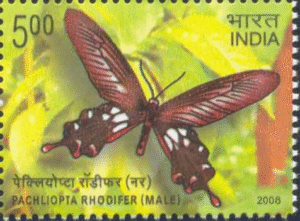
Pachliopta rhodifer
Andaman Club Tail
The Andaman Club Tail has a wingspan of about 120 mm in males and 140 mm in females. The male’s body is red, with black upper wings. The forewing has pale streaks extending up to the apex of the cell. The hind wings are more crimson red and dusted with black scales; the discal area is more extensive, and the antediscal spot extends well below the vein.
The female mimics the female Andaman Mormon and is often seen flying slowly along forest paths.
This endemic species, once very common in South Andamans during the 1980s, is now rarely sighted. Its food plant is Thottea tomentosa.
Philatelic Significance
The Department of Posts is proud to issue a Miniature Sheet consisting of set of 4 commemorative postage stamps highlighting the endemic butterflies of the Andaman and Nicobar Islands. These stamps not only celebrate the natural beauty and biodiversity of the islands but also emphasize the importance of conservation efforts to protect these rare and fragile species for future generations.
First Day Cover