
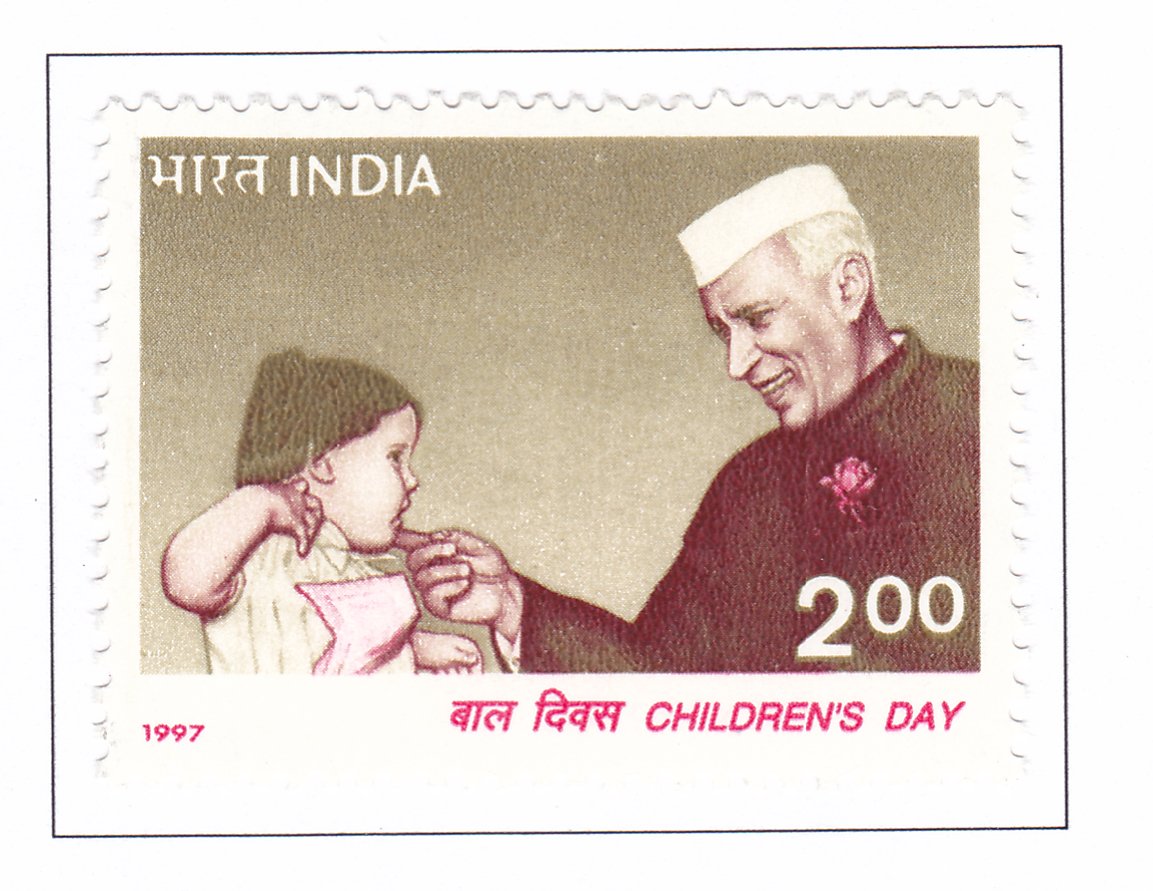
Children’s Day 1997
Technical Data
| Stamp Set | Children's Day |
|---|---|
| Date of Issue | November 14, 1997 |
| Denomination | Rs. 2 |
| Quantity | 700,000 |
| Perforation | comb 13½ x 13 |
| Printer | Security Printing Press, Nashik |
| Printing Process | Photogravure |
| Watermark | No Watermark |
| Colors | Multicolor |
| Credit (Designed By) | |
| Catalog Codes |
Michel IN 1589 Stamp Number IN 1654 Yvert et Tellier IN 1361 Stanley Gibbons IN 1753 |
| Themes | Children | Famous people | Headgear | Men | Politicians |
Jawaharlal Nehru and His Vision for Children
14 November, the birth anniversary of Jawaharlal Nehru, is celebrated every year in India as Children’s Day. Fondly remembered as Chacha Nehru, he shared a deep affection for children and believed that the future of the nation depended on their growth, welfare, and education.
This special day honors both his love for children and his immense contribution to building modern India.
Why 14 November Is Celebrated as Children’s Day
Jawaharlal Nehru believed that children are the foundation of a strong nation. He famously said:
The process of building men and women depends considerably on what is done to its children.
Because of this lifelong commitment, his birthday was dedicated to the children of India.
Jawaharlal Nehru: Builder of Modern India
Beyond being India’s first Prime Minister, Nehru was a visionary leader who dreamed of a progressive and modern nation.
His vision for India included:
- Scientific temper
- Strong democracy
- Industrial growth
- Economic self-reliance
- Social justice
- Equal opportunities for children
He described free India as a noble mansion where all her children could live with dignity.
Nehru’s Contribution to Child Welfare
Nehru believed that national planning must include child development and welfare.
Planned Development
A structured approach to child welfare began with India’s early Five Year Plans of India.
National Policy for Children (1974)
The National Policy for Children recognized children as the nation’s most valuable asset.
It focused on:
- Health and nutrition
- Education
- Protection and care
- Equal opportunity
- Holistic development
India’s Commitment to Children
India became a signatory to global declarations for the survival, protection, and development of children.
The Department of Women and Child Development prepared a national plan of action to address:
- Child health
- Education
- Welfare services
- Removal of gender discrimination
- Protection for disadvantaged children
- Social and economic inclusion
Importance of Children’s Day
Children’s Day reminds society of its moral and social responsibility toward children.
The day emphasizes:
- Every child’s right to education
- Proper healthcare
- Nutrition
- Protection from exploitation
- Equal opportunities
- Love and care
Commemorative Stamp Design
The special postage stamp issued for Children’s Day featured:
- Jawaharlal Nehru with a child
- His popular image as Chacha Nehru
- His lifelong dedication to children’s welfare
First Day Cover
The First Day Cover displayed a painting by Shaly Bhattacharya, chosen from a painting competition among Anganwadi children and provided by the Department of Women and Child Development.
Legacy of Chacha Nehru
Jawaharlal Nehru remains closely associated with children, education, and nation-building.
His belief in nurturing young minds continues to inspire India’s commitment to future generations.
Commemorative Postage Stamp
The Department of Posts issued a special Children’s Day postage stamp to honor Jawaharlal Nehru and celebrate his lasting contribution to children and modern India.