
Dr. Zakir Husain (1897-1969)
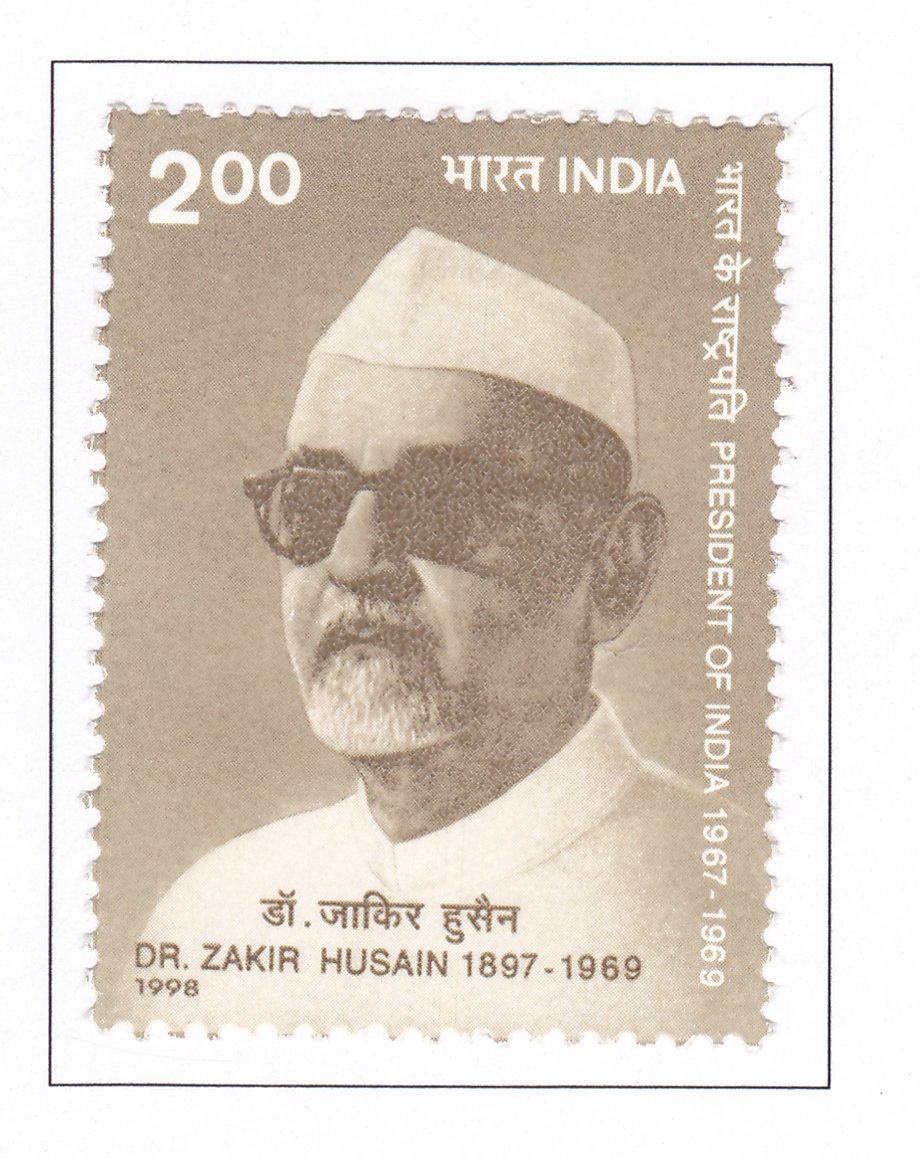
Technical Data
| Stamp Set | Birth Centenary |
|---|---|
| Date of Issue | May 3, 1998 |
| Denomination | Rs. 2 |
| Quantity | 400,000 |
| Perforation | comb 13 x 13½ |
| Printer | Security Printing Press, Nashik |
| Printing Process | Photogravure |
| Watermark | No Watermark |
| Colors | Grey brown |
| Credit (Designed By) | |
| Catalog Codes |
Michel IN 1624 Stamp Number IN 1682 Yvert et Tellier IN 1391 Stanley Gibbons IN 1788 |
| Themes | Anniversaries and Jubilees | Famous people | Headgear | Men | Optical Instruments | Politicians |
Educationist and Third President of India
Zakir Husain was one of India’s most distinguished educationists, National Hero, and the third President of India (1967–1969). His life was dedicated to nation-building through education, inspired deeply by the ideals of Mahatma Gandhi.
Early Life and Education
Dr. Zakir Husain was born on 8th February 1897 in Hyderabad into a Pathan family originally settled in Qaimganj, Uttar Pradesh. He pursued higher education at the Mohammedan Anglo-Oriental College (now Aligarh Muslim University).
At the age of 23, his life took a decisive turn when Mahatma Gandhi visited the college during the Non-Cooperation Movement. Inspired by Gandhiji’s vision, Zakir Husain joined the movement for national education.
Contribution to Education
Dr. Zakir Husain was a co-founder of Jamia Millia Islamia, which became a pioneering institution for innovative education in India.
- In 1926, at just 29 years of age, he became its Vice-Chancellor
- He led the institution for over two decades
- Promoted work-centered education instead of rote learning
In 1937, he chaired the National Committee on Basic Education at Gandhiji’s request, helping shape India’s educational philosophy by balancing practical learning with academic knowledge.
Role in Higher Education and Public Life
After the partition of India, he served as Vice-Chancellor of Aligarh Muslim University for eight years, strengthening the institution during a crucial period.
His contributions extended beyond education:
- Member of the Rajya Sabha (1952)
- Vice-President of India (1962)
- Played key roles in educational and press commissions
- President of India
On 9th May 1967, Dr. Zakir Husain was elected as the third President of India, succeeding Sarvepalli Radhakrishnan.
He served with dignity, integrity, and grace until his sudden demise on 3rd May 1969. His presidency reflected his lifelong commitment to education, ethics, and public service.
Awards and Achievements
Dr. Zakir Husain received some of India’s highest civilian honors:
- Padma Vibhushan (1954)
- Bharat Ratna (1963)
Literary Contributions
A scholar and writer, Dr. Zakir Husain made significant contributions to literature:
- Translated The Republic into Urdu
- Translated works on political economy
- Authored children’s stories and essays
- His speeches were compiled in “The Dynamic University”
Commemorative Recognition
To honor his legacy, India Post issued a commemorative postage stamp on his death anniversary. This tribute celebrates his immense contribution to education and public life in India.
Conclusion
Dr. Zakir Husain remains a symbol of intellectual excellence, humility, and dedication to nation-building. His vision for education and his service as President continue to inspire generations across India.