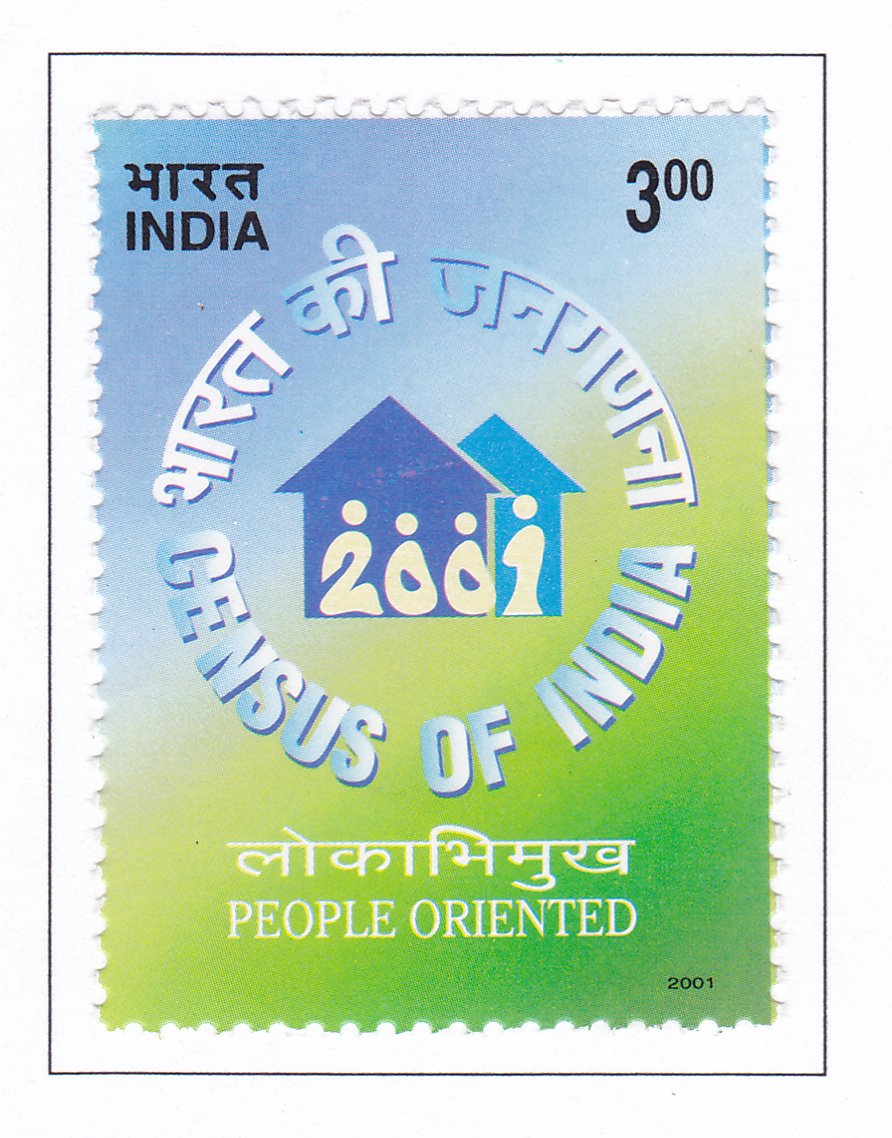
Census of India
Technical Data
| Date of Issue | February 10, 2001 |
|---|---|
| Denomination | Rs. 3 |
| Quantity | 400,000 |
| Perforation | comb 13 |
| Printer | Eagle Press Ltd. |
| Printing Process | Offset Lithography |
| Watermark | No Watermark |
| Colors | Multicolor |
| Credit (Designed By) | Shri Kamleshwar Singh |
| Catalog Codes |
Michel IN 1821 Stamp Number IN 1881 Yvert et Tellier IN 1587 Stanley Gibbons IN 1988 |
| Themes | Census of Population |
History, Process, and Significance
The Census of India 2001 represents one of the largest and most comprehensive population surveys ever conducted. While census enumeration is often considered a modern practice, India has a long history of population data collection dating back to ancient times.
Historical Background of Census in India
Efforts to collect population data in India can be traced to the 3rd century B.C., when Kautilya, in his work Arthashastra, emphasized the importance of population statistics for taxation and governance.
During the Mughal period, extensive records were maintained on land, production, population, and famines, indicating a well-developed administrative system.
The modern census in India began in 1872, when population data from different regions were systematically compiled. Since 1881, India has conducted a regular decennial census every ten years, making it one of the few countries with an unbroken census tradition.
Overview of Census of India 2001
The Census of India 2001 was conducted from 9th to 28th February 2001 across the country, making it one of the largest administrative exercises in the world.
To carry out this massive operation:
- Around 2 million enumerators and supervisors were deployed
- Personnel included teachers, government officials, and local body staff
Phases of Census 2001
The Census of India 2001 was conducted in two major phases:
1. House-Listing Operations
- Conducted between April and June 2000
- Focused on identifying and listing all human dwellings across India
- Helped prepare the groundwork for population enumeration
2. Population Enumeration
- Conducted from 9th to 28th February 2001
- In Jammu and Kashmir, it was conducted earlier in September 2000
- Involved detailed data collection on individuals
Importance of Census Data
The census is not just a simple headcount. It gathers comprehensive information about each individual, including:
- Demographic details
- Social characteristics
- Cultural attributes
- Economic conditions
This data is compiled into structured tables and analytical reports, which are essential for policymakers, researchers, and planners.
Role in Policy and Development
The Census of India plays a critical role in:
- Government planning and policy-making
- Resource allocation
- Development programs
- Social and economic research
It also supports various studies and surveys that enhance the understanding of India’s population dynamics.
Legacy and Recognition
With its long-standing tradition and scale, the Indian census stands as a remarkable administrative achievement. The Census of India 2001 further strengthened this legacy by setting new benchmarks in data collection and analysis.
To commemorate this significant national exercise, the Department of Posts issued a special postage stamp, marking its association with Census 2001.
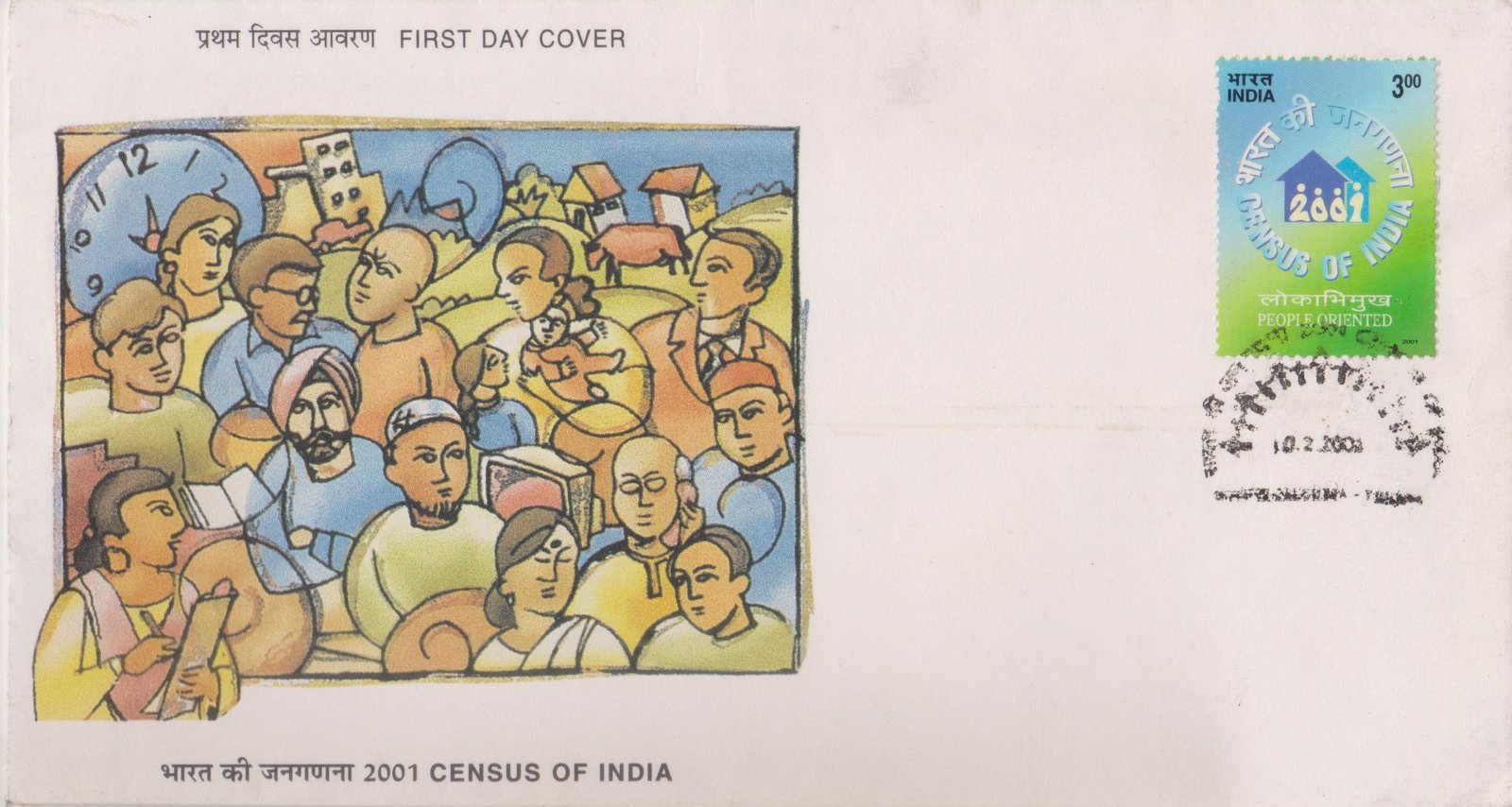
First Day Cover