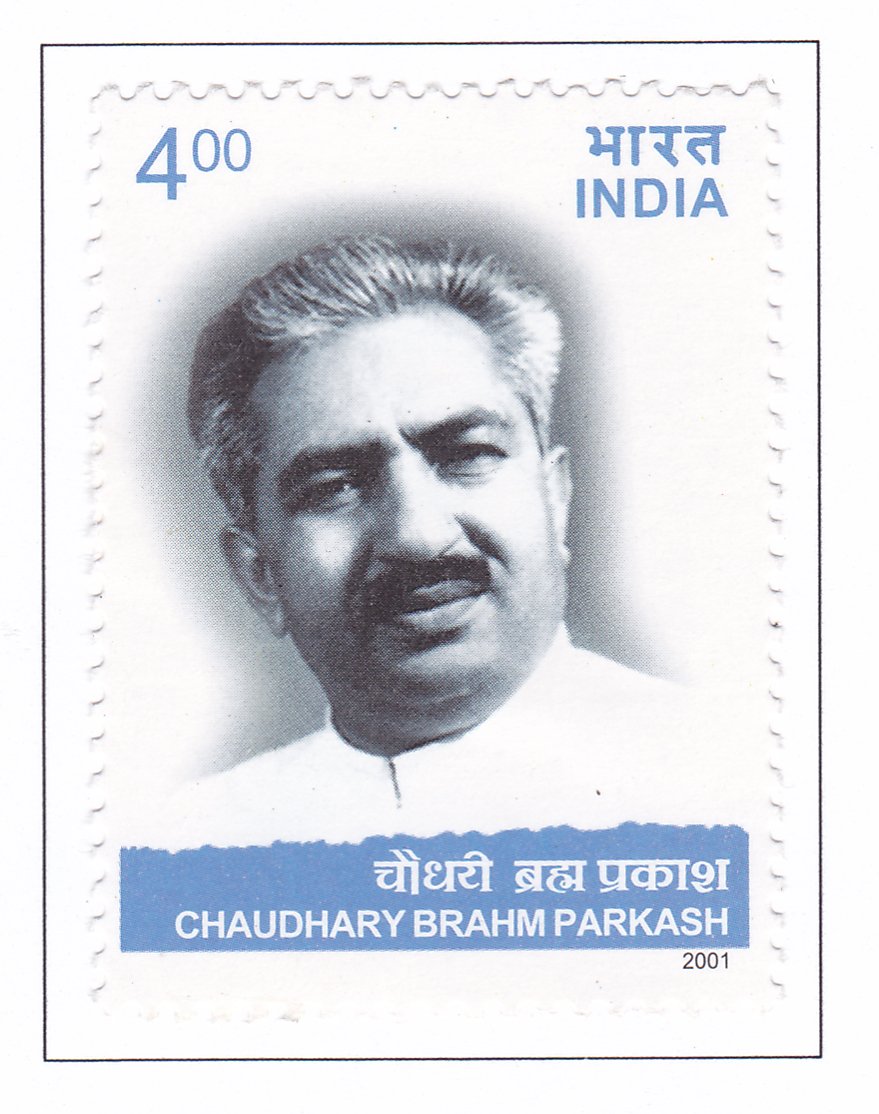
Chaudhary Brahm parkash
Technical Data
| Date of Issue | August 11, 2001 |
|---|---|
| Denomination | Rs. 4 |
| Quantity | 400,000 |
| Perforation | comb 13 |
| Printer | Eagle Press Ltd. |
| Printing Process | Offset Lithography |
| Watermark | No Watermark |
| Colors | Multicolor |
| Credit (Designed By) | Smt. Alka Sharma |
| Catalog Codes |
Michel IN 1847 Stamp Number IN 1906 Yvert et Tellier IN 1613 Stanley Gibbons IN 2013 |
| Themes | Commemoration | Famous people | Men | Politicians |
A Visionary Leader and First Chief Minister of Delhi
Chaudhary Brahm Parkash (1918–1993) was a distinguished leader known for his selfless public service, strong organizational skills, and deep commitment to social welfare. As one of the key political figures in Delhi, he played a vital role in shaping the region’s governance and development.
Early Life and Role in the Freedom Struggle
Born in Shakarpur village in Delhi, Chaudhary Brahm Parkash began his public life in 1936 by joining the local Congress Committee during a crucial phase of India’s freedom struggle.
He actively participated in the Individual Satyagraha led by Mahatma Gandhi and was imprisoned multiple times by British authorities.
During the Quit India Movement, he played a key role in underground resistance activities in Delhi, contributing significantly to the national movement.
Political Career and Leadership
After independence, Chaudhary Brahm Parkash emerged as a leading figure in Delhi’s political landscape. He served as the Chief Minister of Delhi and also held the portfolio of Planning and Development.
His contributions extended to the national level as well. He served as a Member of Parliament during 1957–1971 and again from 1977–1979, earning recognition as an effective and dedicated parliamentarian.
He also represented India as part of the delegation to the United Nations in 1966 and later served as a Union Cabinet Minister handling key portfolios such as Food, Agriculture, Irrigation, and Cooperatives.
Contribution to Rural Development and Cooperative Movement
Rural development and upliftment of marginalized communities were central to his vision. With deep insight into rural challenges, he recognized the importance of cooperative societies in improving the lives of villagers.
As early as 1945, he began organizing village and agricultural cooperatives. Strengthening the cooperative movement became a lifelong mission for him.
He was also a strong advocate of Panchayati Raj institutions, promoting decentralized governance and grassroots empowerment.
Social Welfare Initiatives
In 1977, Chaudhary Brahm Parkash established the National Union of Backward Classes, Scheduled Castes, Scheduled Tribes, and Minorities. This organization aimed to work towards the welfare and empowerment of weaker sections of society.
Legacy and Recognition
Chaudhary Brahm Parkash is remembered as a dedicated leader who worked tirelessly for social justice, rural development, and inclusive governance. His contributions continue to inspire future generations.
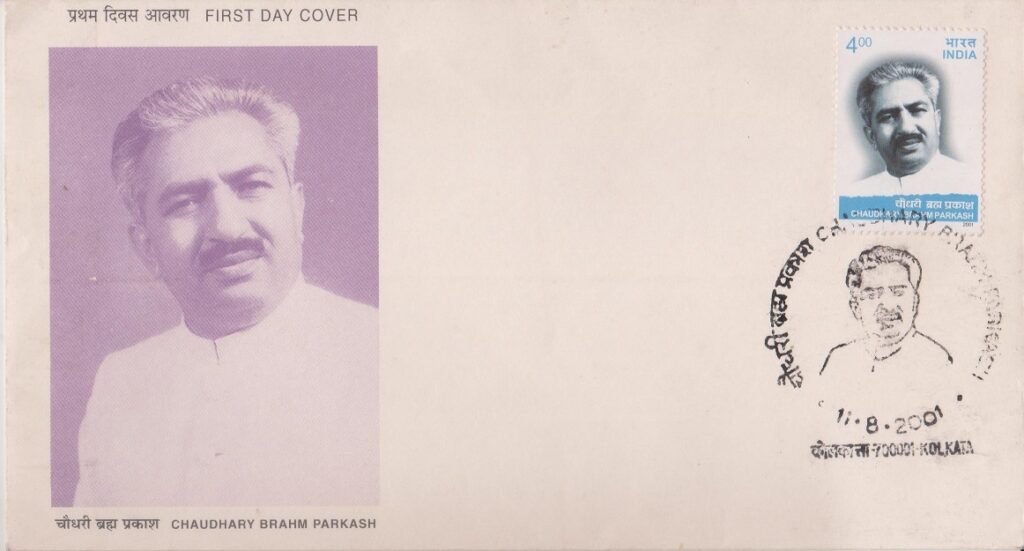
In recognition of his service to the nation, the Department of Posts issued a commemorative postage stamp in his honor.
First Day Cover