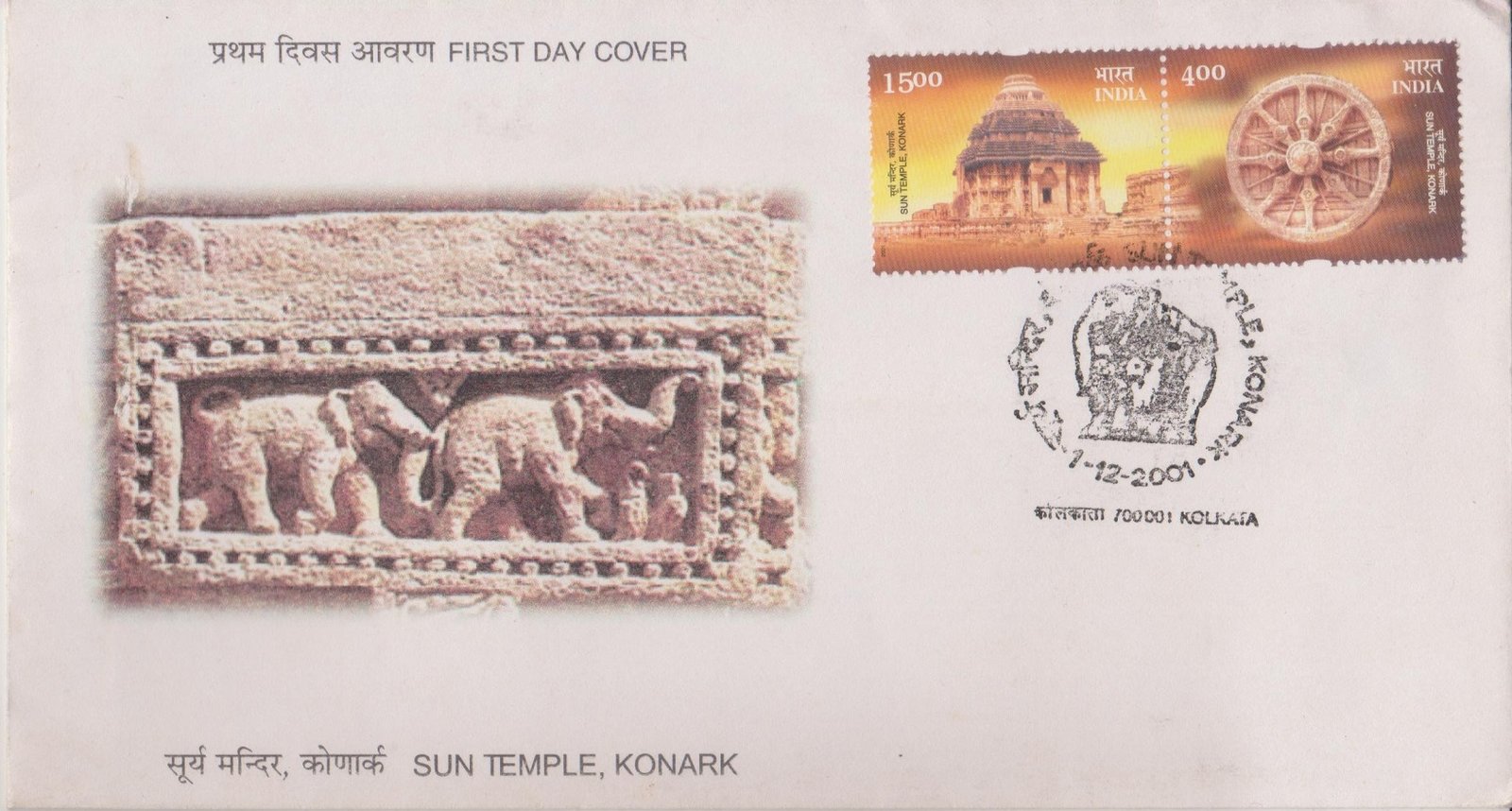
Sun Temple, Konark
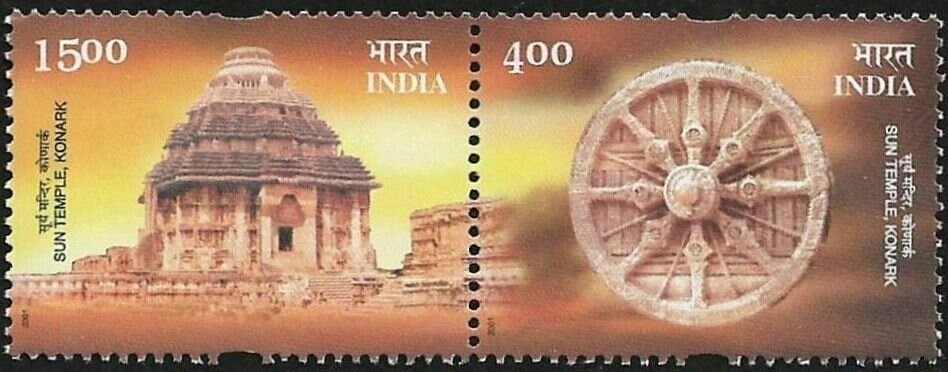
Technical Data
| Date of Issue | December 1, 2001 |
|---|---|
| Denomination | Rs. 19 |
| Quantity | 3,000,000 |
| Perforation | comb 13 |
| Printer | Calcutta Security Printers Ltd |
| Printing Process | Offset Lithography |
| Watermark | No Watermark |
| Colors | Multicolor |
| Credit (Designed By) | Sh. Sankha Samanta |
| Catalog Codes |
Michel IN 1877-1878 Stamp Number IN 1929 Yvert et Tellier IN 1642-1643 Stanley Gibbons IN 2042a |
| Themes | Anniversaries and Jubilees | Buildings | Temples | UNESCO World Heritage Sites | Wheels |
Stamps in this Se-Tenant
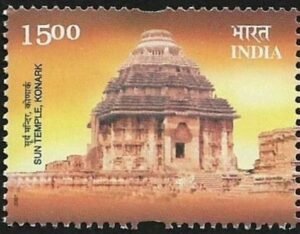
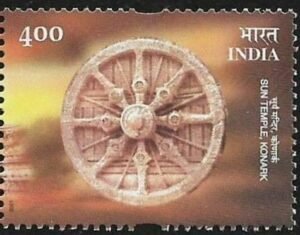
A Masterpiece of Ancient Indian Architecture
The Sun Temple Konark stands as one of the most magnificent symbols of ancient Indian architecture. Representing the pinnacle of temple art in Odisha, this iconic monument—once known as the Black Pagoda—is a remarkable blend of artistic brilliance, engineering excellence, and spiritual symbolism.
Historical Background
The Sun Temple Konark was built in the 13th century by Narasimhadeva I of the Ganga dynasty. It is believed that over 1,200 skilled artisans and architects worked tirelessly for nearly twelve years to create this grand structure, reflecting the political power and cultural sophistication of the dynasty.
Architectural Design and Symbolism
The temple is designed as a colossal chariot of the Sun God, Surya, moving across the sky. This unique structure features:
- Seven majestic horses pulling the chariot
- Twelve pairs of intricately carved wheels
- Alignment along an east-west axis to capture the rising sun
Each wheel is a masterpiece, symbolizing the passage of time and showcasing exceptional craftsmanship.
Structure of the Temple Complex
The Sun Temple Konark comprises three main architectural components:
- Deula (Sanctum)
- Jagamohana (Audience Hall)
- Nata Mandir (Dancing Hall)
The temple faces east, allowing the first rays of the sun to illuminate the structure, enhancing its spiritual significance.
Sculptural Excellence
The temple is renowned for its rich and detailed carvings. Its walls are adorned with:
- Divine and semi-divine figures
- Human and animal forms
- Floral and geometric patterns
Particularly notable are the graceful ‘kanyas’ (maidens) and dancers, depicted with lifelike expressions and dynamic movements. These sculptures not only reflect artistic mastery but also provide insights into the cultural life and classical dance traditions of the time.
The chariot wheels, horses, and ornamental platform together create a sense of motion, making the entire monument appear alive and dynamic.
Cultural Significance and Recognition
The architectural brilliance of the Sun Temple Konark has earned it global recognition, including its inclusion in the UNESCO World Heritage list. It continues to attract historians, architects, and art lovers from around the world.
Conservation and Legacy
For many years, the temple faced neglect and deterioration. Scientific conservation efforts began in 1901, marking the start of systematic preservation.
To commemorate 100 years of conservation, the Department of Posts issued special postage stamps, celebrating the enduring legacy of the Sun Temple Konark as a timeless masterpiece of Indian heritage.
First Day Cover