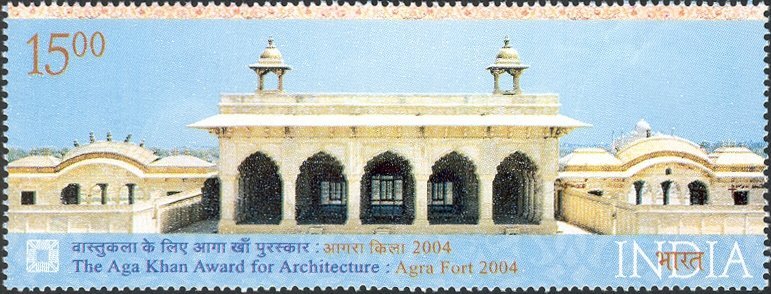
Khas Mahal, Agra Fort 2004
Technical Data
| Date of Issue | November 28, 2004 |
|---|---|
| Denomination | Rs. 15 |
| Quantity | 800,000 |
| Perforation | comb 14 |
| Printer | Security Printing Press, Nashik |
| Printing Process | Photogravure |
| Watermark | No Watermark |
| Colors | Multicolor |
| Credit (Designed By) | Smt. Alka Sharma |
| Catalog Codes |
Michel IN 2062 Stamp Number IN 2089a Yvert et Tellier IN 1833 Stanley Gibbons IN 2242 WADP Numbering System - WNS IN048.04 |
| Themes | Architecture | Palaces | UNESCO World Heritage Sites |
The Khas Mahal is one of the most elegant structures within the historic Agra Fort. Built entirely of white marble, this exquisite palace reflects the refined architectural taste of the Mughal emperor Shah Jahan, who commissioned its construction in 1637.
Situated in the heart of Agra, the palace overlooks the scenic Yamuna River and the beautiful Angoori Bagh. The Khas Mahal served as the private palace and sleeping chamber of the emperor, showcasing the luxurious lifestyle of the Mughal court.
Architectural Design
The architecture of Khas Mahal represents the graceful transition from the red sandstone structures built during the reign of Akbar to the delicate white marble architecture favored by Shah Jahan.
The palace complex includes:
- Three riverside pavilions overlooking the Yamuna River
- A central pavilion used by the emperor as his private chamber
- Elegant arched openings and decorative marble surfaces
- Slender turrets rising from the roof, adding to its graceful appearance
The central pavilion features three arches on each side and five arches on the front façade, creating an airy and well-ventilated structure. This design allowed cool breezes from the river to circulate through the palace, providing comfort during the hot summer months.
Royal Pavilions and Surroundings
The Khas Mahal is flanked by two important pavilions within the Agra Fort complex:
- Bangla-i-Darshan – located to the north, where the emperor held public audiences with his subjects
- Bangla-i-Jahanara – situated to the south, associated with the emperor’s daughter Jahanara Begum
The palace overlooks the elegant Angoori Bagh, a geometrically designed Mughal garden that once served as a relaxing retreat for the royal family.
Artistic Features
The Khas Mahal displays the hallmark artistic features of Mughal architecture during the reign of Shah Jahan. The structure combines:
- Intricate marble carving
- Decorative arches
- Symmetrical planning
- Fine ornamental detailing
These elements reflect the same aesthetic sensibility that later reached its peak in the construction of the Taj Mahal.
Historical and Cultural Significance
As part of the larger Agra Fort complex, the Khas Mahal represents the luxurious residential quarters of the Mughal emperors. The palace illustrates how Mughal architecture evolved from strong military structures into elegant palatial complexes combining beauty, comfort, and artistic refinement.
Agra Fort itself was recognized as a UNESCO World Heritage Site in 1983, highlighting the global significance of its architectural treasures, including the Khas Mahal.
Commemorative Postage Stamp
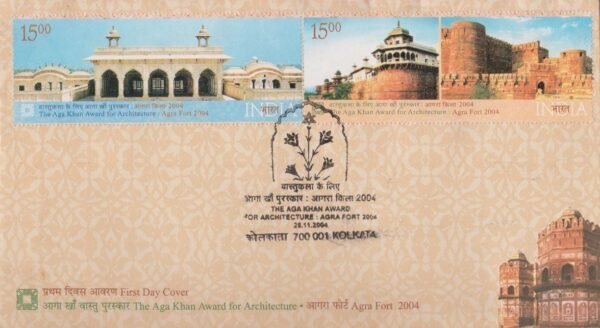
The architectural beauty of Khas Mahal was honored when India Post issued commemorative postage stamps featuring this remarkable structure as part of a series celebrating the Aga Khan Award for Architecture.
Legacy
Today, the Khas Mahal remains one of the most admired structures within Agra Fort. With its delicate marble craftsmanship, elegant pavilions, and scenic views of the Yamuna River, it stands as a timeless example of Mughal architectural brilliance and royal luxury. Visitors to Agra continue to marvel at this palace, which reflects the artistic vision and refined taste of Emperor Shah Jahan.
First Day Cover