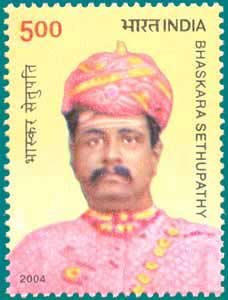
Bhaskara Sethupathy (1868-1903)
Technical Data
| Date of Issue | December 27, 2004 |
|---|---|
| Denomination | Rs. 5 |
| Quantity | 600,000 |
| Perforation | comb 13½ |
| Printer | Security Printing Press, Nashik |
| Printing Process | Photogravure |
| Watermark | No Watermark |
| Colors | Multicolor |
| Credit (Designed By) | Smt. Alka Sharma |
| Catalog Codes |
Michel IN 2069 Stamp Number IN 2095 Yvert et Tellier IN 1832 Stanley Gibbons IN 2251 WADP Numbering System - WNS IN055.04 |
| Themes | Commemoration | Famous people | Headgear | Heads of State | Men |
The Ascetic King of Ramanathapuram
Bhaskara Sethupathy was one of the most distinguished rulers of the Ramanathapuram kingdom. Belonging to the illustrious Sethupathy dynasty, he played an important role in social reform, religious patronage, and the promotion of culture during the late nineteenth century.
The Sethupathy Legacy
The title “Sethupathy” carried by the rulers of Ramanathapuram means “protector of the Sethu”, referring to the legendary passage across the sea from Rameswaram to Sri Lanka, believed to have been built by Lord Rama according to legend. The rulers considered themselves not only sovereigns of their territory but also guardians of the sacred Ramanathaswamy Temple and the revered Ramalinga idol.
Early Life and Education
Bhaskara Sethupathy was born on 3 November 1868 to Muthu Ramalinga Sethupathy II and Muthathal Naachiyar. As the eldest son of the royal family, he received a well-rounded education in Madras, where he studied through both Indian and English systems of learning.
On 3 April 1889, he assumed leadership as the head of the Ramanathapuram State.
Welfare and Social Reforms
King Bhaskara Sethupathy was known for his progressive outlook and commitment to social welfare. During his reign, he implemented several initiatives aimed at improving the lives of common people. He supported education, encouraged artistic activities, and promoted religious harmony.
Among his notable reforms were:
- Facilitating the entry of Harijans into temples, a progressive step toward social equality.
- Ending the practice of animal sacrifice at the Rajarajeshwari Temple with the support of Jagatguru Sringeri Sankaracharya.
- Donating more than 40 lakh rupees between 1890 and 1893 for religious, educational, and public welfare activities.
Patron of Swami Vivekananda
One of Bhaskara Sethupathy’s most celebrated contributions was his support for Swami Vivekananda. He played a crucial role in enabling Vivekananda to attend the World’s Parliament of Religions 1893 in Chicago.
The king made all the necessary arrangements for Vivekananda’s journey and stay in the United States. After Vivekananda returned to India in 1897, Bhaskara Sethupathy organized a grand reception in his honour on 23 January 1897. He also built a monument at the place where Vivekananda landed and inscribed the inspiring words “Satyameva Jayate” on it.
In recognition of his support and spiritual inclination, Swami Vivekananda conferred upon him the title “Raaja Rishi”, meaning “Ascetic King.”
Contribution to Tamil Culture
Apart from his political and social contributions, Bhaskara Sethupathy was also an accomplished Tamil scholar. He authored several works in Tamil and actively supported the cultural revival of the language.
He also assisted his cousin Pandithurai Thevar in organizing the Fourth Tamil Sangam, which played a significant role in promoting Tamil literature and scholarship.
Final Years
The death of Swami Vivekananda in 1902 deeply affected Bhaskara Sethupathy. In his later years, he gradually withdrew from worldly affairs and chose a more spiritual path. He spent much of his time in meditation at a monastery on the banks of the Tamirabarani River in Kallidaikurichi.
King Bhaskara Sethupathy passed away on 27 December 1903 at the young age of 35. Despite his short life, his contributions left a lasting impact on the social, cultural, and spiritual life of the region.
Commemorative Postage Stamp
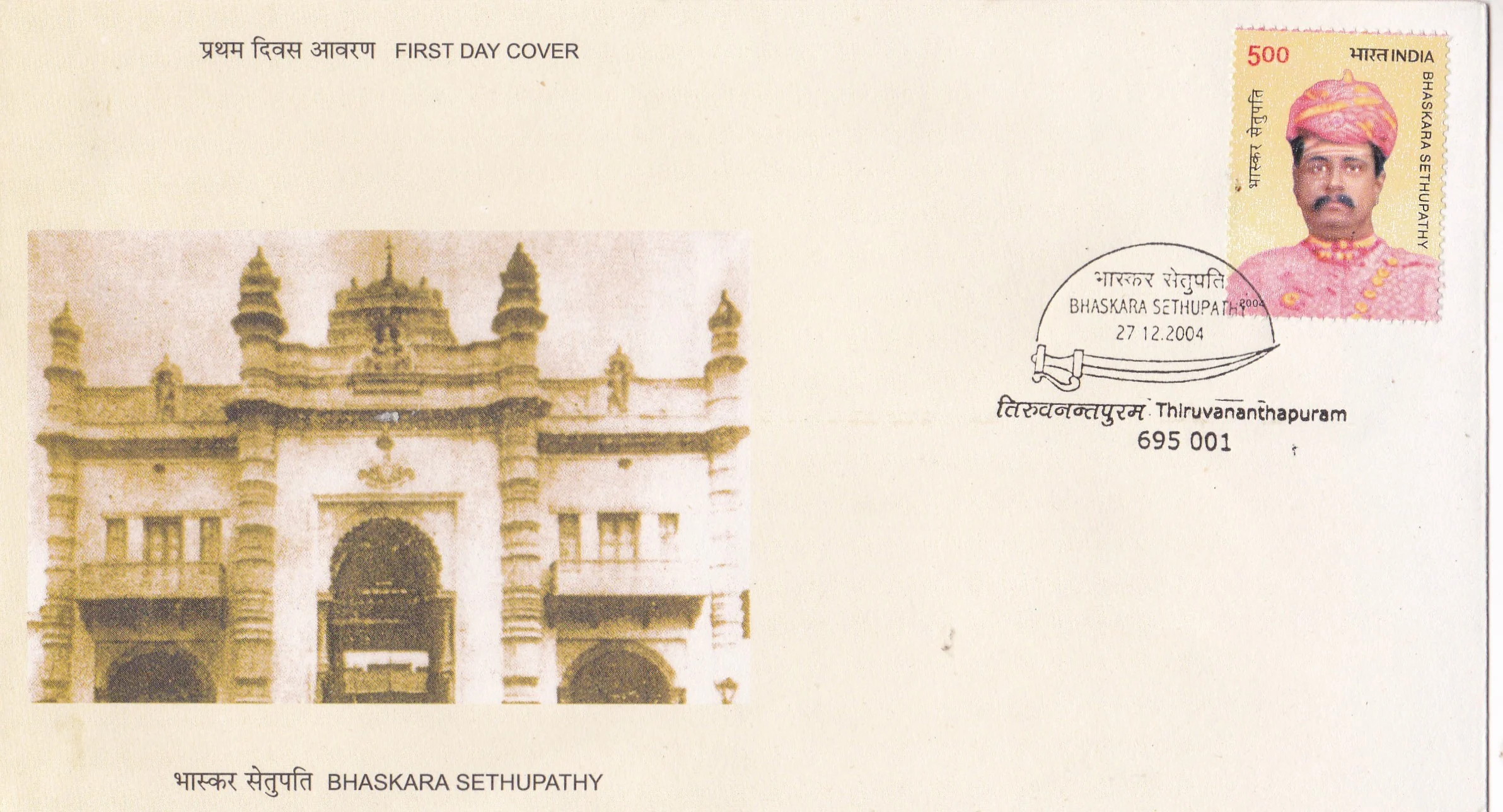
To honour his remarkable legacy, India Post issued a commemorative postage stamp dedicated to King Bhaskara Sethupathy. The stamp pays tribute to a ruler remembered for his reformist spirit, patronage of culture, and unwavering support to one of India’s greatest spiritual leaders.
First Day Cover