
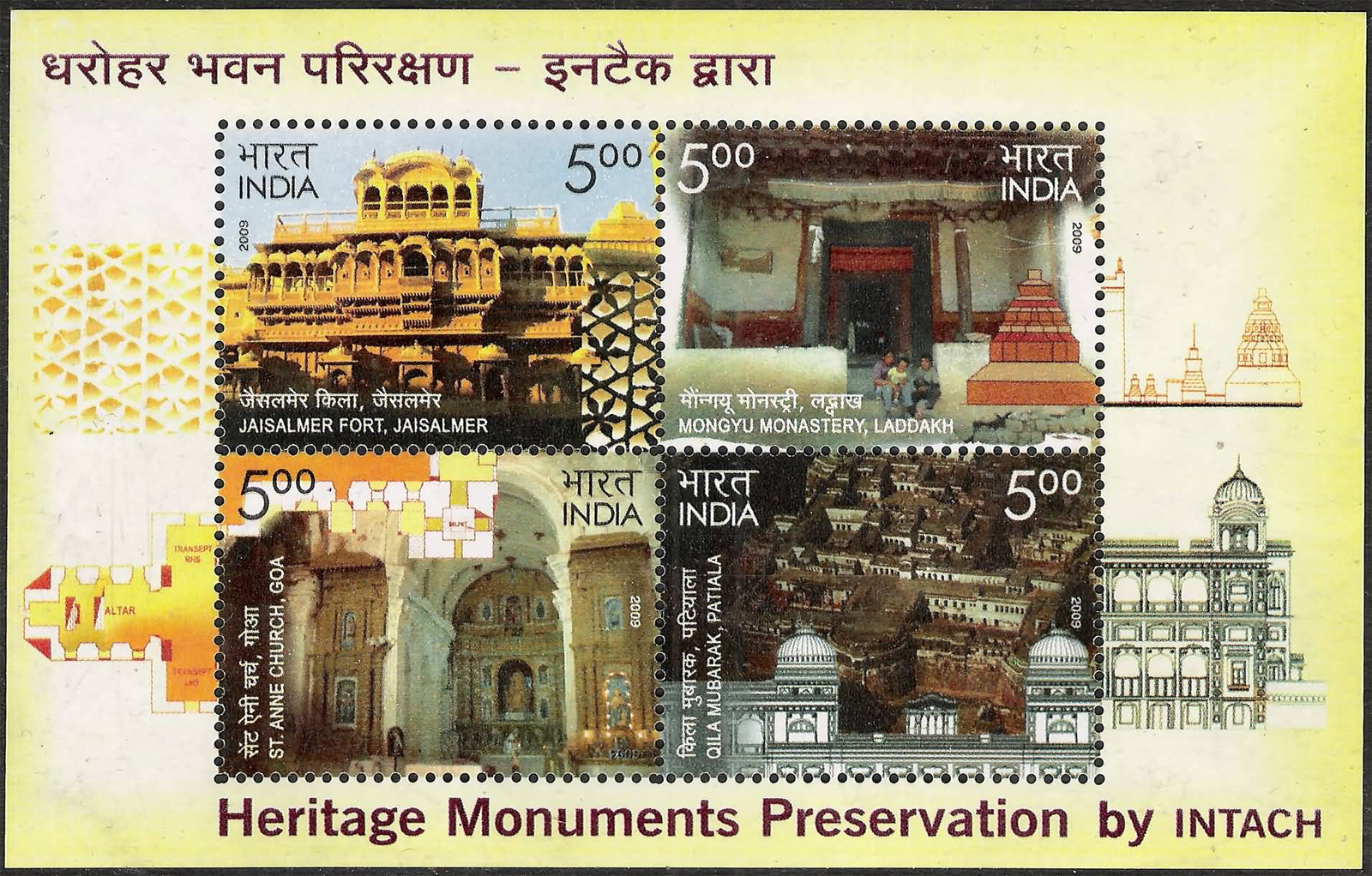
Heritage Monuments Preservation by INTACH
Technical Data
| Date of Issue | January 28, 2009 |
|---|---|
| Denomination | Rs. 20 |
| Quantity | 200,000 |
| Perforation | 13 |
| Printer | India Security Press, Nasik |
| Printing Process | Photo Gravure |
| Watermark | No Watermark |
| Colors | Multicolor |
| Credit (Designed By) | Sh. Bharati Mirchandani |
| Catalog Codes |
Michel IN BL67 Stamp Number IN 2308e Stanley Gibbons IN MS2570 WADP Numbering System - WNS IN007MS.2009 |
| Themes | Churches-Cathedrals-Basilicas-Chapels | Fortresses / Strongholds | Monasteries and Convents | UNESCO World Heritage Sites |
Stamps in this Miniature Sheet
India’s glorious history of over 5,000 years reflects a civilization rich in art, architecture, music, dance, handicrafts, and monumental structures. Preserving this invaluable architectural heritage of India is not just a cultural responsibility but a duty toward future generations. Architectural preservation ensures that the historical, material, and design integrity of heritage monuments is maintained through carefully planned conservation efforts.
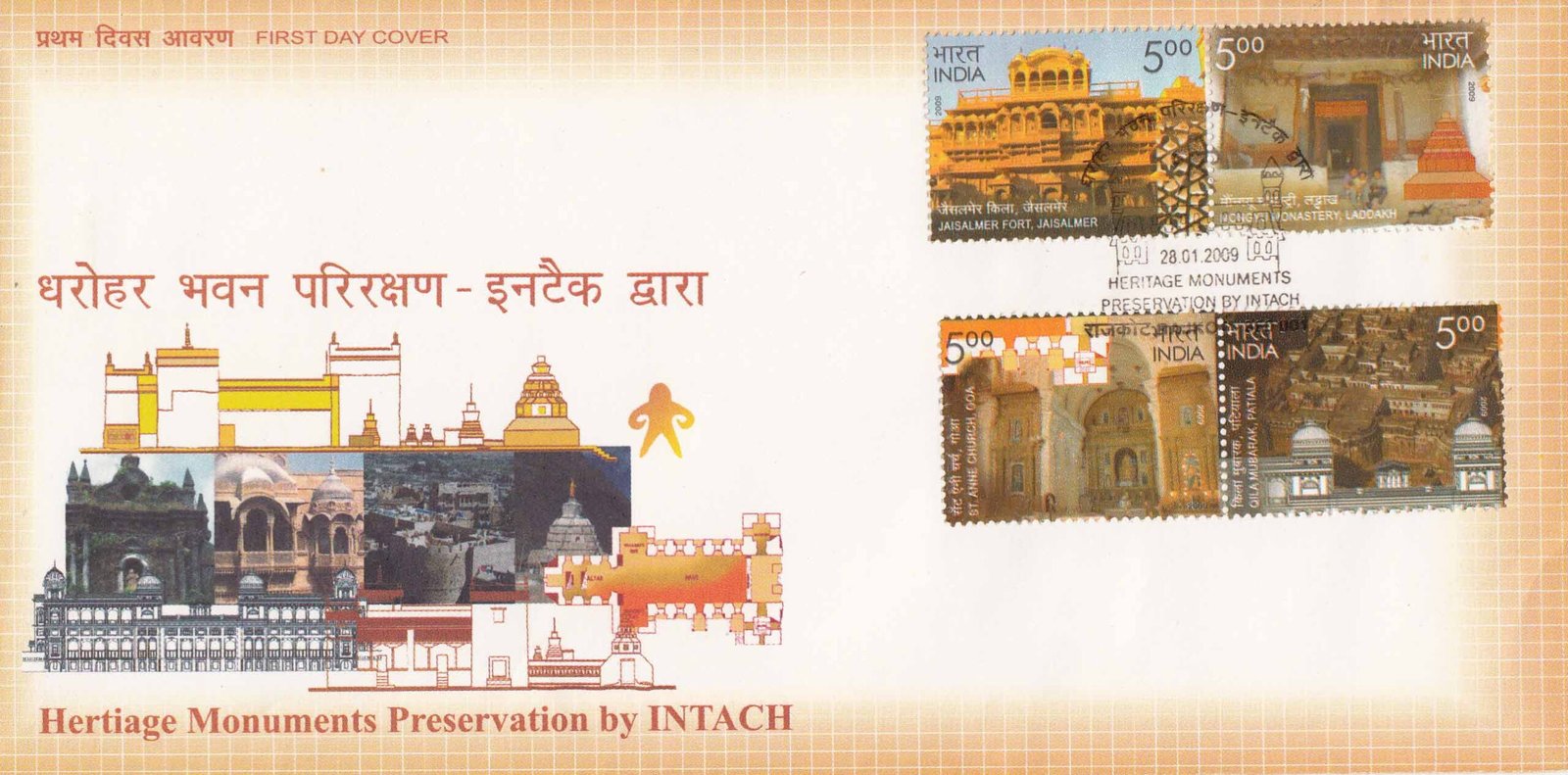
The Indian National Trust for Art and Cultural Heritage (INTACH) has played a vital role in protecting and conserving India’s vast natural and cultural legacy. In recognition of these efforts, India Post issued a set of four commemorative postage stamps highlighting four iconic heritage monuments: Mangyu Monastery, Saint Anne’s Church Goa, Jaisalmer Fort, and Qila Mubarak.
Mangyu Monastery
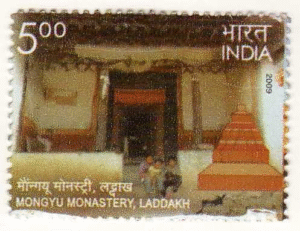
Located in the small village of Mangyu in Leh, Ladakh, Mangyu Monastery derives its name from the Mangyu River. The monastery, along with the ancient Nag-Idar Chorten (Stupa), is believed to be over 1,000 years old.
It is traditionally attributed to Rinchen Zangpo, the legendary scholar credited with spreading Buddhism across Ladakh and the Western Himalayas.
The monastery complex comprises four temples:
- Nanggarmangad
- Chenrezig Lhakhang
- Chamba Lhakhang (Maitreya)
- Chamba Lhakhang (Jambeyang)
Though modest in exterior appearance, the interiors are adorned with exquisite wall paintings and stucco sculptures. Two massive 4.5-meter-high stucco images of Chamba (Maitreya), 25 intricate mandalas, and 1,000 miniature Buddhas arranged in neat rows showcase remarkable craftsmanship. The artistic style reflects both Kashmiri and Western Tibetan influences, believed to have been introduced by 32 Kashmiri artisans who worked on its embellishments.
St. Anne’s Church (Goa)
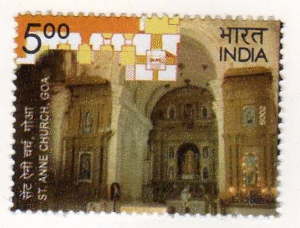
Built between 1681 and 1695 in Talaulim village near Panaji, Saint Anne’s Church traces its origins to 1577, when Jesuit priests from St. Paul’s College of Old Goa constructed an initial chapel.
The present grand structure was rebuilt under Msgr. Francisco de Rego and completed by Fr. Antonio Francisco Da Cunha. The date of completion is engraved on its main entrance. The church once formed part of the vibrant metropolitan region of Old Goa. However, with the decline of Old Goa in the 18th century and the administrative shift to Panaji, the surrounding area gradually diminished in prominence.
Today, the church stands as a symbol of Goa’s colonial-era ecclesiastical architecture and religious heritage.
Jaisalmer Fort
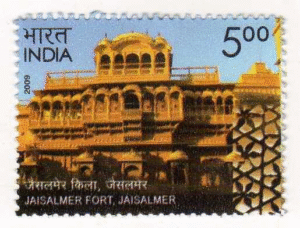
Rising majestically from the sands of the Thar Desert, Jaisalmer Fort is one of India’s most extraordinary medieval fortifications. Built in the 12th century entirely from golden sandstone, the fort’s 99 bastions create a dramatic skyline against the desert horizon.
Often described as the world’s only “living fort,” Jaisalmer Fort continues to house residents, markets, temples, palaces, and havelis within its fortified walls. Its architectural brilliance and continuity of traditional life make it a rare and invaluable heritage structure.
Qila Mubarak
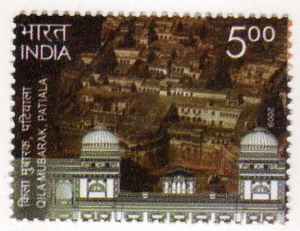
Situated in the heart of Patiala, Punjab, the 10-acre Qila Mubarak Complex was founded in the mid-18th century by Baba Ala as a military stronghold. It is regarded as one of the only Sikh forts of its kind in Punjab, distinct from the Mughal and pre-Mughal forts in the region.
The fort reflects a harmonious blend of late Mughal and Rajasthani architectural styles, with colonial elements evident in its roofing. The Androon section comprises interconnected palace complexes arranged around courtyards, including:
- Sheesh Mahal
- Rang Mahal
- Toshkhana
- Jail Khana
- Chand Mahal
Each section represents a unique architectural and functional identity within the larger complex.
Preserving India’s Built Heritage
Through conservation initiatives led by INTACH and commemorative recognition by India Post, these heritage monuments continue to receive attention for their historical and architectural significance.
The issuance of these four commemorative stamps not only celebrates Mangyu Monastery, Saint Anne’s Church Goa, Jaisalmer Fort, and Qila Mubarak but also reinforces the importance of preserving India’s architectural heritage for generations to come.
First Day Cover
Leave a Comment
You must be logged in to post a comment.