
Endemic Species of Indian Biodiversity Hotspots
Technical Data
| Date of Issue | October 16, 2012 |
|---|---|
| Denomination | Rs. 40 |
| Quantity | 400,000 |
| Perforation | 13¾ |
| Printer | Security Printing Press, Hyderabad |
| Printing Process | Wet Offset |
| Watermark | No Watermark |
| Colors | Multicolor |
| Credit (Designed By) | Smt. Alka Sharma |
| Catalog Codes |
Michel IN BL104 Stamp Number IN 2597a Stanley Gibbons IN MS2896 |
| Themes | Amphibians | Animals (Fauna) | Birds | Frogs | Mammals | Monkeys |
Stamps in this Miniature Sheet
In recent years, the conservation of biodiversity and the maintenance of ecological balance have come under increasing pressure due to habitat fragmentation, rapid development, and the impacts of global warming. These challenges have raised serious concerns worldwide about the accelerating loss of biological diversity.
Convention on Biological Diversity (CBD)
Global concern for biodiversity conservation found formal expression with the adoption of the Convention on Biological Diversity (CBD) at the Rio Earth Summit in 1992. The CBD is the first comprehensive international agreement addressing biodiversity in all its dimensions. It is built around three key objectives:
- Conservation of biological diversity
- Sustainable use of its components
- Fair and equitable sharing of benefits arising from the use of genetic resources
The Conference of the Parties (CoP) serves as the governing body of the Convention and guides its implementation through decisions taken at periodic meetings.
India and the Conference of Parties (CoP-11)
The tenth meeting of the Conference of Parties was held in Nagoya, Japan, from 18–29 October 2010. Continuing its commitment to biodiversity conservation, India hosted the eleventh Conference of Parties (CoP-11) to the CBD in Hyderabad from 1–19 October 2012.
Endemic Species of Indian Biodiversity Hotspots
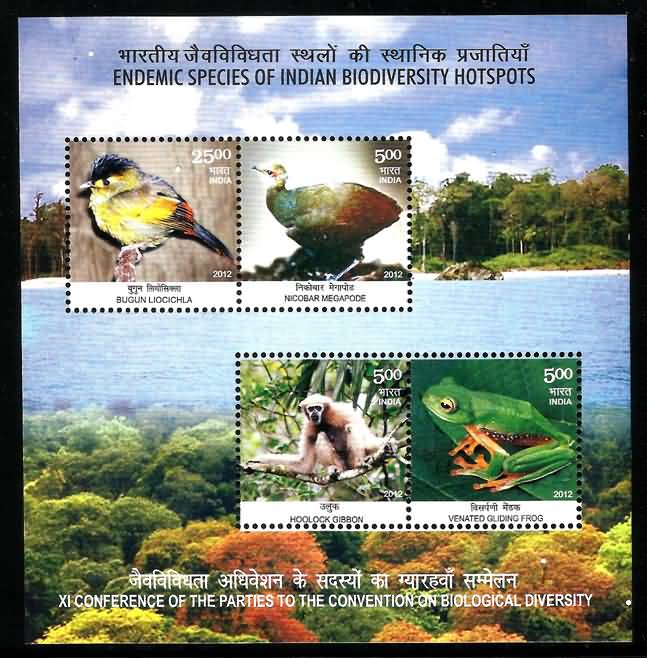
To commemorate CoP-11, the Department of Posts is issuing a set of four Commemorative Postage Stamps and a Miniature Sheet, depicting four endemic species from India’s biodiversity hotspots—each representing the fragile richness of the country’s natural heritage.
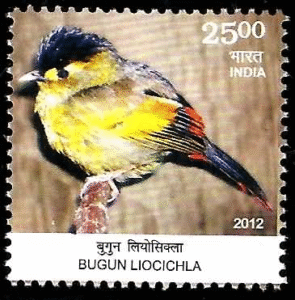
Bugun Liocichla (Liocichla bugunorum)
The Bugun Liocichla is a rare bird species classified as Vulnerable under the IUCN Red List. Discovered in Arunachal Pradesh, it symbolizes the importance of conserving little-known species found in restricted habitats.
Nicobar Megapode (Megapodius nicobariensis)
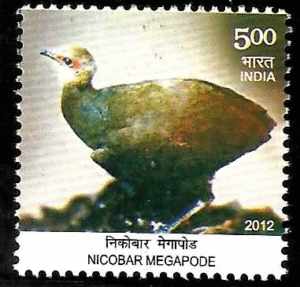
Endemic to the Nicobar Islands, the Nicobar Megapode inhabits forested and coastal areas. In 2006, the estimated number of breeding pairs stood at 788. The species faces significant threats from the loss and fragmentation of coastal forests due to agricultural expansion and infrastructure development.
Hoolock Gibbon (Hoolock hoolock)
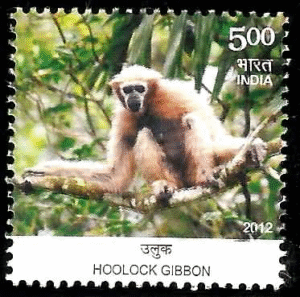
The Hoolock Gibbon, India’s only ape species, is a forest-dwelling primate and an important seed disperser. Its diet consists mainly of ripe fruits, along with flowers and leaves. Habitat encroachment, forest clearance, and degradation pose serious threats to its survival in the wild.
Venated Gliding Frog (Rhacophorus malabaricus)
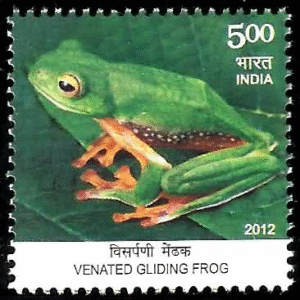
The Venated Gliding Frog is a critically endangered amphibian restricted to the Indira Gandhi National Park and surrounding regions of the South Western Ghats in Tamil Nadu, at elevations of 1000–1300 metres. Conversion of forest land for cultivation and timber extraction are the main threats to this species.
The Miniature Sheet – A Symbol of Conservation
The Miniature Sheet on Endemic Species of Indian Biodiversity Hotspots enhances the thematic value of the stamp issue. By presenting all four species together in a single artistic layout, the miniature sheet reinforces the message of biodiversity conservation and ecological interconnectedness.
For philatelists, the miniature sheet adds collectible significance, while for conservationists, it serves as a reminder of India’s commitment to protecting its unique flora and fauna.
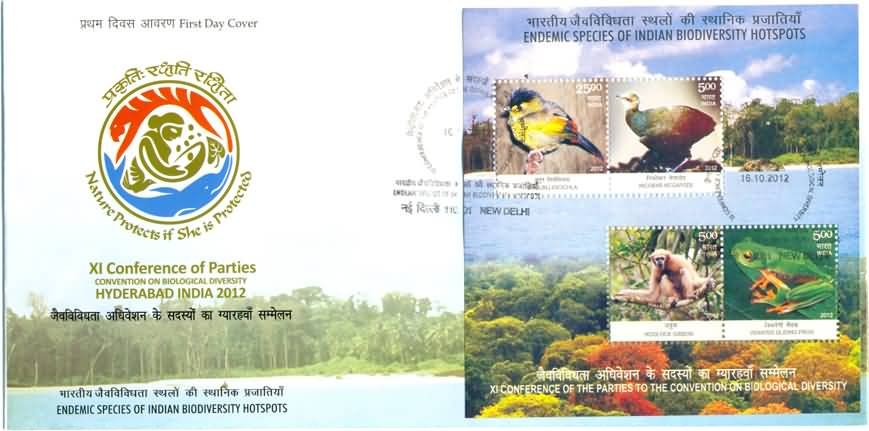
First Day Cover
Leave a Comment
You must be logged in to post a comment.