
Nicobar Megapode
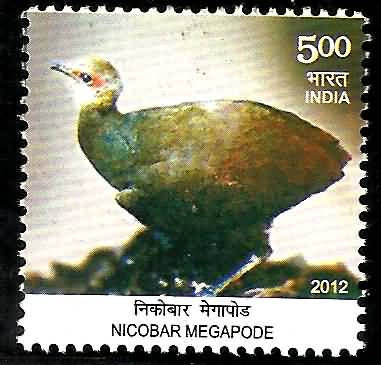
Technical Data
| Date of Issue | October 16, 2012 |
|---|---|
| Denomination | Rs. 5 |
| Quantity | 400,000 |
| Perforation | 13¾ |
| Printer | Security Printing Press, Hyderabad |
| Printing Process | Wet Offset |
| Watermark | No Watermark |
| Colors | Multicolor |
| Credit (Designed By) | Smt. Alka Sharma |
| Catalog Codes |
Michel IN 2670 Stamp Number IN 2594 Stanley Gibbons IN 2892 WADP Numbering System - WNS IN034.2012 |
| Themes | Animals (Fauna) | Birds |
A Remarkable Bird of the Nicobar Islands
The Nicobar Megapode (Megapodius nicobariensis) is a fascinating and rare bird species endemic to the Nicobar Islands of India. Known for its unique nesting behaviour and strong association with coastal forests, this species represents the extraordinary biodiversity of India’s island ecosystems.
Habitat and Distribution
As its name suggests, the Nicobar Megapode is found exclusively in the Nicobar archipelago. It inhabits forests and secondary growth areas, with a higher concentration in coastal forest regions. These habitats provide the loose soil and organic material necessary for the bird’s unusual reproductive strategy.
Unique Breeding Behaviour
Unlike most birds, the Nicobar Megapode does not incubate its eggs using body heat. Instead, it constructs large mound nests made of soil, sand, and decaying vegetation. The heat generated through natural decomposition incubates the eggs, making this species one of nature’s most remarkable examples of adaptive evolution.
Population Status and Threats
In 2006, the total number of breeding pairs of Nicobar Megapode was estimated at approximately 788, highlighting its vulnerable population size. The species faces serious threats from the loss of coastal forests, primarily due to agricultural expansion and road development projects. Such activities fragment habitats and disrupt breeding grounds, posing long-term risks to its survival.
Ecological Importance
The Nicobar Megapode plays an important role in maintaining forest health by turning over soil during nest construction, which aids nutrient cycling and seed germination. Its presence is an indicator of relatively undisturbed coastal forest ecosystems.
Philatelic Tribute to an Endemic Species
In recognition of India’s rich biodiversity and to mark the Eleventh Conference of the Parties (CoP-11) to the Convention on Biological Diversity, hosted in Hyderabad in 2012, the Department of Posts issued a Commemorative Postage Stamp featuring the Nicobar Megapode. The stamp draws attention to the conservation challenges faced by endemic island species.
Stamps Promoting Conservation Awareness
Through philately, the story of the Nicobar Megapode reaches collectors and nature enthusiasts alike, reinforcing the message that protecting fragile island ecosystems is essential for preserving India’s natural heritage.
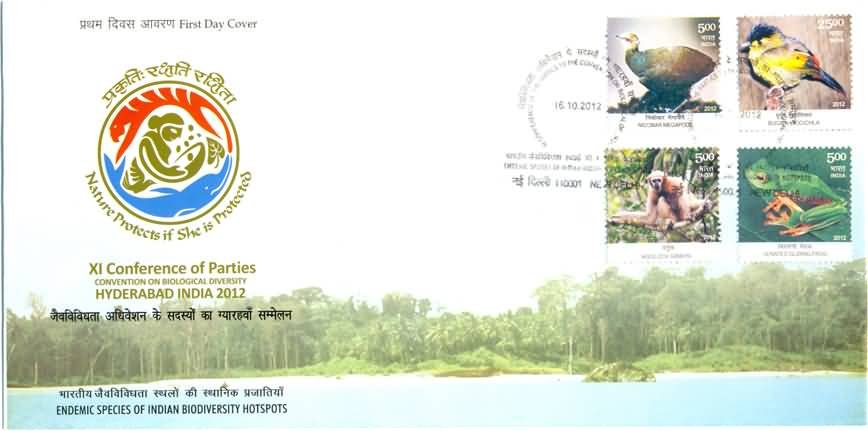
First Day Cover
Leave a Comment
You must be logged in to post a comment.