
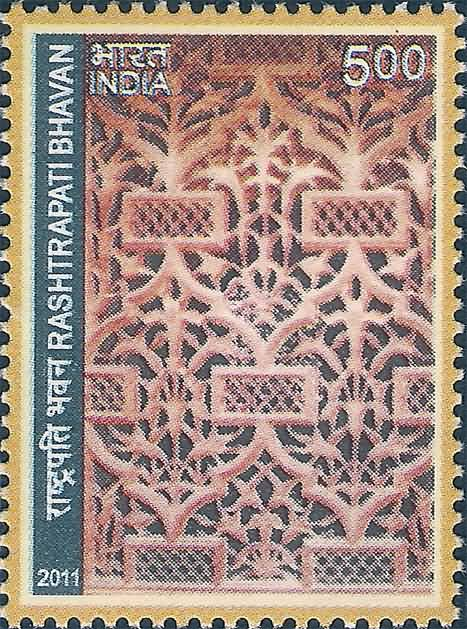
Stone Jali (Latticed Screen)
Technical Data
| Date of Issue | August 5, 2011 |
|---|---|
| Denomination | Rs. 5 |
| Quantity | 400,000 |
| Perforation | 13 |
| Printer | India Security Press, Nashik |
| Printing Process | Wet Offset |
| Watermark | No Watermark |
| Colors | Multicolor |
| Credit (Designed By) | Sh. Sankha Samanta |
| Catalog Codes |
Michel IN 2610 Stanley Gibbons IN 2826 WADP Numbering System - WNS IN035.2011 |
| Themes | Architecture | Government Buildings |
Harmony of Light, Air and Ornamentation
The stone jali, or latticed screen, is one of the most refined architectural elements employed in the design of Rashtrapati Bhavan. Skillfully integrated by Sir Edwin Landseer Lutyens, these delicately carved stone screens reflect a successful synthesis of Indian architectural traditions with Western classical planning.
Mughal Inspiration and Indian Aesthetics
Lutyens drew inspiration from Mughal architecture, particularly the use of stone jalis seen in monuments such as the Red Fort of Delhi. These screens, carved with floral and geometric motifs, were reinterpreted and blended into the architectural vocabulary of Rashtrapati Bhavan, lending the structure an unmistakable Indian character while maintaining formal symmetry and restraint.
Functionality and Climatic Response
Beyond their decorative appeal, stone jalis serve a vital functional purpose. The perforated screens allow filtered daylight to enter interior spaces while ensuring natural ventilation, an essential feature in India’s climate. At the same time, they provide privacy and shade, reducing glare and heat without obstructing airflow.
Play of Light and Shadow
One of the most striking aspects of the latticed screens is the ever-changing interplay of light and shadow they create within corridors, verandahs and interior spaces. As sunlight passes through the finely carved apertures, it casts intricate patterns on floors and walls, transforming static stone surfaces into living architectural experiences.
Craftsmanship and Material Excellence
Carved from sandstone, the jalis demonstrate exceptional craftsmanship, reflecting the skill of Indian artisans who translated age-old techniques into a modern imperial setting. The precision and delicacy of the carvings stand in contrast to the monumental scale of the building, softening its grandeur with elegance and refinement.
Symbol of Cultural Synthesis
The stone jali at Rashtrapati Bhavan symbolizes the fusion of Indian tradition and colonial architecture. While the building was originally conceived to express imperial authority, the incorporation of indigenous elements such as latticed screens helped transform it into a structure rooted in the subcontinent’s artistic heritage.
Enduring Architectural Legacy
Today, the stone jalis of Rashtrapati Bhavan remain a testament to thoughtful design that balances aesthetics, climate, and cultural identity. They continue to exemplify how traditional Indian architectural elements were seamlessly adapted into a modern context, contributing to the timeless elegance of this national monument.
Commemorative Stamp
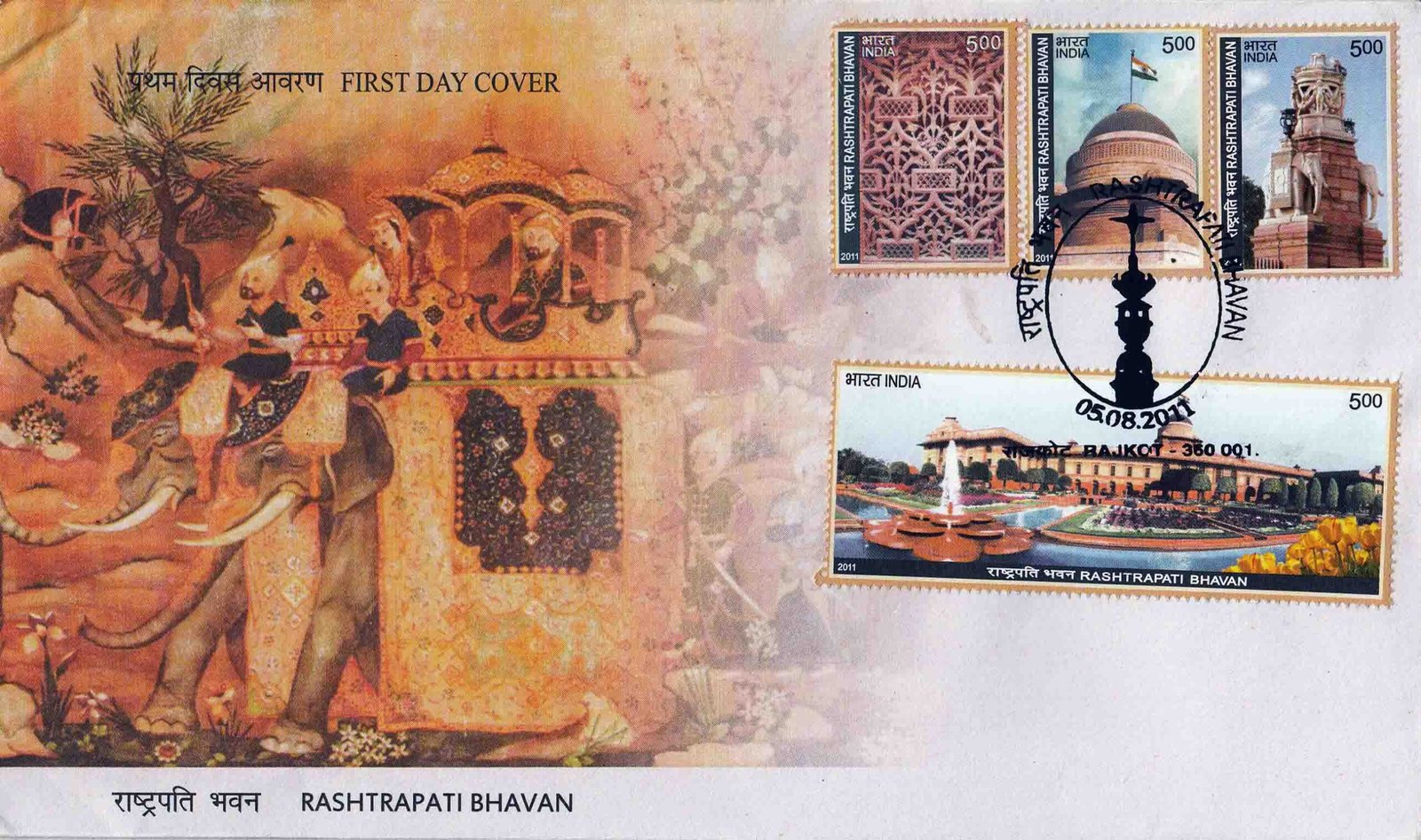
To highlight the architectural splendour and national significance of Rashtrapati Bhavan, the Department of Posts has issued commemorative postage stamps celebrating its legacy. The depiction of architectural elements such as the stone jali (latticed screen) on philatelic material brings attention to India’s rich architectural traditions and showcases how heritage motifs continue to inspire national symbols.
First Day Cover
Leave a Comment
You must be logged in to post a comment.