
Kanan Devi
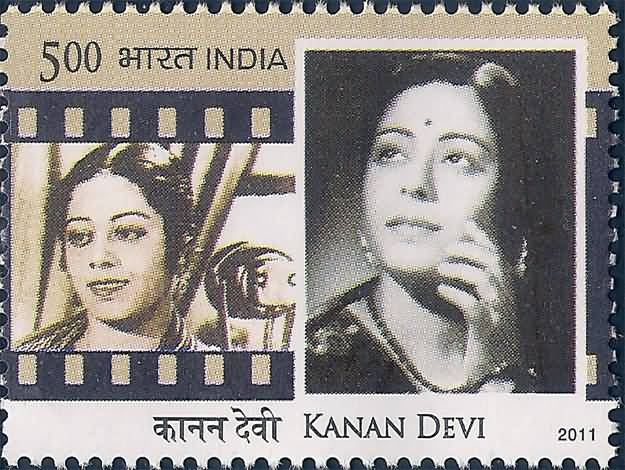
Technical Data
| Date of Issue | February 13, 2011 |
|---|---|
| Denomination | Rs. 5 |
| Quantity | 400,000 |
| Perforation | 13 |
| Printer | India Security Press, Nashik |
| Printing Process | Wet Offset |
| Watermark | No Watermark |
| Colors | Multicolor |
| Credit (Designed By) | Sh. Sankha Samanta |
| Catalog Codes |
Michel IN 2590 Stamp Number IN 2515 Stanley Gibbons IN 2804 WADP Numbering System - WNS IN014.2011 |
| Themes | Actors | Famous people | Women |
The First Star of Bengali Cinema
Early Life and Entry into Films
Kanan Devi, born as Kananbala, was born on 22 April 1916 at Howrah, Bengal, British India (now West Bengal, India). She began her career as a child actress, making her debut in the film ‘Joydev’. Early in her career, she worked under contract with Radha Films, acting in films directed by Jyotish Bannerjee.
Rise to Stardom
Although P.C. Barua was unable to cast her as Paro in his celebrated film ‘Devdas’ (1935), she went on to play the lead role in his next film, ‘Mukti’, which proved to be a turning point in her career. The film established her as a major star and marked the beginning of her long and successful association with New Theatres, one of the most prominent studios of the era.
Between 1937 and 1940, Kanan Devi reigned as the leading star of New Theatres. The immense success of ‘Bidyapati’, along with her memorable duets with K.C. Dey, firmly positioned her at the pinnacle of Bengali cinema.
Musical Training and Singing Career
When she entered films, Kanan Devi was an untrained singer, but her determination led her to pursue formal musical training. She studied briefly under Ustad Allah Rakha at Lucknow and later worked as a singer with Megaphone Gramophone. Further training came from Bhishmaadev Chatterjee, who is believed to have shaped her distinctive Bengali singing style. She also learned Rabindra Sangeet under Anadi Dastidar and regarded Rai Chand Boral as her true mentor.
Her singing, often characterized by a rapid tempo and emotional intensity, became closely associated with some of the most iconic songs of the studio era, especially in films such as ‘Bidyapati’, ‘Street Singer’, and ‘Sapurey’.
Career Beyond New Theatres
One of the few leading actresses of New Theatres without a stage background, Kanan Devi’s influence on Bengali cinema was comparable to Shanta Apte’s impact on Marathi cinema. In 1941, she resigned from New Theatres and began freelancing in both Bengali and Hindi films, further broadening her artistic reach.
Producer and Writer
In 1949, Kanan Devi turned producer, establishing Shrimati Pics, and later launched the Sabhyasachi collective, producing the film ‘Ananya’. Her literary contribution includes her autobiography ‘Sabare Ami Nomi’ (1973), which provides valuable insight into her life and the early years of Indian cinema.
Death and Legacy
Kanan Devi passed away on 17 July 1992 in Kolkata, West Bengal, India. Widely regarded as the first true star of Bengali cinema, she remains an iconic figure whose contributions as an actress, singer, producer and writer shaped the cultural and artistic foundations of Indian film history.
Philatelic Tribute
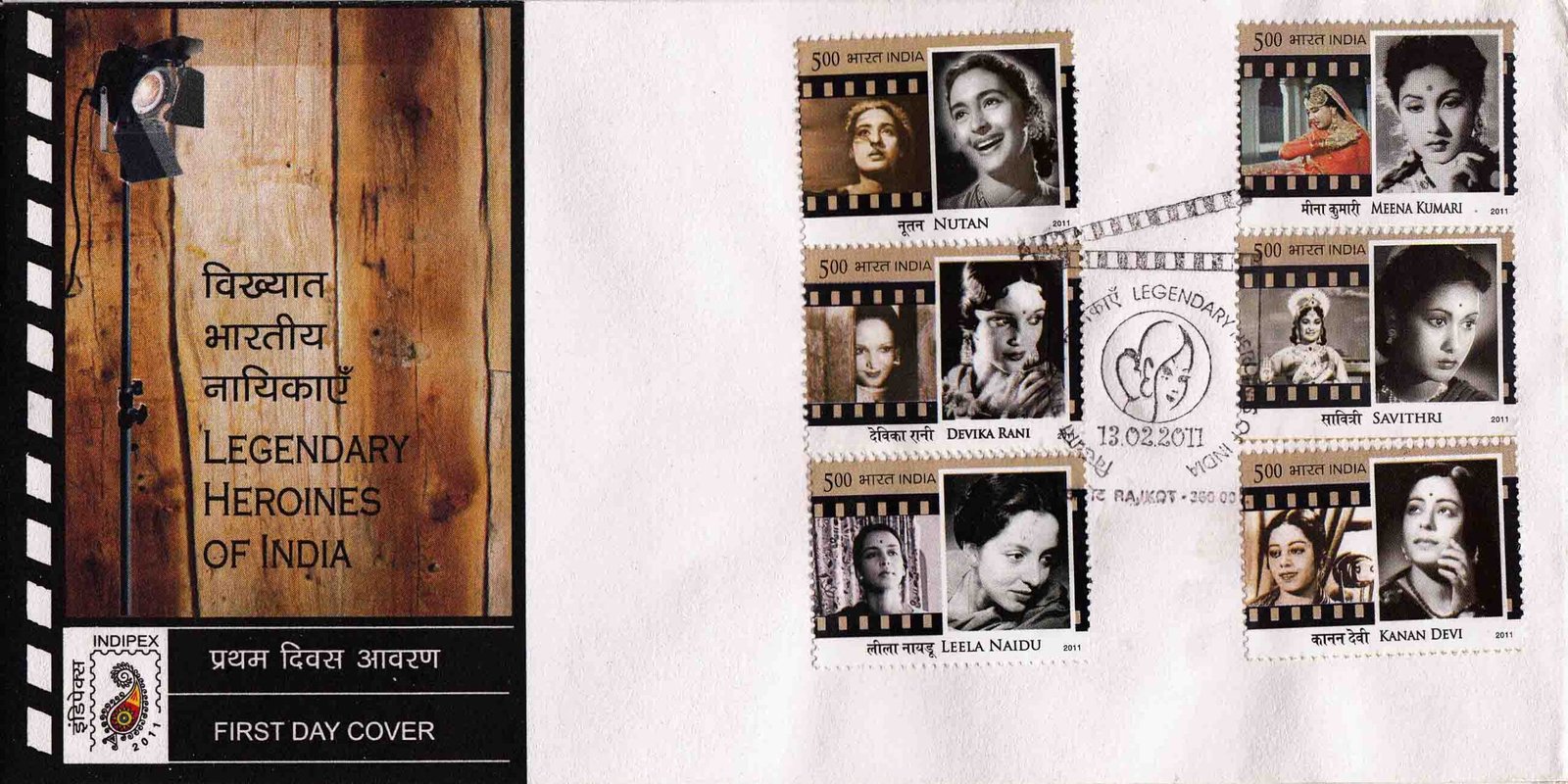
As part of the prestigious “Legendary Heroines of India” series, India Post is happy to issue a commemorative postage stamp on Kanan Devi, honouring her extraordinary legacy as an Indian actress and singer whose influence continues to inspire generations.
First Day Cover
Leave a Comment
You must be logged in to post a comment.