
Centenary of “DOOT”Magazine
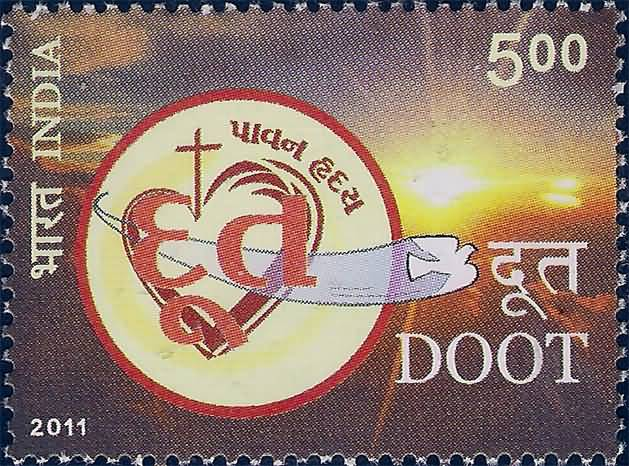
Technical Data
| Date of Issue | January 15, 2011 |
|---|---|
| Denomination | Rs. 5 |
| Quantity | 300,000 |
| Perforation | 13 |
| Printer | India Security Press, Nashik |
| Printing Process | Wet Offset |
| Watermark | No Watermark |
| Colors | Multicolor |
| Credit (Designed By) | Smt. Alka Sharma |
| Catalog Codes |
Michel IN 2547 Stamp Number IN 2484 Yvert et Tellier IN 2310 Stanley Gibbons IN 2788 WADP Numbering System - WNS IN001.2011 |
| Themes | Anniversaries and Jubilees | Crosses | Hearts | Magazines | Pigeons | Stylized Animals | Sunsets / Sunrises |
A Century of Gujarati Journalism and Literature (1911–2011)
Historical Significance
In the history of Gujarati periodicals and literature, DOOT holds a unique distinction as the second Gujarati magazine to complete one hundred years of uninterrupted publication, after the 155-year-old Buddhiprakash of the Gujarat Vidyasabha. Its centenary marks a remarkable milestone in the cultural and literary journey of Gujarat.
Foundation and Early Years
DOOT was first published in January 1911 from Gujarat. It was founded by Fr. Herman Zurhansen, S.J., a German Jesuit Mission Superior. The magazine was initially published in Gujarati under the title “Ati Pavitra Antakaranno Doot” and consisted of just twelve pages. The inaugural issue was printed at the Examiner Press, Mumbai. In the year 2000, the magazine’s name was officially shortened to “Doot”.
Reflection of Community Life and Culture
Over the decades, DOOT has faithfully reflected the life, culture and social evolution of the Christian community in Gujarat, documenting its integration, growth and contribution to society. The magazine has served as an important platform for expression and dialogue within the community while remaining deeply rooted in Gujarati cultural traditions.
Contribution to the Gujarati Language
One of the most significant contributions of DOOT lies in its role in enriching the Gujarati language. The magazine brought several words and expressions spoken in Central Gujarat into mainstream usage. Many of these words eventually found a place in Gujarati dictionaries, underscoring the pioneering role played by the magazine’s editors in expanding and strengthening the language.
Expanding Reach and Readership
In its early years, DOOT primarily catered to readers in Central Gujarat and to migrants from Anand and Kheda districts living elsewhere in Gujarat and in Mumbai. Over time, its reach expanded to include Saurashtra, Kutch–Bhuj, and the tribal regions of Banaskantha, Sabarkantha, Panchmahals, Dahod, Narmada and Dangs. Today, DOOT is poised to reach 10,000 paid subscribers, reflecting its sustained relevance and appeal.
Centenary Commemoration
The completion of 100 years of continuous publication stands as a testament to DOOT’s enduring legacy in Gujarati journalism, literature and cultural life.
Philatelic Tribute
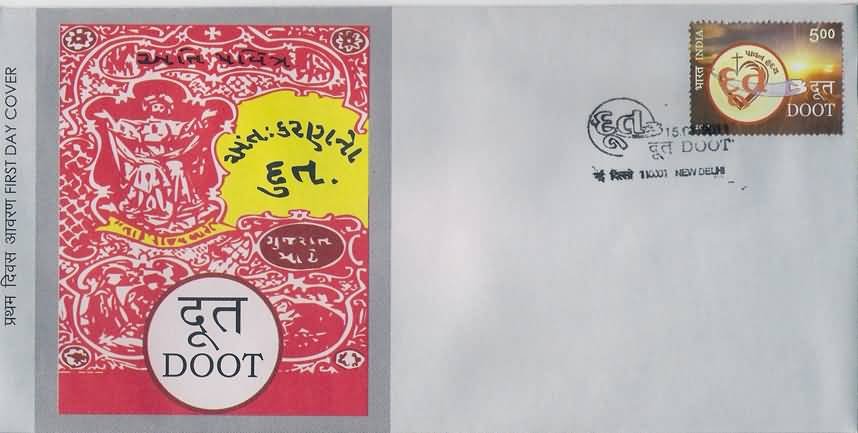
India Post commemorates this historic milestone by issuing a postage stamp to mark the centenary of “DOOT” Magazine, honouring its valuable contribution to Gujarati language, literature and society.
First Day Cover
Leave a Comment
You must be logged in to post a comment.