
Surendra Nath Jauhar
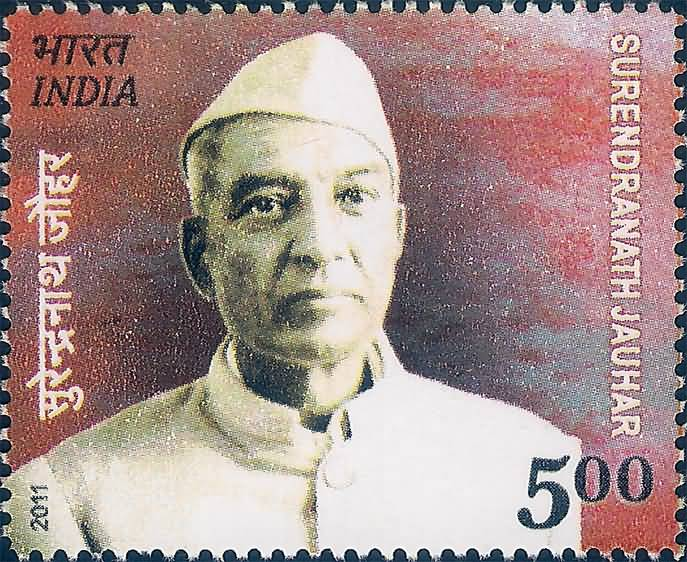
Technical Data
| Date of Issue | September 2, 2011 |
|---|---|
| Denomination | Rs. 5 |
| Quantity | 400,000 |
| Perforation | 13 |
| Printer | India Security Press, Nashik |
| Printing Process | Wet Offset |
| Watermark | No Watermark |
| Colors | Multicolor |
| Credit (Designed By) | Smt. Alka Sharma |
| Catalog Codes |
Michel IN 2614 Stanley Gibbons IN 2831 WADP Numbering System - WNS IN038.2011 |
| Themes | Anniversaries and Jubilees | Commemoration | Famous people | Freedom Fighters | Headgear | Men | Politicians |
Freedom Fighter, Spiritual Seeker, Nation Builder
Early Life and Education
Surendra Nath Jauhar was born on 13 August 1903 in Vahalee village, Jhelum District, West Punjab (now in Pakistan). He pursued his higher education at D.A.V. College and National College, Lahore, institutions known for nurturing nationalist thought during the freedom struggle.
Role in India’s Freedom Movement
From his student days, Jauhar actively participated in the Indian freedom movement, emerging as one of the fiery and prominent freedom fighters of his time. His name figures prominently in the official Directory of Freedom Fighters of Delhi.
He served as:
- Member, Provincial Congress Committee (PCC) from 1934 to 1947
- Member, Delhi Congress Committee (DCC) in 1939
Civil Disobedience and Quit India Movement
Surendra Nath Jauhar played an active role in the Civil Disobedience Movement and the Quit India Movement. In 1930, he organised the boycott of foreign cloth in the markets of Chandni Chowk, striking at the economic roots of colonial rule.
Demonstrating remarkable courage, he publicly read the Independence Day Resolution on 14 November 1930 at the Clock Tower, Chandni Chowk, defying British authority. For this act, he was arrested and sentenced to nine months of rigorous imprisonment in the Central Jail, Multan. He was released in 1931 following the Gandhi–Irwin Pact.
Underground Activities and Arrest
During the Quit India Movement of 1942, Jauhar went underground and worked closely with Smt. Aruna Asaf Ali and Shri Jugal Kishore Khanna. He was arrested again on 17 September 1942 and faced trial on multiple charges for nearly two years. Ultimately, he was acquitted on 6 May 1944.
Transition to Spiritual Life
After Independence, Surendra Nath Jauhar withdrew from active politics and dedicated himself to spiritual pursuits. He joined the Sri Aurobindo Ashram, Delhi, inspired by Sri Aurobindo’s profound teaching that “All life is Yoga.”
As a committed follower of this philosophy, Jauhar worked tirelessly to develop the Delhi Centre of the Sri Aurobindo Ashram, shaping it into a vibrant hub of spiritual and social activity through his perseverance, vision, and selfless service.
Service to Humanity
True to the Ashram’s ideals, Jauhar believed that service to humanity is the highest form of meditation. Under his leadership, the Ashram:
- Provided free medical services to the needy
- Organised disaster relief operations for cyclone victims in Odisha and earthquake victims in Gujarat
- Promoted youth development through National Integration and Youth Camps
More than 500 camps were organised, benefiting over 40,000 young people, exposing them to leadership training, meditation, trekking, rock climbing, volunteer service, and India’s spiritual and cultural heritage.
Legacy and Remembrance
Surendra Nath Jauhar’s life was a seamless blend of patriotism and spirituality. The revolutionary fire of his youth matured into a steady flame of devotion and service in his later years. He passed away on 2 September 1986, leaving behind a legacy of courage, compassion, and commitment to the nation.
Commemorative Postage Stamp
In recognition of his invaluable contribution to India’s freedom struggle and spiritual renaissance, India Post is honoured to issue a Commemorative Postage Stamp on Surendra Nath Jauhar, paying tribute to a life devoted wholly to the service of the nation and humanity.
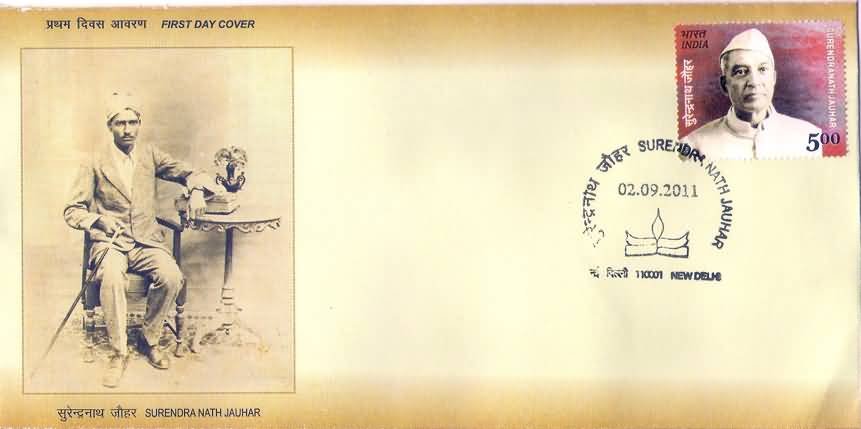
First Day Cover
Leave a Comment
You must be logged in to post a comment.