
Kumaraguruparar Swamigal
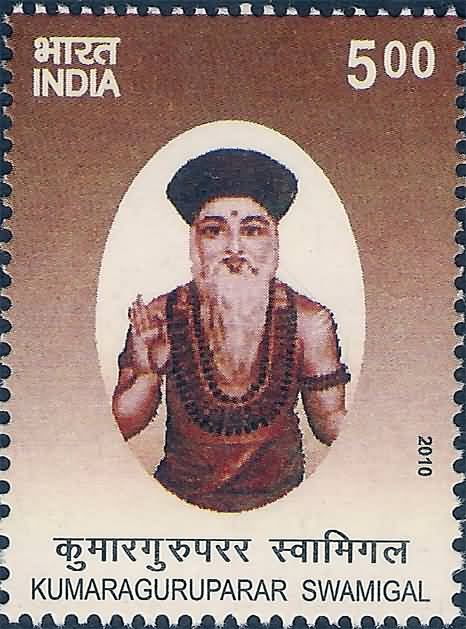
Technical Data
| Date of Issue | June 27, 2010 |
|---|---|
| Denomination | Rs. 5 |
| Quantity | 300,000 |
| Perforation | 13½ |
| Printer | Security Printing Press, Hyderabad |
| Printing Process | Wet Offset |
| Watermark | No Watermark |
| Colors | Multicolor |
| Credit (Designed By) | Smt. Alka Sharma |
| Catalog Codes |
Michel IN 2495 Stamp Number IN 2432 Stanley Gibbons IN 2726 WADP Numbering System - WNS IN040.2010 |
| Themes | Commemoration | Famous people | Literary People (Poets and Writers) | Men | Saints |
Early Life and Divine Grace
Kumaraguruparar Swamigal was born in 1625 at Srivaikuntam near Tiruchendur in Tamil Nadu. According to legend, he was deaf and dumb until the age of five. His distressed parents took him to the sacred Sri Subramanya Swamy Temple, Tiruchendur, where, by the grace of Lord Muruga, his disability miraculously disappeared. From that divine moment, he began to utter verses spontaneously and became an ardent devotee of Lord Subramanya, earning the name Kumaraguruparar.
Spiritual Quest and Literary Pursuits
He received his grounding in classical Tamil from his father. Renouncing worldly life at a young age, he adopted an austere and ascetic path. Traveling across the Tamil region, he visited renowned pilgrimage centres, offering worship and composing timeless devotional hymns in praise of various deities. His life became a harmonious blend of spirituality and literary excellence.
Initiation and Pilgrimage to Varanasi
Kumaraguruparar was initiated into sainthood by his guru, Masilamani Desigar, the head of the Dharmapuram Math. As a sanyasi, he undertook pilgrimages to several important centres, including Varanasi. His growing spiritual influence and scholarship attracted widespread admiration.
It is said that Aurangzeb, the Mughal ruler of the time, expressed a desire to meet him. Legend narrates that Kumaraguruparar visited the emperor riding on a lion, symbolizing courage and spiritual authority. Aurangzeb was deeply impressed by his humility and erudition and treated him with great respect. With the emperor’s support, land was granted near the Kedar Ghat in Varanasi, where Kumaraguruparar established the Kumaraswamy Matham. There, he delivered discourses in both Tamil and Hindi on religion, philosophy, and literature. He also rebuilt a temple and reconsecrated the Visweswara Lingam at Kedar Ghat. He remained in Varanasi until his passing in 1688.
Literary Contributions
Scholars note that his first composition was Kandar Kalivenba, a devotional hymn of 244 lines dedicated to Lord Muruga, still recited by Tamil devotees today. His Neethineri Vilakkam, an ethical work comprising 100 stanzas, is regarded as a classic text rich in moral wisdom. Many of its verses emphasize educational and ethical values that remain relevant even in contemporary times.
Dr. Murugesan, who studied his life and writings extensively, observed that Kumaraguruparar Swamigal occupies a unique place in the religious, literary, and educational history of India.
Commemoration
In recognition of his enduring spiritual and literary legacy, India Post issued a commemorative postage stamp in honour of Kumaraguruparar Swamigal, celebrating his invaluable contribution to India’s cultural heritage.
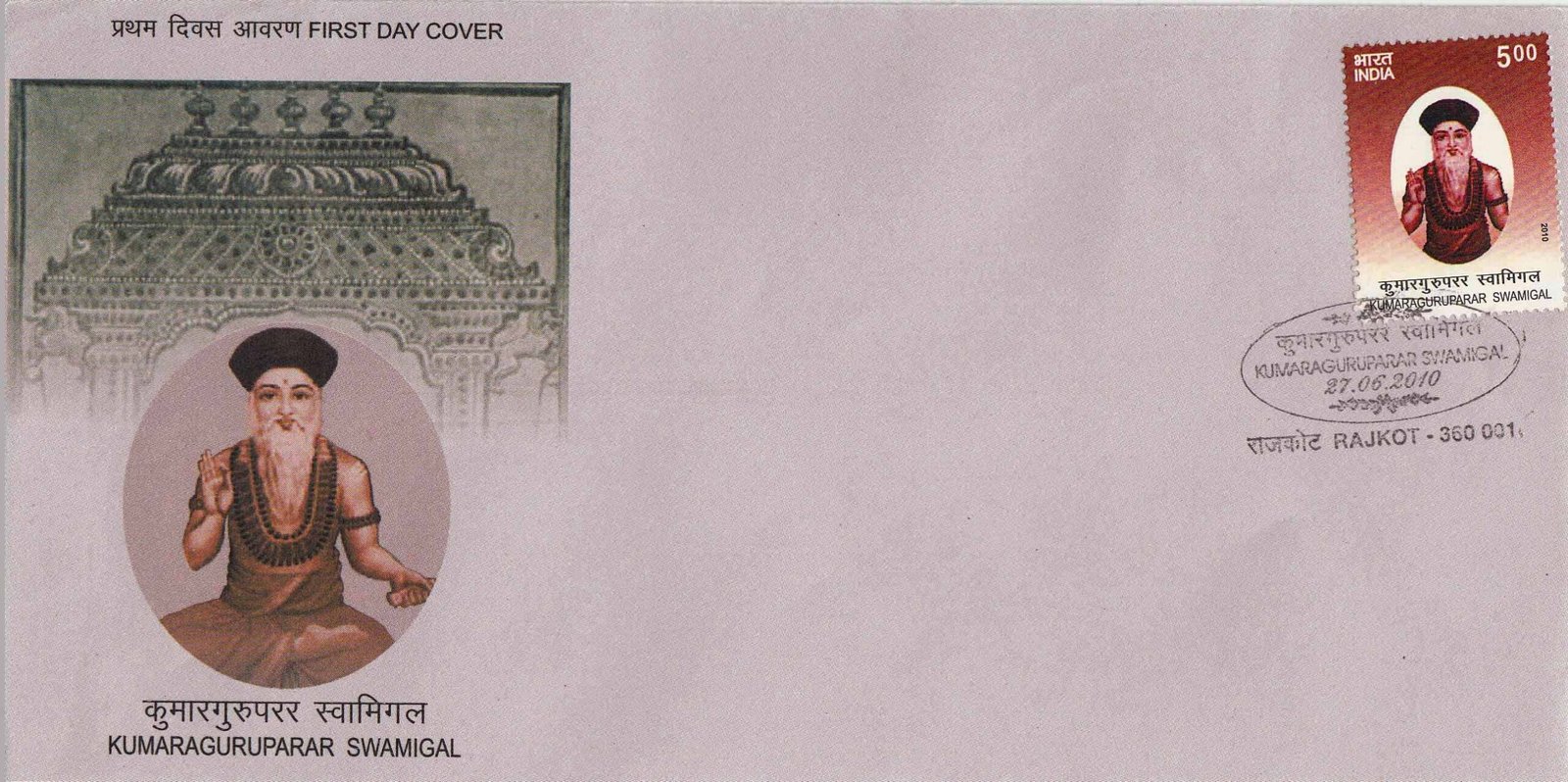
First Day Cover
Leave a Comment
You must be logged in to post a comment.