
100 Years of Indian Cinema – 3 of 6
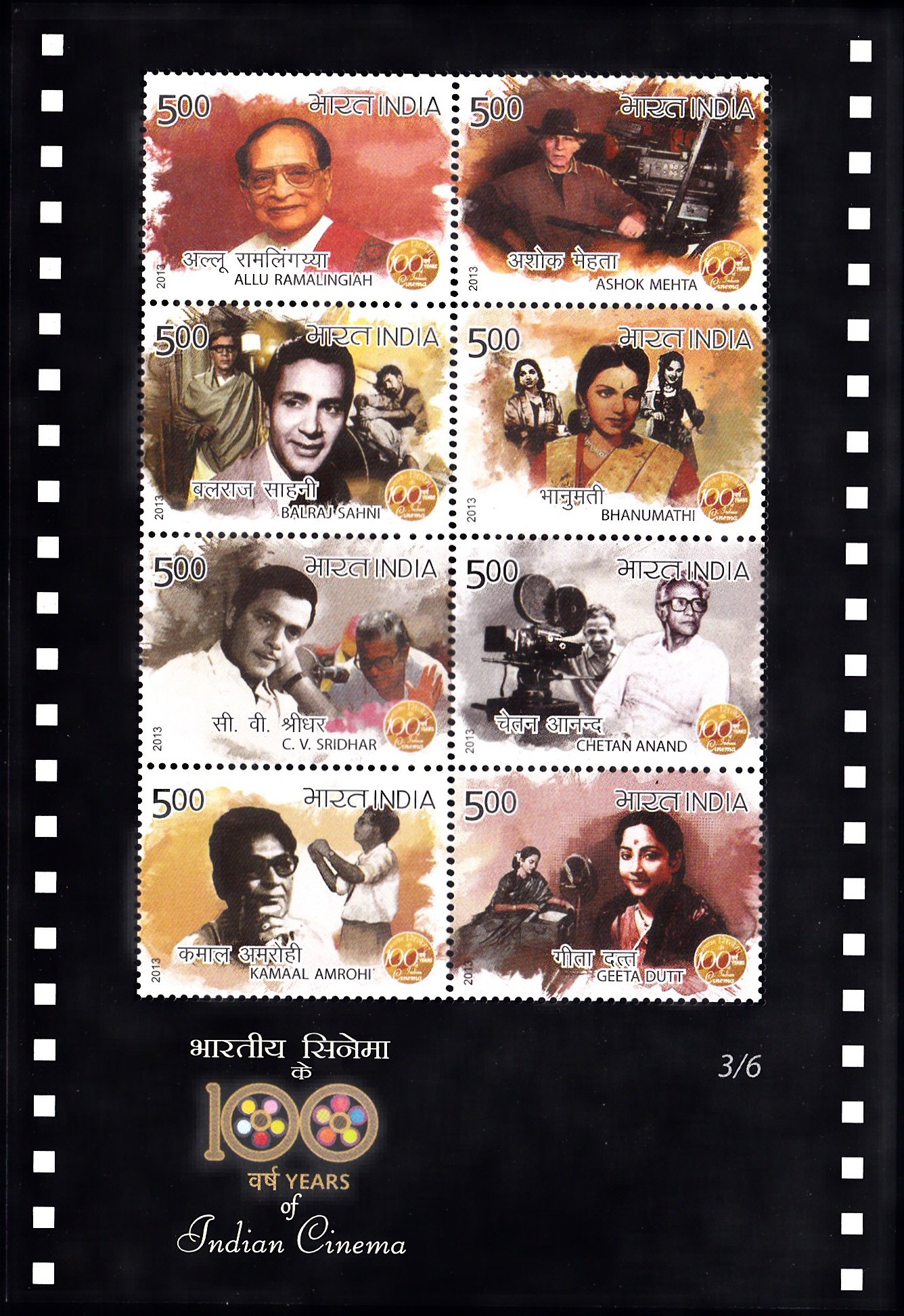
Technical Data
| Date of Issue | May 3, 2013 |
|---|---|
| Denomination | Rs. 40 |
| Quantity | 810,000 |
| Perforation | 13 |
| Printer | Security Printing Press, Hyderabad |
| Printing Process | Offset Lithography |
| Watermark | No Watermark |
| Colors | Multicolor |
| Credit (Designed By) | Shri Kamleshwar Singh |
| Catalog Codes |
Michel IN BL110 Stanley Gibbons IN MS2937 WADP Numbering System - WNS IN058MS.2013 |
| Themes | Actors | Anniversaries and Jubilees | Famous people | Men | Movies | Women |
Stamps in this Miniature Sheet
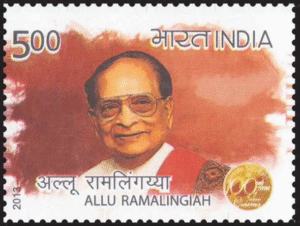
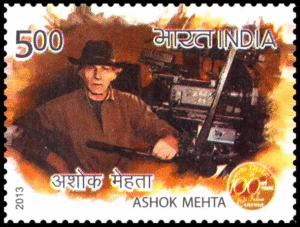
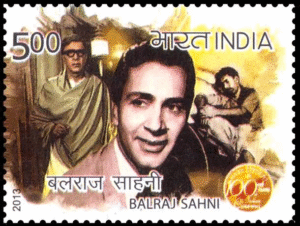


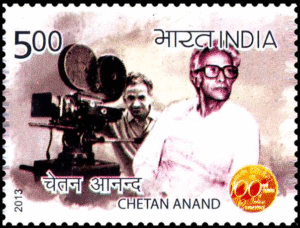

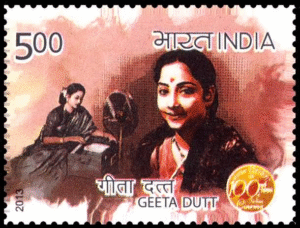
A Century of Indian Cinema
On 3rd May 1913, Indian cinema was born when Dadasaheb Phalke, the Father of Indian Cinema, released Raja Harishchandra, India’s first full-length feature film. The film mesmerised audiences and marked the beginning of a powerful medium that would go on to influence social engagement, culture, and collective behaviour across the nation. Over the next hundred years, cinema evolved not merely as mass entertainment, but as a mirror and moulder of Indian society.
The Advent of Sound: A New Era Begins
A major milestone in the history of Indian cinema came with the release of India’s first talkie, Alam Ara, produced by Ardeshir Irani. Released on 14th March 1931 at the Majestic Cinema in Mumbai, the film starred Zubeida, Master Vithal, and Prithviraj Kapoor. Its unprecedented popularity drew such massive crowds that police intervention was required to manage the audience.
The success of Alam Ara marked the end of the silent film era and transformed Indian cinema forever. Actors now needed strong voices and singing abilities, as music became an integral element of films. In the same year, the first talkies in regional languages were released—Jumai Shasthi (Bengali), Bhakta Prahlad (Telugu), and Kalidas (Tamil).
The Golden Era of Music and Meaningful Cinema
The 1940s and 1950s were challenging decades for India due to war and political upheaval. Despite this, Indian cinema flourished, particularly in film music. Legendary composers such as Shankar–Jaikishan, O. P. Nayyar, Madan Mohan, C. Ramachandra, Salil Chowdhury, Naushad, and S. D. Burman created timeless melodies that continue to resonate today.
The 1950s also marked a turning point in cinematic themes, with socially conscious filmmakers addressing issues such as poverty, inequality, and justice, using cinema as a tool for social education.
Creative Excellence and Global Recognition
The creative momentum carried into the 1960s, with visionary filmmakers like Satyajit Ray, Ritwik Ghatak, Guru Dutt, Bimal Roy, Mehboob Khan, K. Asif, Raj Kapoor, K. V. Reddy, L. V. Prasad, and Ramu Kariat producing iconic films such as Pyaasa, Do Bigha Zamin, Mughal-e-Azam, Pather Panchali, Mother India, Maya Bazaar, and Chemmeen.
These films earned widespread national and international acclaim and firmly established Indian cinema on the global stage.
Masala Films and the Rise of Parallel Cinema
The 1970s witnessed the emergence of the masala film genre, offering a blend of action, drama, romance, music, and entertainment for mass audiences. Alongside this, Parallel Cinema emerged as a significant movement, emphasising realism, artistic integrity, and social relevance.
This movement also paved the way for women filmmakers such as Aparna Sen, Prema Karanth, Mira Nair, Sai Paranjpye, and Kalpana Lajmi, particularly during the 1980s, enriching Indian cinema with diverse perspectives.
Technological Advancement and Corporate Investment
The 1990s brought a wide range of films, including romantic dramas, thrillers, action films, and comedies. Technological advancements such as Dolby digital sound, improved special effects, and modern choreography enhanced cinematic quality. This period also saw increased corporate investment, better scripts, and higher production standards.
Indian Cinema in the Global Spotlight
At the turn of the 21st century, Indian cinema achieved global appeal through international releases and regular participation in major film festivals worldwide. Today, films remain one of the most powerful expressions of popular culture in contemporary India, reflecting the nation’s diversity, aspirations, and evolving identity.
Commemorating 100 Years of Indian Cinema
To celebrate this remarkable century-long journey, the Department of Posts is proud to release six Miniature Sheets commemorating the contributions of fifty iconic personalities of Indian cinema. The first two Miniature Sheets, each featuring nine stamps, depict distinguished Dadasaheb Phalke Award recipients, while the remaining four sheets, with eight stamps each, honour eminent personalities from various fields of cinema.
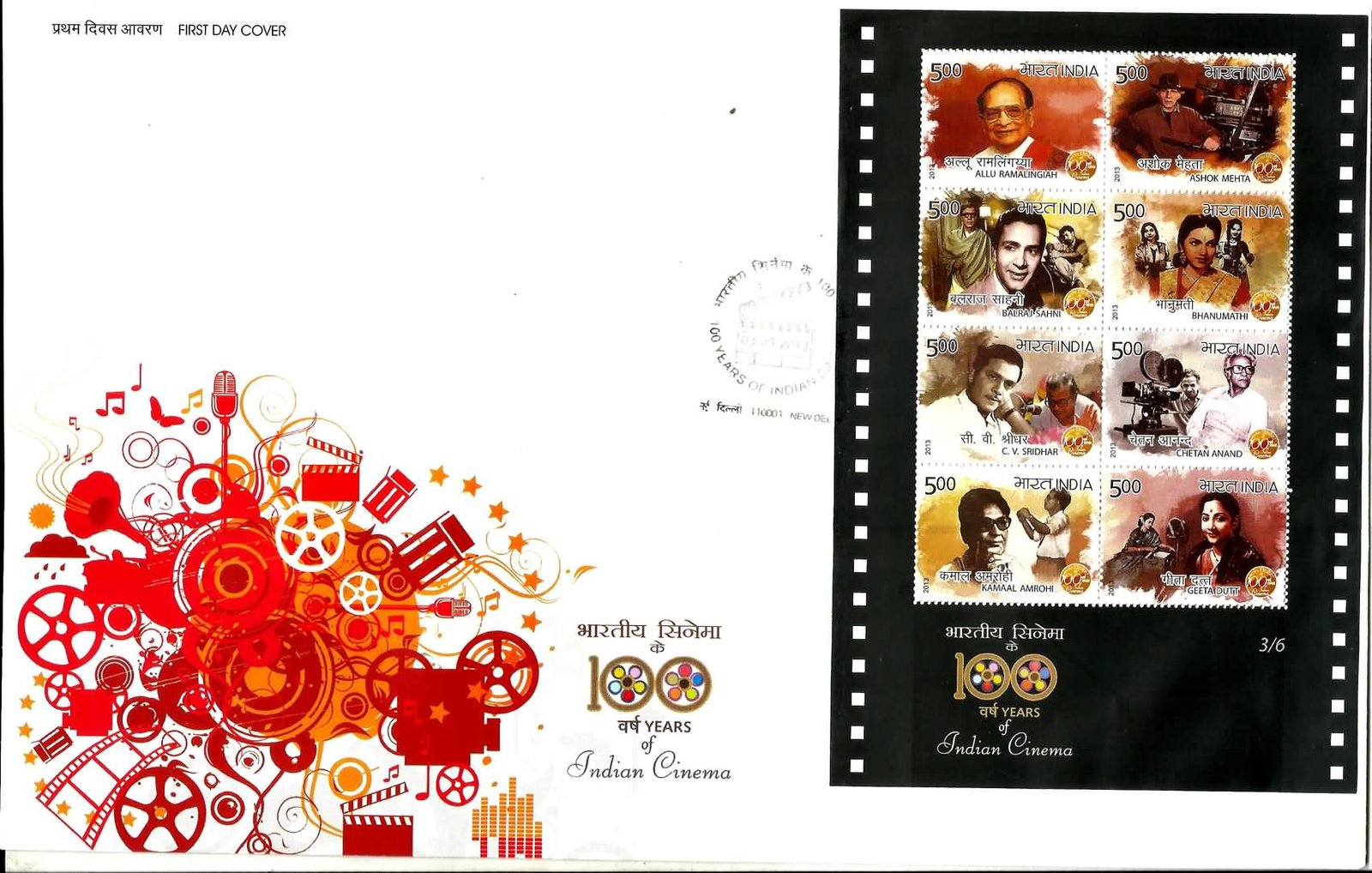
First Day Cover
Leave a Comment
You must be logged in to post a comment.