
Architectural Heritage of India
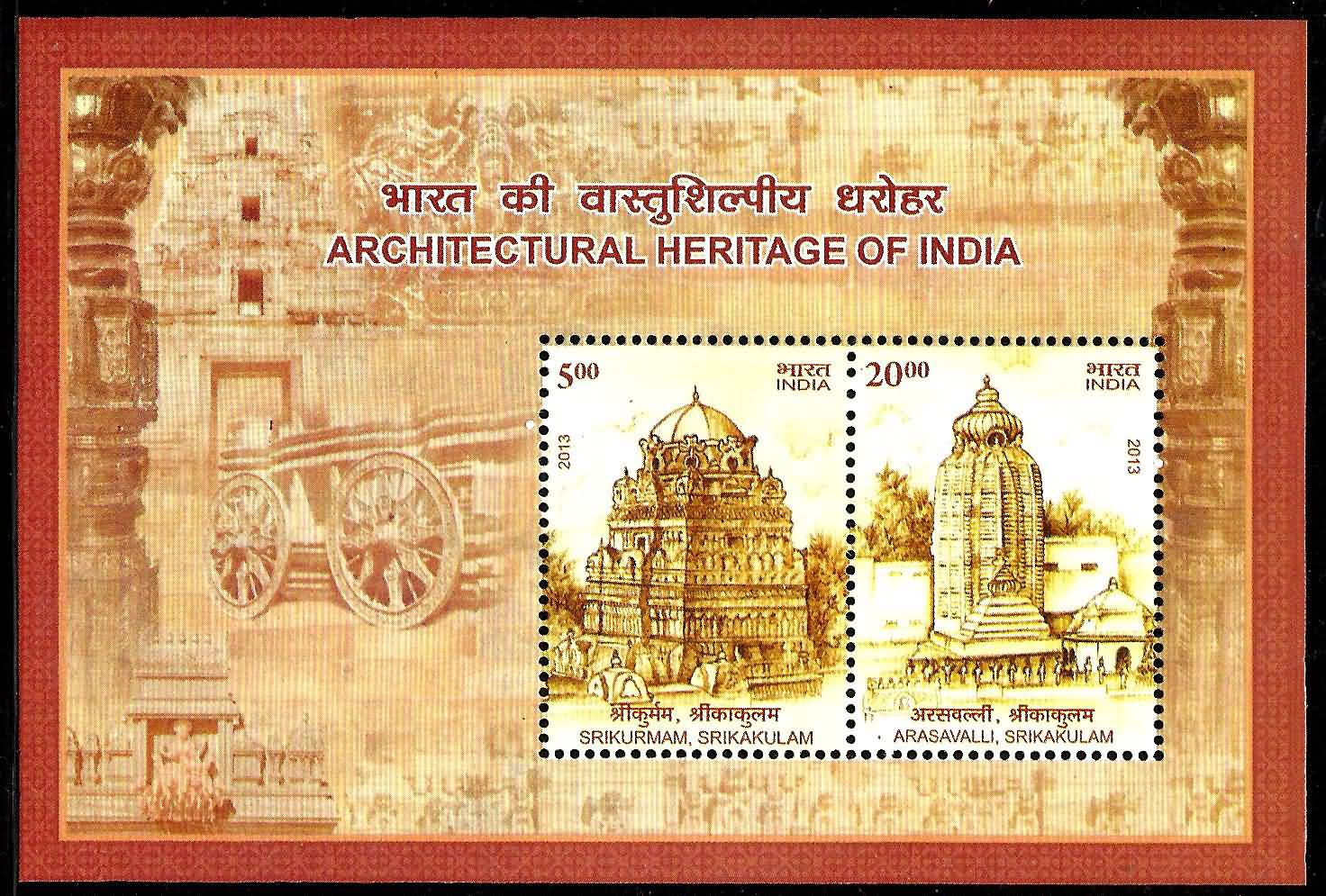
Technical Data
| Date of Issue | April 11, 2013 |
|---|---|
| Denomination | Rs. 25 |
| Quantity | 210,000 |
| Perforation | 13¾ |
| Printer | Security Printing Press, Hyderabad |
| Printing Process | Wet Offset |
| Watermark | No Watermark |
| Colors | Multicolor |
| Credit (Designed By) | Sh. Brahm Prakash Smt. Alka Sharma |
| Catalog Codes |
Michel IN BL106 Stanley Gibbons IN MS2929 |
| Themes | Architecture | Temples |
Stamps in this Miniature Sheet
Introduction
In early Indian society, religion was not merely a matter of faith—it was an all-encompassing way of life. Temples served as spiritual centres as well as vibrant hubs of social and cultural activity. Among the remarkable architectural monuments from ancient and early-medieval India are the Arasavalli and Srikurmam temples of Andhra Pradesh, each reflecting a unique legacy of devotion, craftsmanship and heritage.
Arasavalli Temple
Historical Background
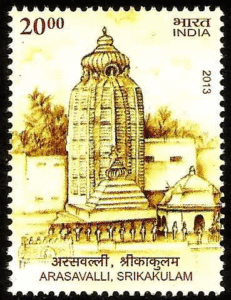
The Arasavalli Sun Temple, dating to the 7th century AD, stands in the Arasavalli village near Srikakulam. Believed to have been built by Devendra Verma, ruler of Kalinga, this ancient shrine is dedicated to Surya, the Sun God.
Architectural Features
A remarkable aspect of this temple is its scientific architectural design—twice a year, in March and September, the sun’s rays fall directly on the feet of the main deity.
The temple is a fine example of the craftsmanship of the Maharanas, the Vishwakarma sculptors of ancient Orissa.
Built in the Panchayatana style, the temple enshrines:
- Aditya (Surya) at the centre
- Ganesh, Shiva, Parvati, and Vishnu in the four corners
The principal idol is a five-foot image of Surya, carved from the rare stone Arunashila, seated on a seven-horse chariot and flanked by his consorts.
Religious Significance
Surya is worshipped here as the God of Health. Devotees believe that offering prayers cures ailments, and that a holy dip in the temple’s Pushkarini fulfils wishes.
The annual Suryanarayanaswami Kalyanotsavam, a five-day celebration held in March–April, draws large numbers of worshippers.
Srikurmam Temple
Historical Background
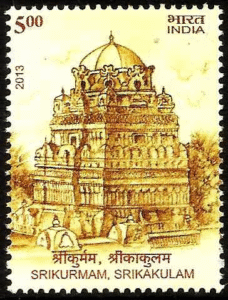
Located in Srikurmam village near Srikakulam, this is the only temple in the world dedicated to Lord Vishnu in his Kurma (tortoise) avatar. Originally built before the 2nd century AD, it underwent major development during the 7th century. Kings of the Kalinga and Chola dynasties further contributed to its growth.
Architectural Features
This temple is the only one in the region built in the classic ancient Dravidian style.
Its prominent features include:
- An imposing five-storied gopuram
- 200 granite pillars carrying Devanagari inscriptions from the 11th to 19th centuries
- 41 mural panels depicting mythological scenes, reminiscent of the famed Ajanta frescoes
A distinctive element of this temple is the presence of Dhwajastambams (flag masts) on both the front and back. This is because the main deity uniquely faces west, towards the rear of the temple.
Festivals
The most significant festival is Dolotsavam, celebrated annually in March. The event attracts nearly 50,000 pilgrims who gather to seek blessings and participate in the festivities.
Philatelic Tribute
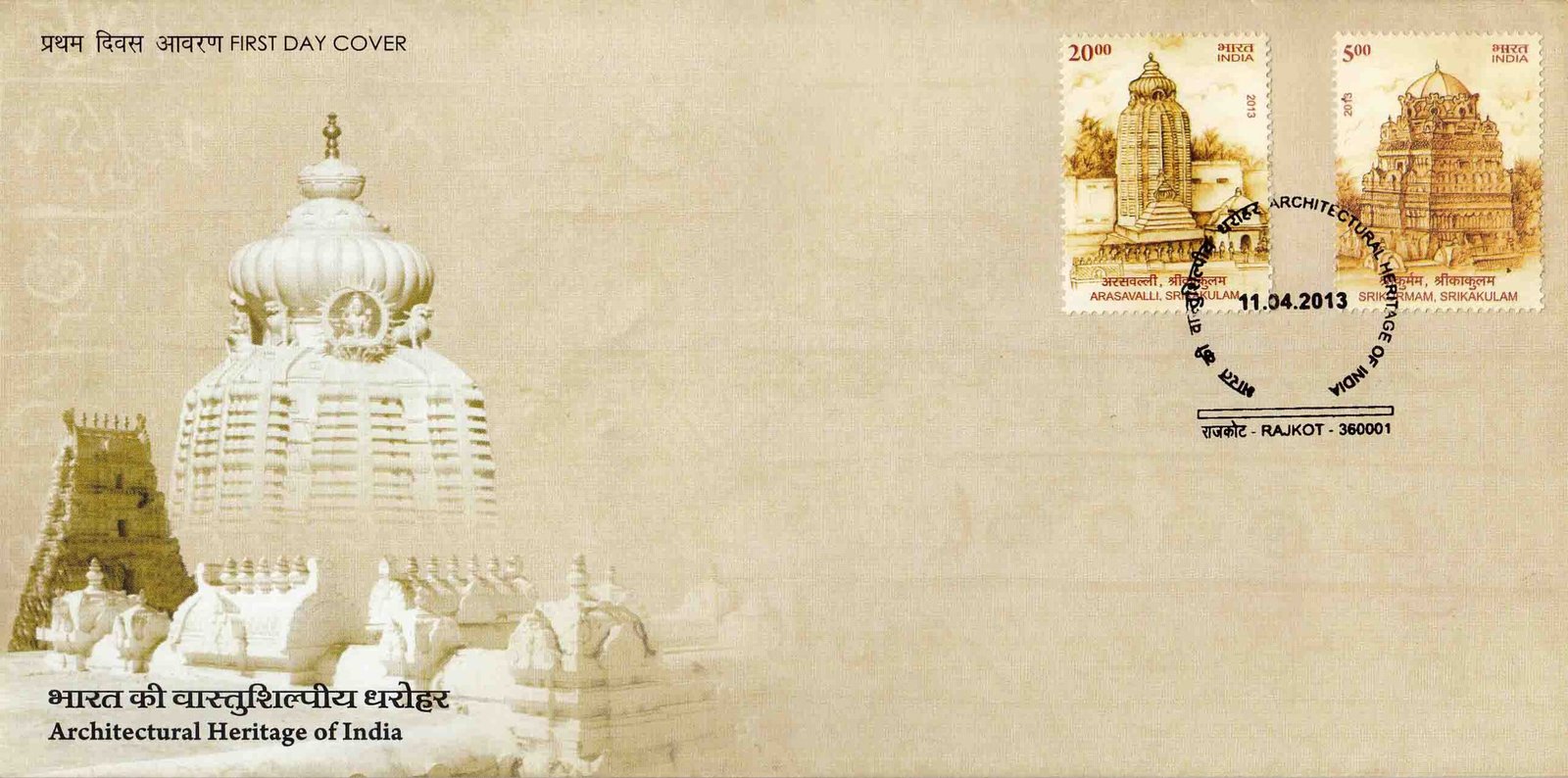
The Department of Posts has released a Miniature Sheet comprising two commemorative postage stamps featuring these magnificent architectural treasures-Arasavalli and Srikurmam Temples of Srikakulam, Andhra Pradesh—paying homage to India’s rich architectural and cultural heritage.
First Day Cover
Leave a Comment
You must be logged in to post a comment.