Aruna Asaf Ali (1909-1996)

Technical Data
| Date of Issue | July 16, 1998 |
|---|---|
| Denomination | Rs. 3 |
| Quantity | 400,000 |
| Perforation | comb 13 |
| Printer | Security Printing Press, Nashik |
| Printing Process | Photogravure |
| Watermark | No Watermark |
| Colors | Chestnut |
| Credit (Designed By) | Sh. Sankha Samanta |
| Catalog Codes |
Michel IN 1636 Stamp Number IN 1697 Yvert et Tellier IN 1402 Stanley Gibbons IN 1800 |
| Themes | Commemoration | Famous people | Freedom Fighters | Women |
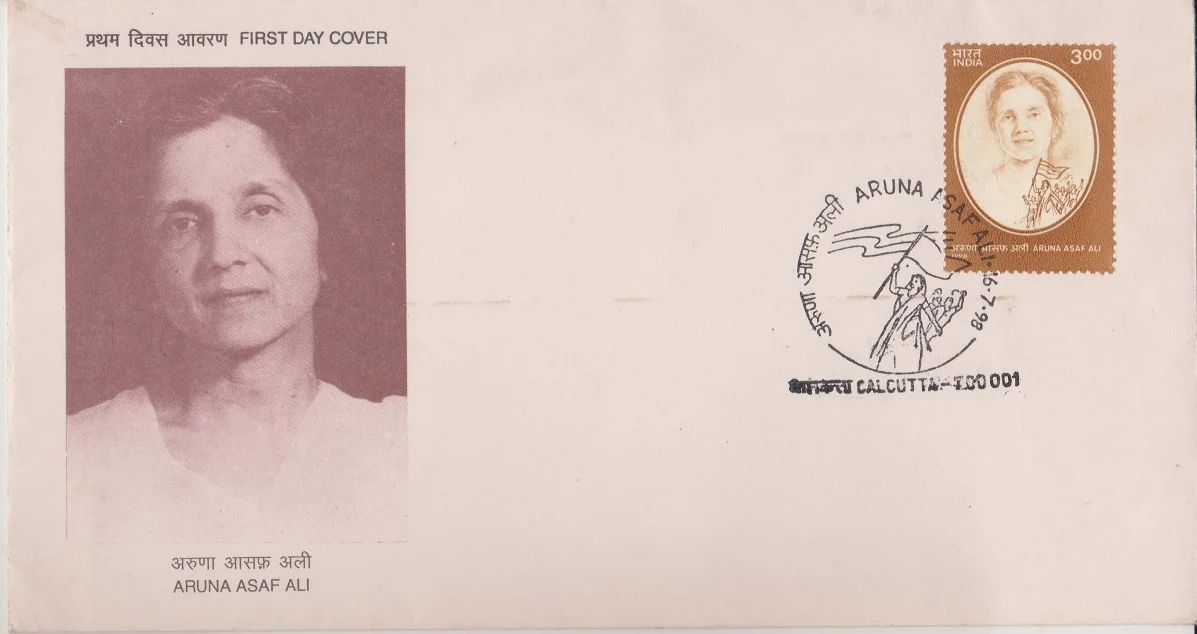
Commemorative Postage Stamp on Aruna Asaf Ali
The commemorative postage stamp issued in honor of Aruna Asaf Ali pays tribute to one of the most courageous women of India’s freedom struggle. Remembered for her fearless leadership during the Quit India Movement of 1942, she became a lasting symbol of resistance, patriotism, and public service.
Early Life and Background
Aruna Asaf Ali was born in 1909 at Kalka into a Bengali family associated with the reformist Brahmo Samaj tradition. She broke social convention by marrying Asaf Ali, a noted lawyer and nationalist from Delhi.
Role in the Freedom Movement
She was deeply involved in India’s struggle for independence:
- Participated in the Civil Disobedience Movement during the 1930s
- Imprisoned for anti-colonial activities
- Courted arrest during Mahatma Gandhi’s Individual Satyagraha in 1941
Her most famous role came during the Quit India Movement.
After the arrest of senior Congress leaders in August 1942, she went underground and helped organize resistance networks across Calcutta, Bombay, and Delhi. Her determination made her an icon of youthful defiance against British rule.
Public Life After Independence
After 1947, she remained active in political and civic life:
- President of the Delhi Pradesh Congress Committee
- Joined socialist and labor movements
- Vice President of the All India Trade Union Congress
- Became the first Mayor of Delhi in 1958
Though she later withdrew from active politics, her public life reflected commitment to justice and democratic values.
Honours and Recognition
Her service was recognized with prestigious awards:
- Lenin Peace Prize (1975)
- Jawaharlal Nehru Award for International Understanding (1991)
Design Significance of the Stamp
The stamp honoring Aruna Asaf Ali symbolizes:
- Courage in the face of repression
- Women’s leadership in the independence struggle
- Democratic ideals and public service
- The spirit of sacrifice for national freedom
Legacy
Aruna Asaf Ali belonged to the heroic generation that fought for India’s independence. Her name remains closely associated with bravery, political conviction, and principled activism. This commemorative stamp preserves the memory of a woman who stood firm when the nation needed courage most.
First Day Cover