Arya Samaj
Technical Data
| Date of Issue | March 5, 2000 |
|---|---|
| Denomination | Rs. 3 |
| Quantity | 400,000 |
| Perforation | comb 13 x 13½ |
| Printer | Calcutta Security Printers Ltd |
| Printing Process | Offset Lithography |
| Watermark | No Watermark |
| Colors | Multicolor |
| Credit (Designed By) | Sh. Bharati Mirchandani |
| Catalog Codes |
Michel IN 1754 Stamp Number IN 1815 Yvert et Tellier IN 1520 Stanley Gibbons IN 1918 |
| Themes | Anniversaries and Jubilees | Books | Famous people | Fire and Flames | Men | Organizations |
Vedic Reform Movement and Its Global Impact
The Arya Samaj was founded by Swami Dayananda Saraswati on April 7, 1875, in Bombay. Built on ten universal principles, the Arya Samaj aims to revive and promote the Vedic way of life while encouraging truth, righteousness, and social upliftment.
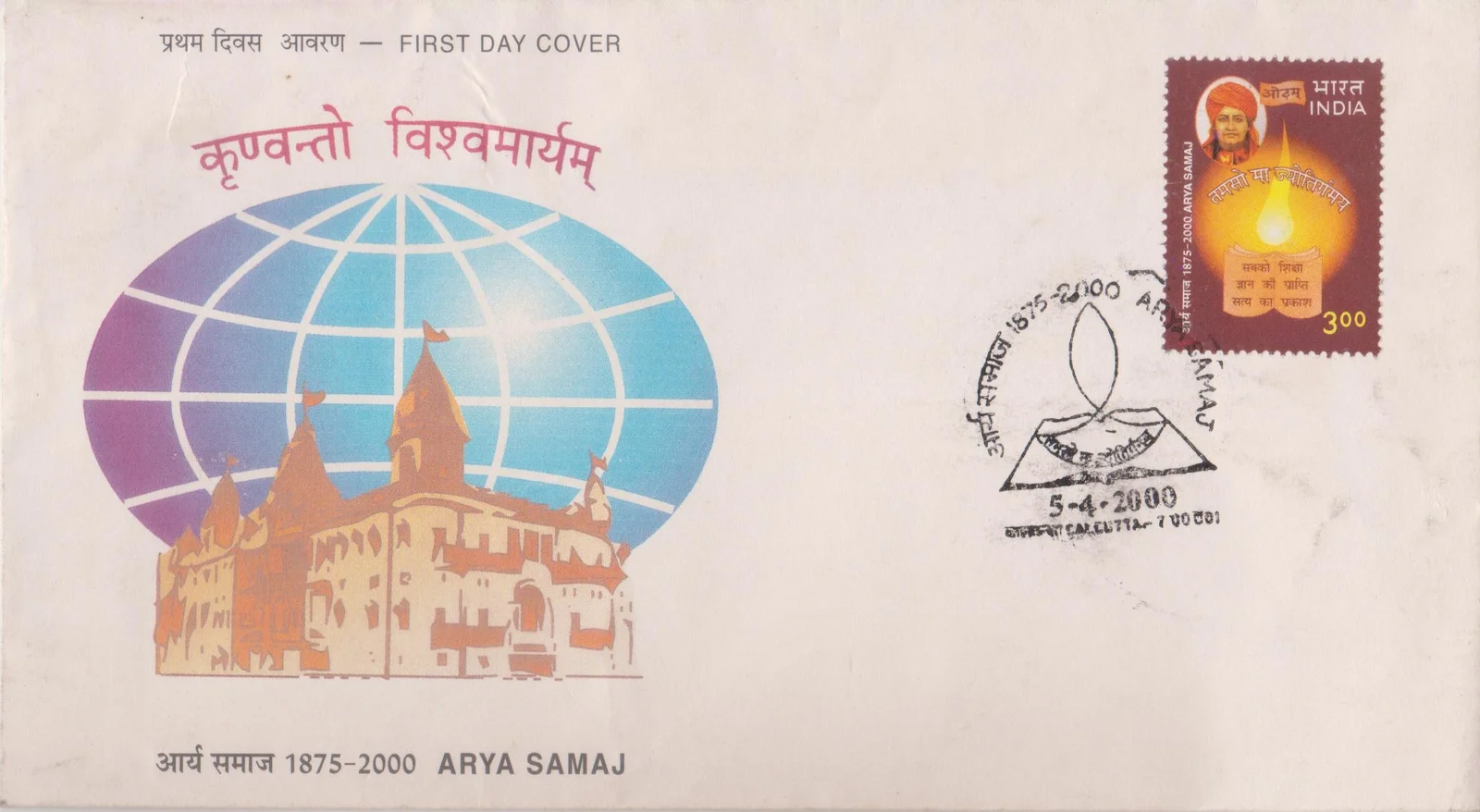
Its guiding motto, “Krinvanto Vishwam Aryam” (Make the world noble), reflects its mission to create a better and more enlightened global society.
Philosophy and Core Principles
The Arya Samaj emphasizes:
- Acceptance of truth and rejection of falsehood
- Physical, spiritual, and social development of individuals
- Promotion of love, justice, and equality beyond caste, creed, or race
Its teachings are rooted in the Vedas and summarized in ten fundamental principles that guide ethical living and social responsibility.
Teachings of Swami Dayananda Saraswati
Swami Dayananda Saraswati was a visionary reformer who worked to restore the original purity of Hinduism and promote nationalism in India.
His ideas are captured in his famous work, Satyarth Prakash, which forms the philosophical foundation of the Arya Samaj.
He advocated:
- Rational thinking and scientific temperament
- Continuous pursuit of knowledge for societal welfare
- Elimination of superstition and blind faith
- Ethical conduct and self-discipline
Social Reforms and Contributions
The Arya Samaj played a vital role in social reform in India. It strongly opposed:
- Caste discrimination
- Untouchability
- Child marriage
- Inequality of women
Through education, awareness, and activism, it worked towards building an equal and just society.
Role in National Awakening
Arya Samaj significantly contributed to India’s national awakening during the late 19th and early 20th centuries. It promoted the idea of “Swaraj” (self-rule) even before it became a mainstream political demand.
The movement also supported Swadeshi (self-reliance) as a means to eliminate poverty and strengthen the Indian economy.
Global Presence and Modern Relevance
Today, the Arya Samaj is active worldwide, running numerous institutions focused on:
- Education
- Social service
- Spiritual development
Its teachings promote universal brotherhood and unity, encouraging individuals to lead ethical and purposeful lives.
Symbolism and Recognition
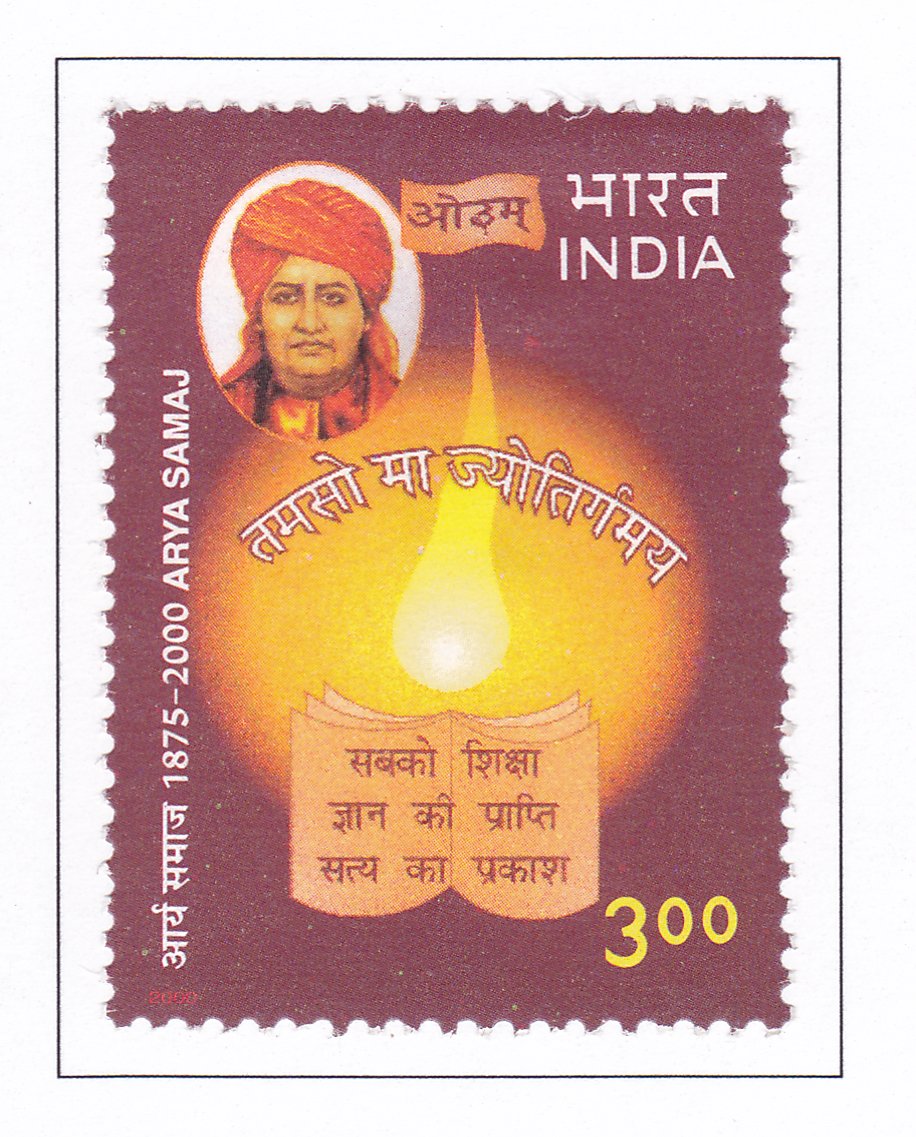
The movement is symbolized by the Sanskrit phrase “Tamaso Ma Jyotirgamaya” (Lead us from darkness to light), reflecting its mission to spread knowledge and truth.
To honor its invaluable contributions, the Department of Posts issued a commemorative postage stamp marking 125 years of Arya Samaj, celebrating both the organization and its founder, Swami Dayananda Saraswati.
First Day Cover