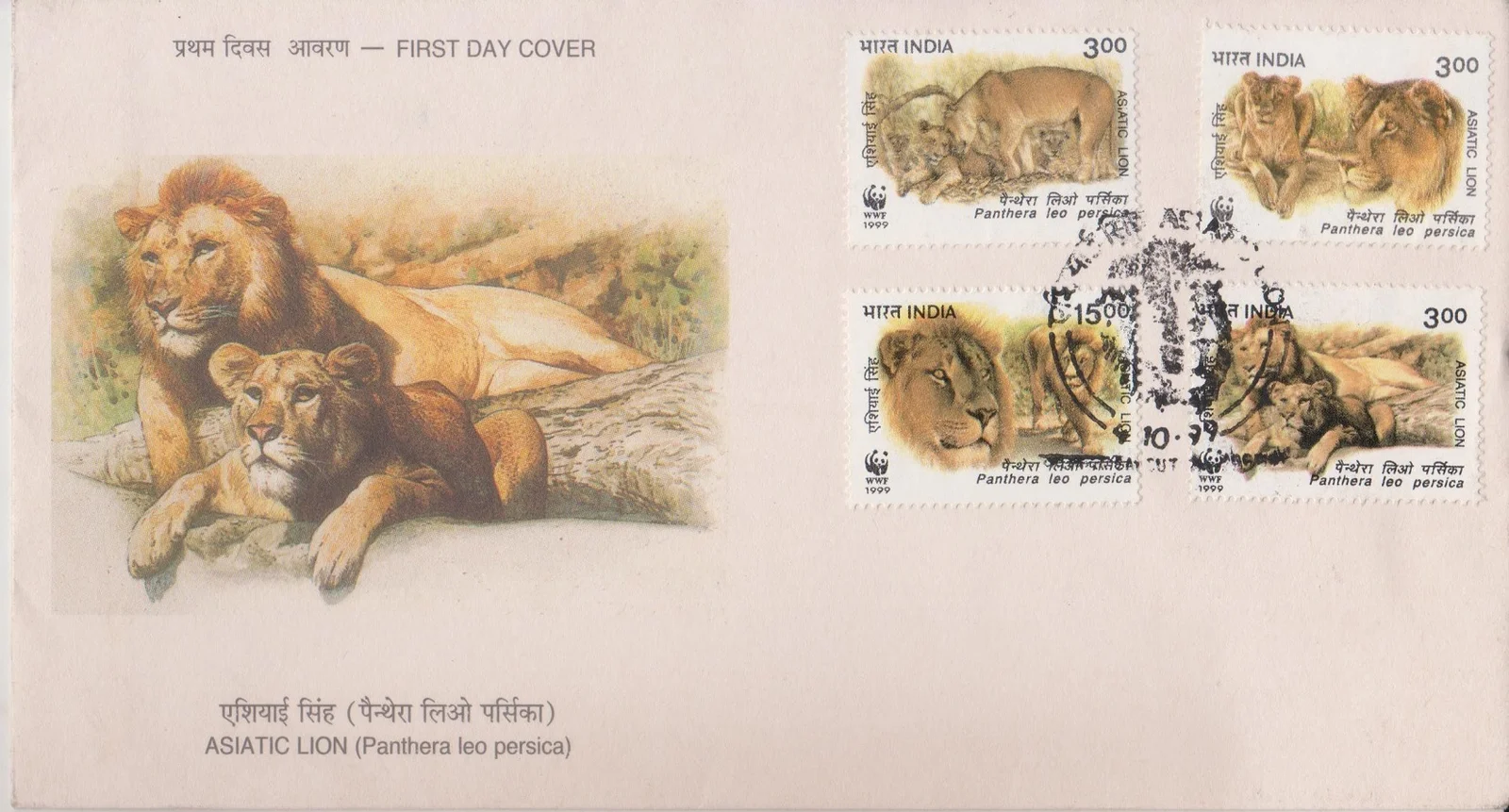
Asiatic Lion – Panthera leo persica
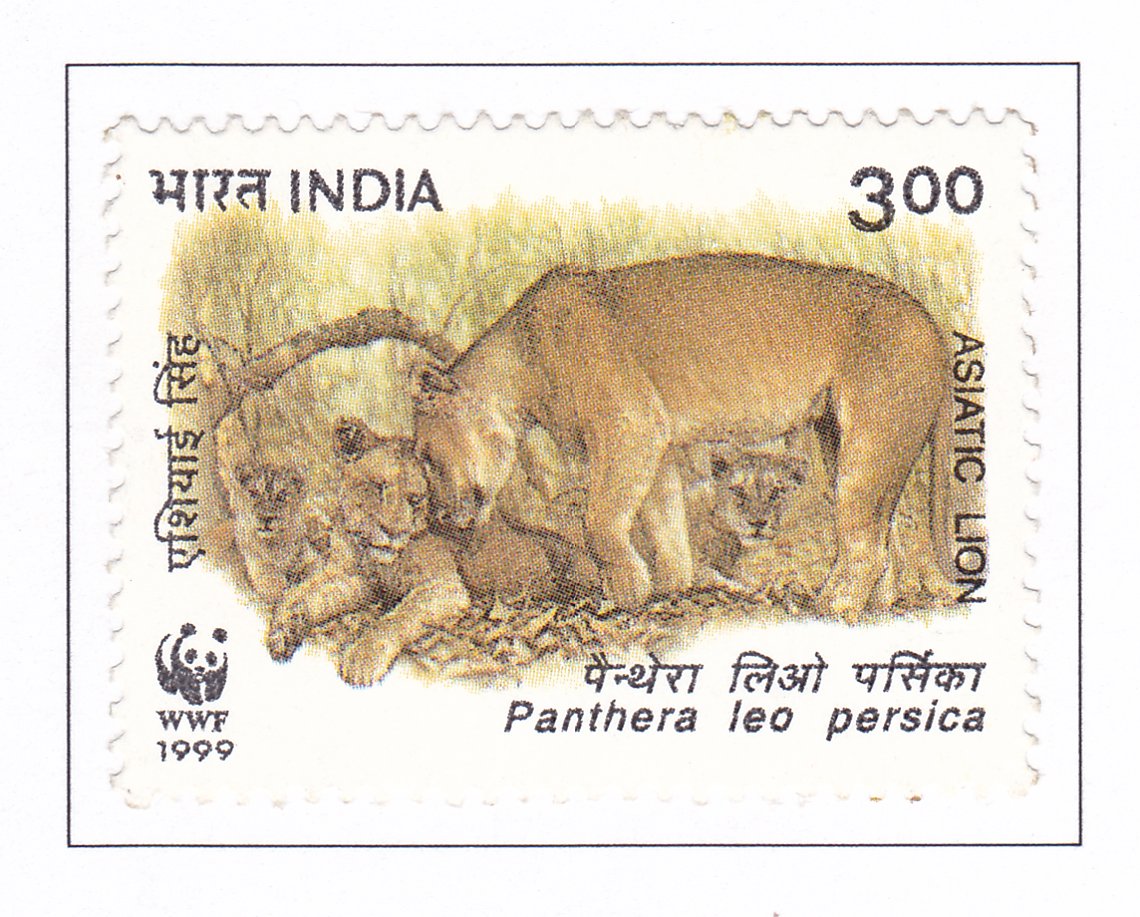
Technical Data
| Stamp Set | Endangered Species |
|---|---|
| Date of Issue | October 4, 1999 |
| Denomination | Rs. 3 |
| Quantity | 1,000,000 |
| Perforation | comb 13½ x 13 |
| Printer | Security Printing Press, Nashik |
| Printing Process | Photogravure |
| Watermark | No Watermark |
| Colors | Multicolor |
| Credit (Designed By) | |
| Catalog Codes |
Michel IN 1704 Stamp Number IN 1767 Yvert et Tellier IN 1471 Stanley Gibbons IN 1869 |
| Themes | Animals (Fauna) | Lions | Mammals | Wild Cats | WWF |
Commemorative Postage Stamp Series
With growing global awareness about environmental protection, the need to conserve wildlife and maintain ecological balance has become more important than ever. Rapid industrialization, habitat destruction, and overexploitation of natural resources have severely impacted biodiversity, leading to the extinction of many species. Recognizing this, India has consistently prioritized wildlife conservation since independence.
To highlight these efforts, the Department of Posts issued a special set of commemorative stamps dedicated to the Asiatic Lion, drawing attention to the urgent need for protecting this endangered species.
Cultural Significance of the Asiatic Lion
The Asiatic Lion holds a prominent place in Indian culture, symbolizing strength, courage, and royalty. Its presence can be seen in ancient art, literature, and folklore, including depictions from the Indus Valley Civilization.
The lion is also featured in India’s national emblem, where four lions stand back-to-back, representing power, pride, and confidence.
Decline and Survival of the Asiatic Lion
Historically, the Asiatic Lion had a vast range extending across Mesopotamia, Arabia, Persia, and large parts of India. However, excessive hunting and habitat loss drastically reduced its population, pushing it to the brink of extinction.
Today, its only natural habitat is the Gir Forest in Gujarat, which serves as the last refuge of this species in the wild.
At the beginning of the 20th century, the population had dwindled to critically low numbers. Conservation efforts began when the rulers of Junagadh imposed strict protection measures, including bans on hunting. Post-independence, the Indian government further strengthened these efforts through habitat management and wildlife protection initiatives.
As a result, the population of the Asiatic Lion has gradually stabilized, marking a significant success in conservation.
Habitat and Behaviour
Unlike the Bengal Tiger, which prefers dense forests, the Asiatic Lion thrives in dry deciduous and scrub forests. It is primarily a nocturnal hunter with a keen sense of hearing.
Key characteristics include:
- Smaller mane compared to African lions
- Social structure, living in groups known as prides
- Hunting in coordinated groups, often targeting large herbivores
Their common prey includes species like the Chital Deer, along with sambar deer, nilgai, wild boar, and occasionally livestock.
Conservation and Global Recognition
The Gir Forest ecosystem has been carefully managed to support not just the lions but the entire biodiversity of the region. This has helped restore ecological balance and ensure the survival of the species.
The commemorative stamp series is also part of the World Wide Fund for Nature (WWF) Conservation Stamp Collection, reinforcing global efforts toward wildlife preservation.
Promoting Conservation Awareness
Through this stamp issue, the Department of Posts emphasizes:
- The importance of biodiversity conservation
- The need for environmental education
- Public awareness through institutions, media, and social initiatives
A Symbol of India’s Conservation Efforts
The “Asiatic Lion” commemorative stamp series stands as a tribute to India’s long-standing commitment to wildlife conservation. It not only celebrates the successful protection of an endangered species but also serves as a reminder of our responsibility to preserve nature for future generations.
First Day Cover