August Kranti : Ballia
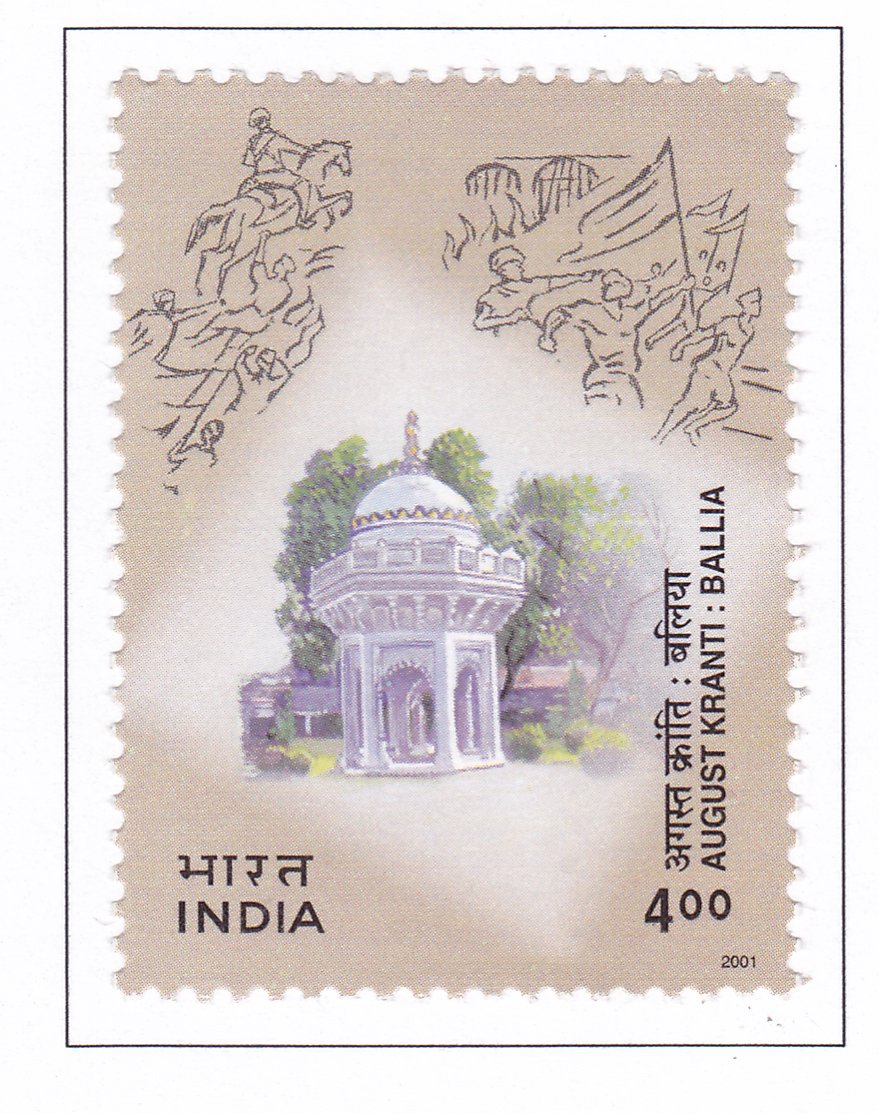
Technical Data
| Date of Issue | August 19, 2001 |
|---|---|
| Denomination | Rs. 4 |
| Quantity | 400,000 |
| Perforation | comb 13 |
| Printer | Calcutta Security Printers Ltd |
| Printing Process | Offset Lithography |
| Watermark | No Watermark |
| Colors | Multicolor |
| Credit (Designed By) | Sh. Sankha Samanta |
| Catalog Codes |
Michel IN 1848 Stamp Number IN 1907 Yvert et Tellier IN 1614 Stanley Gibbons IN 2014 |
| Themes | Anniversaries and Jubilees | Monuments | Revolutions |
A Defining Chapter of the Quit India Movement
The August Kranti (August Revolution) in Ballia, Uttar Pradesh, stands as one of the most inspiring episodes of the Quit India Movement. It symbolized the courage and determination of ordinary citizens who rose against British rule during India’s struggle for independence.
Background: Quit India Movement of 1942
In August 1942, the Indian National Congress passed the historic Quit India Resolution during its Bombay session under the leadership of Mahatma Gandhi. Gandhiji’s powerful call of “Do or Die” inspired millions of Indians to join the freedom struggle.
However, before the movement could formally begin, the British authorities acted swiftly. Major leaders were arrested, and the Congress was declared illegal. This led to widespread anger and spontaneous uprisings across the country, with people demanding an end to colonial rule.
Rise of National Governments
A unique feature of the Quit India Movement was the establishment of parallel “National Governments” in several regions. Although most of these governments were short-lived, they demonstrated the people’s ability to challenge and replace colonial authority.
The Ballia Uprising
In Ballia district of Uttar Pradesh, the revolt began with student-led protests. The situation escalated after the arrest of young girls and indiscriminate police firing in the market, which outraged the local population.
The protests quickly intensified into mass resistance. People disrupted communication and transport by uprooting railway tracks, cutting telegraph wires, and attacking symbols of British authority such as police stations and government offices.
Within a week, local revolutionaries took control of key institutions, forcing British officials to surrender. The national flag was hoisted across government buildings, marking the end of colonial control in the district.
Formation of the Ballia National Government
With the British administration dismantled, local leaders took responsibility for governance. On 19th August 1942, a parallel National Government was established in Ballia.
This government was led by Chittu Pandey, a charismatic leader famously referred to as the “Tiger of Ballia” by leaders like Jawaharlal Nehru and Subhas Chandra Bose.
The people of Ballia fully supported this government, contributing funds and resources to ensure its functioning.
Suppression and Historical Significance
Despite its initial success, the Ballia National Government could not withstand the severe repression by British forces and was eventually suppressed within a few days.
However, the August Kranti of Ballia left a lasting impact. It showcased the strength of public unity and the depth of nationalist sentiment across India. The uprising proved that colonial rule was losing its grip and that independence was inevitable.
Commemoration
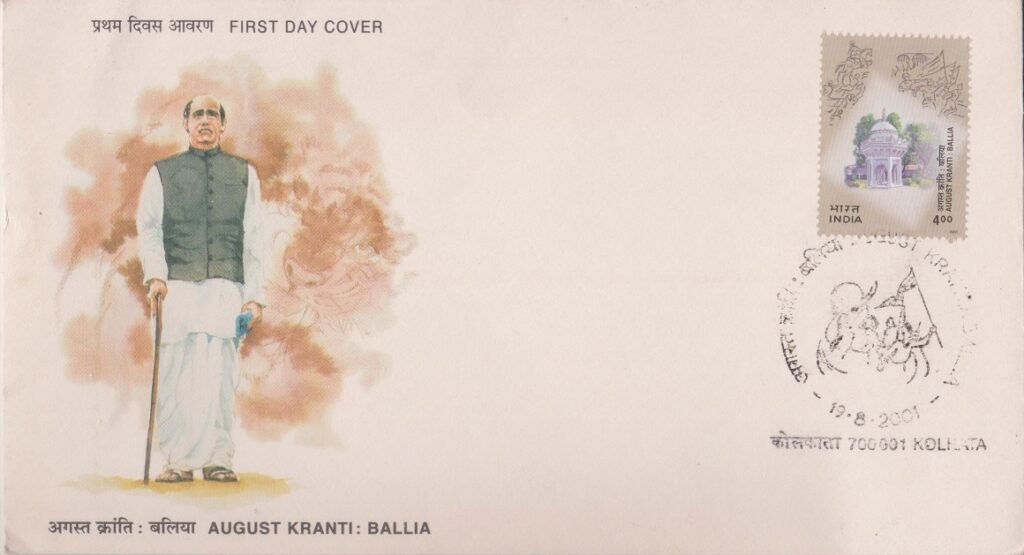
In recognition of this historic movement, the Department of Posts issued a commemorative postage stamp, honoring the courage and sacrifice of the people of Ballia during the August Kranti.
First Day Cover