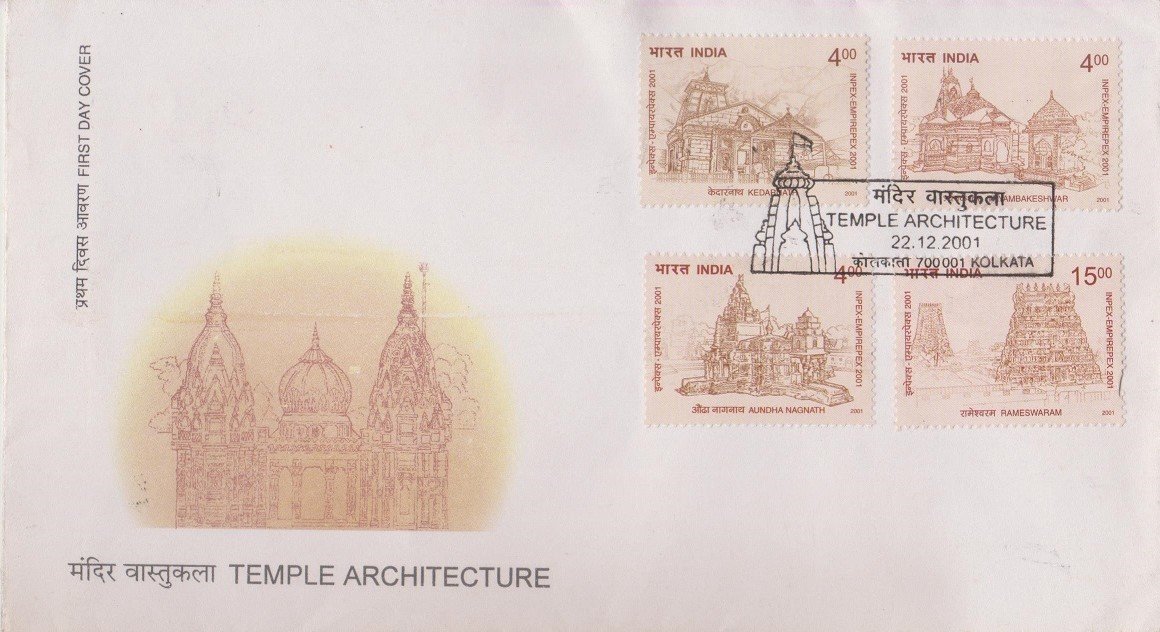
Aundha Nagnath Temple, Maharashtra

Technical Data
| Stamp Set | Temple Architecture |
|---|---|
| Date of Issue | December 22, 2001 |
| Denomination | Rs. 4 |
| Quantity | 3,000,000 |
| Perforation | comb 13 |
| Printer | Madras Security Printers |
| Printing Process | Offset Lithography |
| Watermark | No Watermark |
| Colors | Multicolor |
| Credit (Designed By) | Sh. Sankha Samanta |
| Catalog Codes |
Michel IN 1887 Stamp Number IN 1938 Yvert et Tellier IN 1652 Stanley Gibbons IN 2052 |
| Themes | Architecture | Temples |
A Historic Marvel of Indian Temple Architecture
The Aundha Nagnath Temple is one of the most ancient and architecturally significant temples in India. Known for its intricate craftsmanship and spiritual importance, the temple is a fine example of Indian temple architecture.
Architectural Style and Design
The Aundha Nagnath Temple is built in the distinctive Hemadpanthi style of architecture, which is characterized by the use of locally available stone and minimal use of mortar. Spread across an area of nearly 60,000 square feet, the temple stands out for its:
- Exquisite carvings
- Solid stone construction
- Detailed sculptural work
The artistic detailing on the walls and pillars reflects the high level of craftsmanship achieved by ancient Indian artisans.
Religious Significance
The temple is one of the revered Jyotirlinga shrines, dedicated to Lord Shiva. As such, it holds immense religious importance and attracts devotees from across the country.
Like many temples in India, its structure and design are deeply rooted in spiritual symbolism, where architecture serves both functional and religious purposes.
Place in Indian Temple Architecture
The Aundha Nagnath Temple represents the diversity of Indian temple architecture, especially in the Deccan region. While traditional classifications include Nagara and Dravidian styles, regional styles like Hemadpanthi add unique variations to India’s architectural heritage.
Its grand scale and intricate carvings highlight how temple architecture evolved not only as a place of worship but also as an artistic and cultural expression.
Cultural and Historical Importance
The temple stands as a testament to India’s rich architectural and spiritual legacy. It continues to be an important pilgrimage destination and a subject of interest for historians and architecture enthusiasts alike.
Recognizing its significance, the Department of Posts featured the Aundha Nagnath Temple in a commemorative stamp series celebrating India’s temple architecture.
First Day Cover