
Bahadur R. Srinivasan (1860-1945)
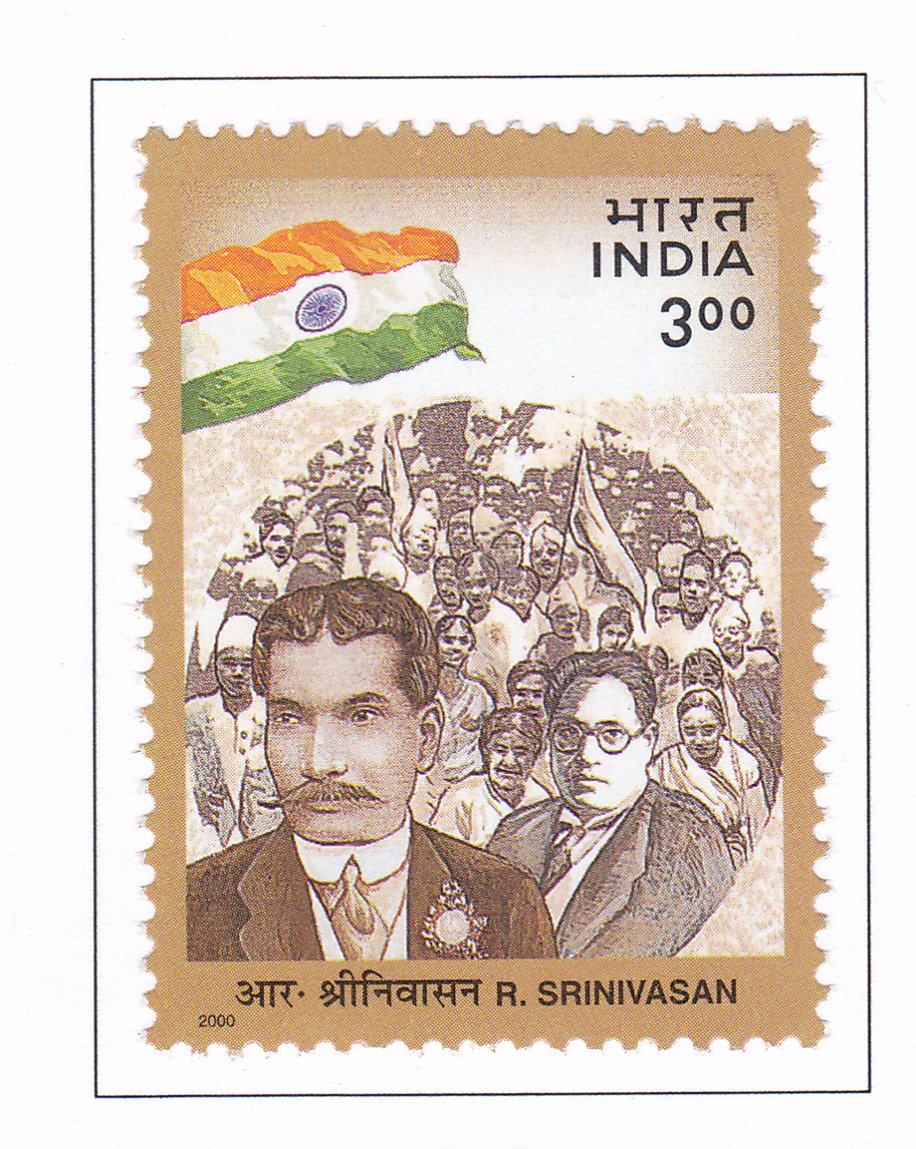
Technical Data
| Stamp Set | Social and Political Leaders |
|---|---|
| Date of Issue | August 15, 2000 |
| Denomination | Rs. 3 |
| Quantity | 400,000 |
| Perforation | comb 13 x 13½ |
| Printer | Calcutta Security Printers Ltd |
| Printing Process | Offset Lithography |
| Watermark | No Watermark |
| Colors | Multicolor |
| Credit (Designed By) | |
| Catalog Codes |
Michel IN 1773 Stamp Number IN 1841 Yvert et Tellier IN 1540 Stanley Gibbons IN 1943 |
| Themes | Famous people | Flags | Men |
Early Life and Education
R. Srinivasan (1859–1945) was a prominent leader of the oppressed and marginalized communities in the erstwhile Madras Presidency. He completed his higher education in Madras and Coimbatore, laying the foundation for a life dedicated to social reform and empowerment.
Champion of the Depressed Classes
At a time when untouchability was deeply entrenched in society, Srinivasan emerged as a fearless advocate for equality. In 1891, he founded the Adi Dravida Mahajana Sabha to protect the rights and interests of the so-called “untouchables” and to promote their social and political inclusion.
Role in Social Awareness and Journalism
To spread awareness and inspire change, he launched the newspaper Paraiyan. Through this platform, he urged society’s leaders to support marginalized communities by promoting education, employment opportunities, and social upliftment. His efforts played a crucial role in awakening political consciousness among the deprived sections.
International Exposure and Leadership
Srinivasan also served in government service in South Africa from 1904 to 1920, gaining valuable global exposure. His leadership was further recognized when he represented the depressed classes at the Round Table Conference in London during 1930–31, where he voiced the concerns of marginalized communities at an international platform.
Legacy in Nation Building
India’s journey towards becoming a Republic was shaped by visionary leaders like Srinivasan, who worked tirelessly for social equality and justice. His contributions significantly influenced the movement for the socio-economic empowerment of weaker sections, aligning with the ideals later enshrined in the Constitution of India.
Commemorative Postage Stamp
To honour his remarkable contributions, the Department of Posts issued a commemorative postage stamp as part of the “Great Leaders: Social and Political Series.” This recognition celebrates his lifelong dedication to eradicating untouchability and uplifting the marginalized sections of society.
Conclusion
Diwan Bahadur R. Srinivasan remains a symbol of courage, reform, and social justice. His pioneering efforts continue to inspire generations striving for equality and inclusive development in India