
Bali and Sugriva
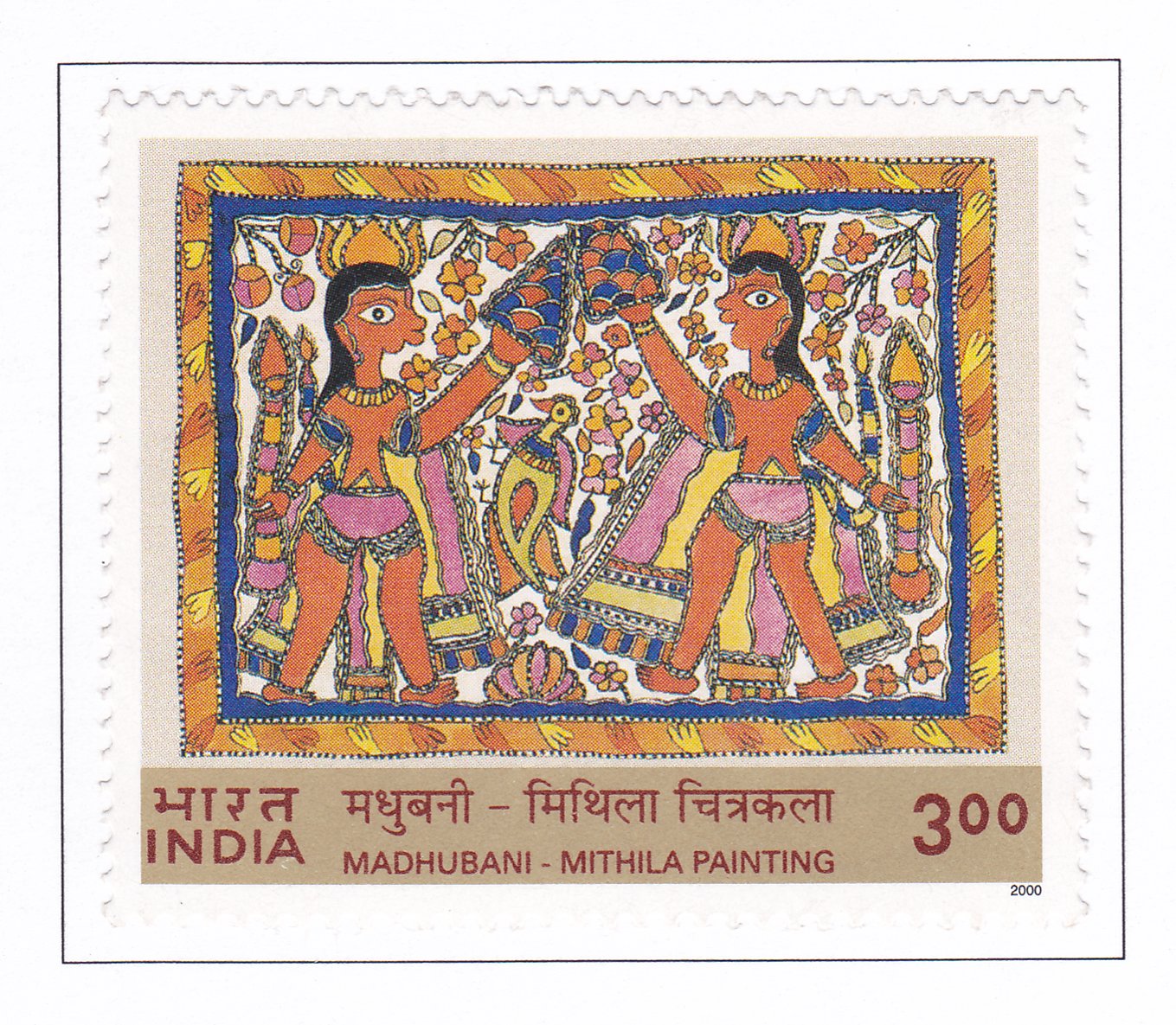
Technical Data
| Stamp Set | Madhubani Mithila Paintings |
|---|---|
| Date of Issue | October 15, 2000 |
| Denomination | Rs. 3 |
| Quantity | 3,000,000 |
| Perforation | comb 13½ |
| Printer | Calcutta Security Printers Ltd |
| Printing Process | Offset Lithography |
| Watermark | No Watermark |
| Colors | Multicolor |
| Credit (Designed By) | |
| Catalog Codes |
Michel IN 1786 Stamp Number IN 1852 Yvert et Tellier IN 1552 Stanley Gibbons IN 1957 |
| Themes | Art | Paintings |
A Masterpiece of Madhubani Art
The “Bali and Sugriva” painting is a remarkable example of Madhubani Painting, showcasing the rich storytelling tradition of the Mithila region. Created by artist Smt. Sanjula Devi, this artwork beautifully illustrates a significant episode from the epic Ramayana.
Mythological Theme and Narrative
The painting portrays the legendary conflict between Bali and Sugriva, two brothers from the Ramayana. This powerful story symbolizes justice, loyalty, and righteousness.
Through vivid imagery and symbolic representation, the artwork reflects how Madhubani artists transform mythological narratives into visually engaging compositions.
Artistic Style and Features
The “Bali and Sugriva” painting highlights the distinctive features of Madhubani Painting:
- Bold outlines and vibrant natural colors
- Stylized human and animal figures
- Intricate patterns filling the entire space
- Flat perspective focused on storytelling
These elements create a unique aesthetic that is both traditional and expressive.
Cultural and Symbolic Significance
In Madhubani Painting, mythological themes carry deep cultural meaning. The story of Bali and Sugriva represents moral values such as truth, duty, and the victory of good over evil.
This painting also reflects the legacy of women artists in Mithila, who have preserved these traditions through generations.
Commemorative Postage Stamp Featuring Bali and Sugriva
The “Bali and Sugriva” painting was featured in a commemorative postage stamp issued by India Post as part of a special series celebrating Madhubani art.
Stamp Highlights:
- Based on the artwork by Smt. Sanjula Devi
- Showcases the traditional Madhubani style and mythological theme
- Represents a cross-section of rural artistic expression
- Highlights the excellence of women folk artists
This commemorative stamp not only honors the artwork but also promotes awareness of India’s rich folk art heritage.
Importance in Madhubani Art Tradition
The inclusion of this painting in a postage stamp reflects the global recognition of Madhubani Painting.
It signifies:
- The evolution of traditional wall art into modern formats
- The preservation of mythological storytelling
- The artistic contribution of rural communities
Conclusion
The “Bali and Sugriva” painting is a powerful blend of art, mythology, and cultural heritage. Its depiction on a commemorative stamp further cements its importance, ensuring that this traditional art form continues to inspire and reach a wider audience.